Mass Timber Makes 15-Story Wood Buildings Reality
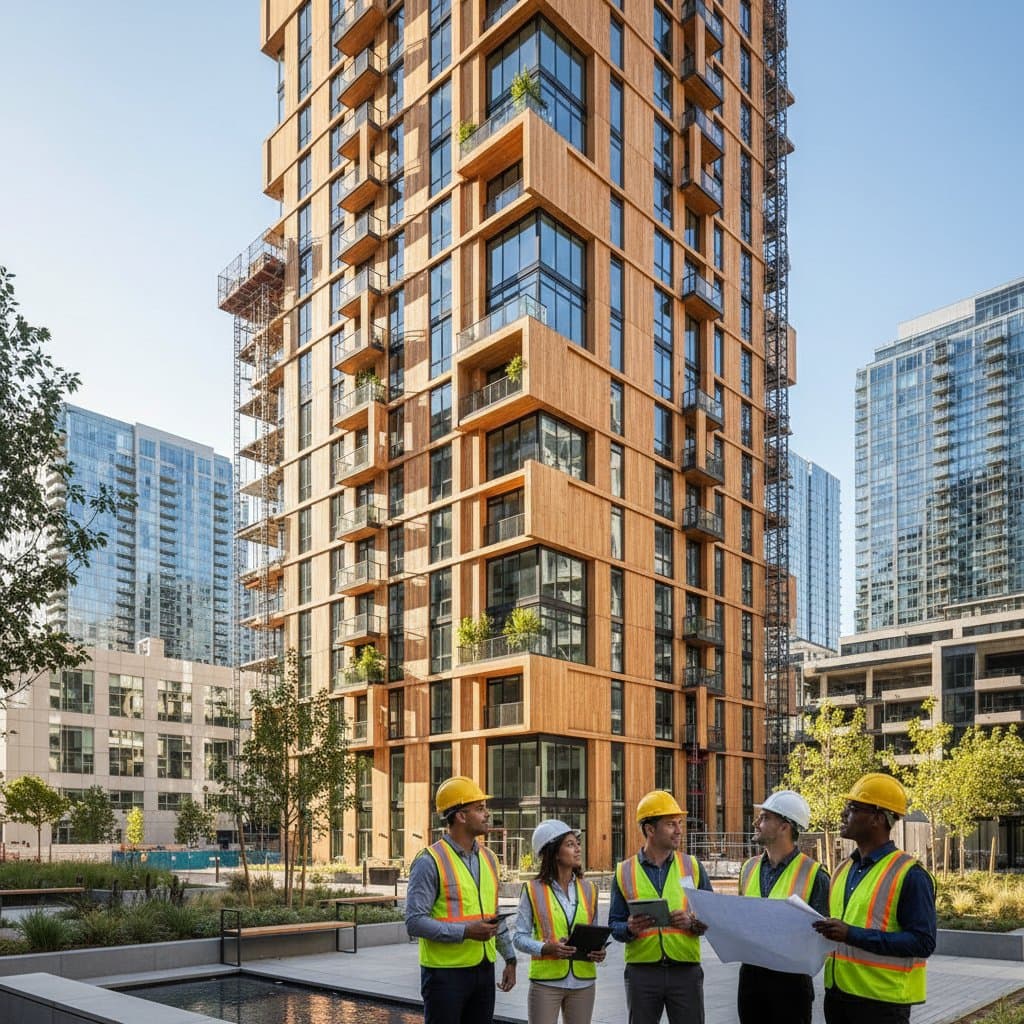
Mass timber construction represents a significant advancement in building technology. This approach utilizes engineered wood products to create structures that reach heights previously dominated by steel and concrete. Projects now demonstrate the feasibility of wood buildings up to 15 stories, blending environmental benefits with structural integrity.
Developers and architects increasingly turn to mass timber for urban projects. These materials offer a renewable alternative that reduces reliance on carbon-intensive resources. As cities prioritize green building practices, mass timber emerges as a practical solution for sustainable high-rises.
Understanding Mass Timber
Mass timber consists of large panels and beams made from layered wood. Cross-laminated timber (CLT) forms the core of many applications, where boards are glued in alternating directions for enhanced strength. Glued-laminated timber (glulam) provides curved or straight beams ideal for load-bearing elements.
Engineers design these components to meet rigorous building codes. The manufacturing process occurs in controlled factories, ensuring precision and quality. Once assembled on-site, the panels interlock efficiently, minimizing waste and construction time.
This technology draws from centuries of wood-building tradition but incorporates modern engineering. Unlike traditional lumber, mass timber resists warping and supports multi-story loads. Certification standards verify its performance in seismic zones and extreme weather.
Key Benefits of Mass Timber in High-Rise Construction
Sustainability stands out as the primary advantage. Wood sequesters carbon during growth, and mass timber buildings store this carbon long-term. Lifecycle analyses show these structures emit up to 45 percent less greenhouse gas compared to conventional methods.
Construction speed accelerates project timelines. Prefabricated panels install rapidly, often reducing build times by 30 percent. Workers assemble floors and walls in days rather than weeks, lowering labor costs and site disruptions.
Fire safety addresses a common concern with wood. Mass timber chars on the surface during exposure, protecting inner layers and slowing fire spread. Testing confirms it performs comparably to steel, which can weaken under heat. Sprinkler systems and intumescent coatings further enhance protection.
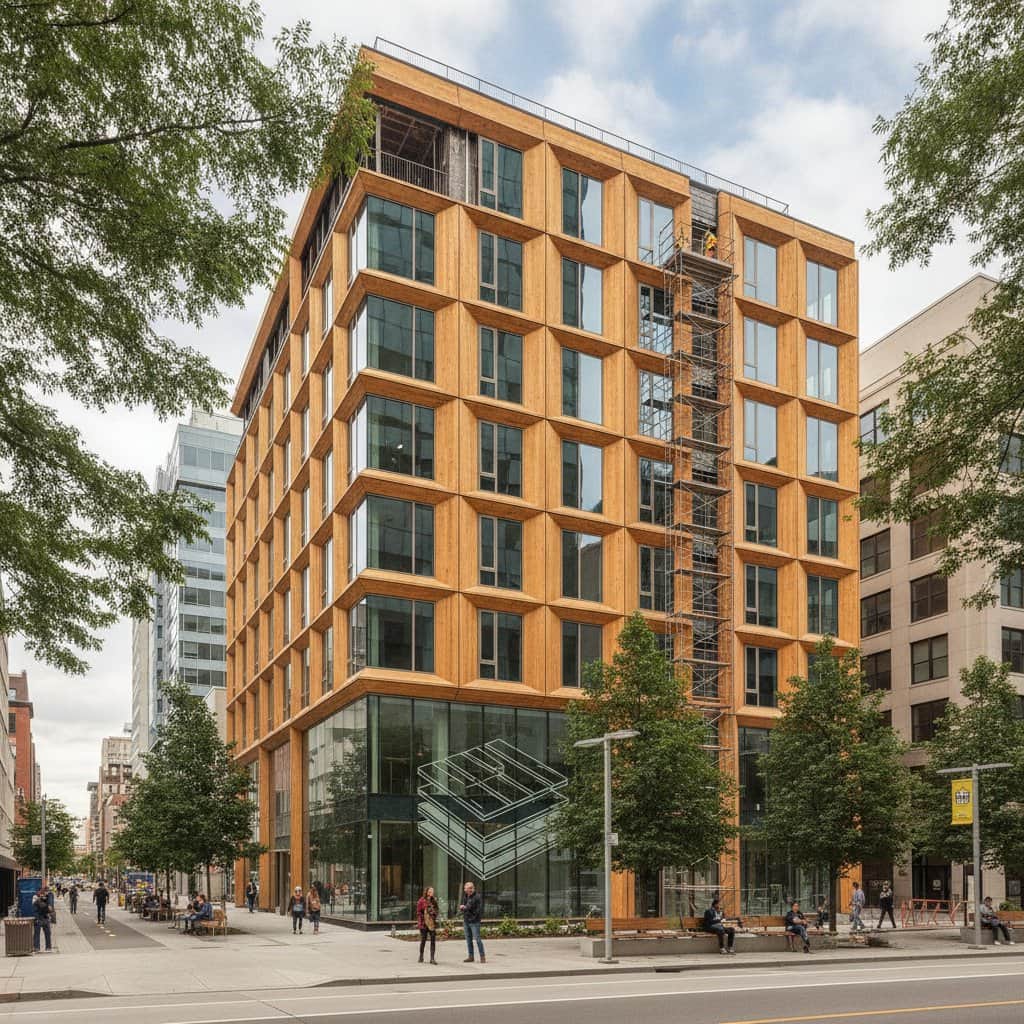
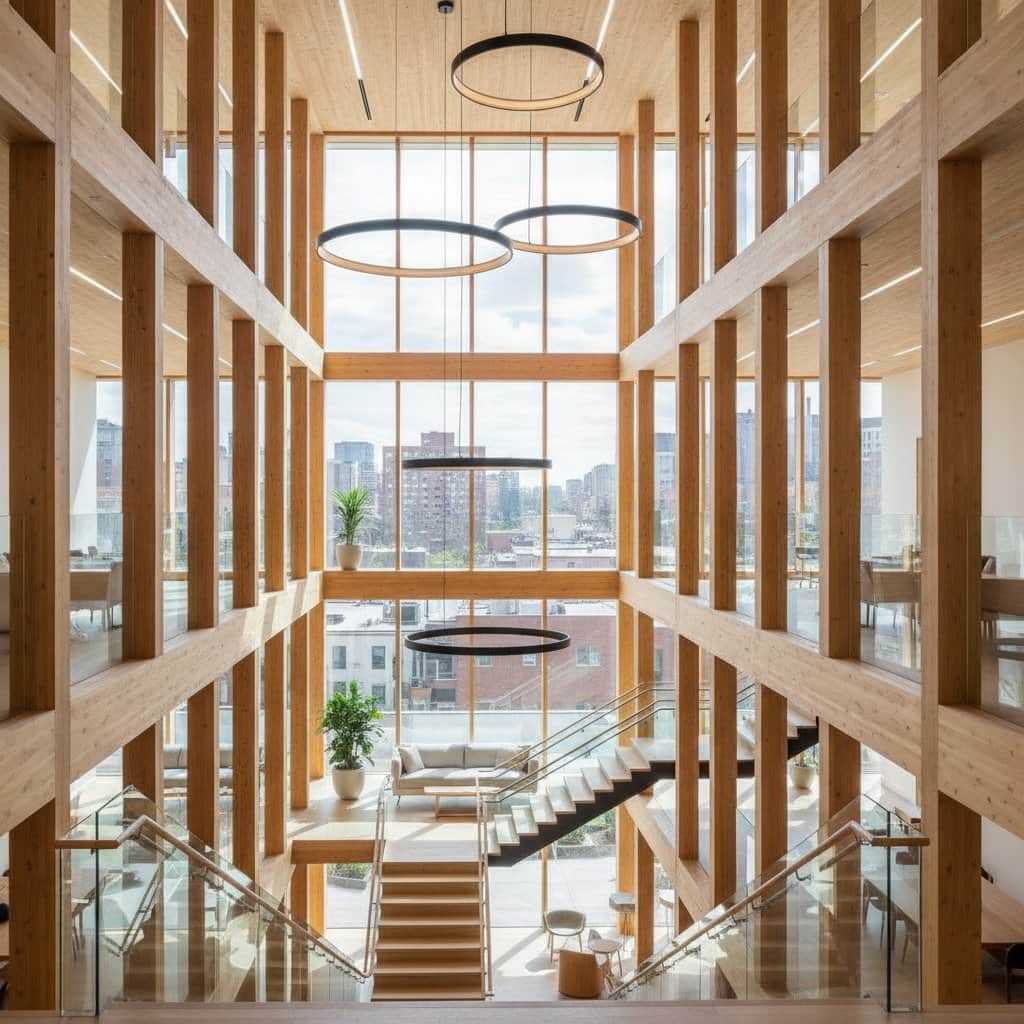
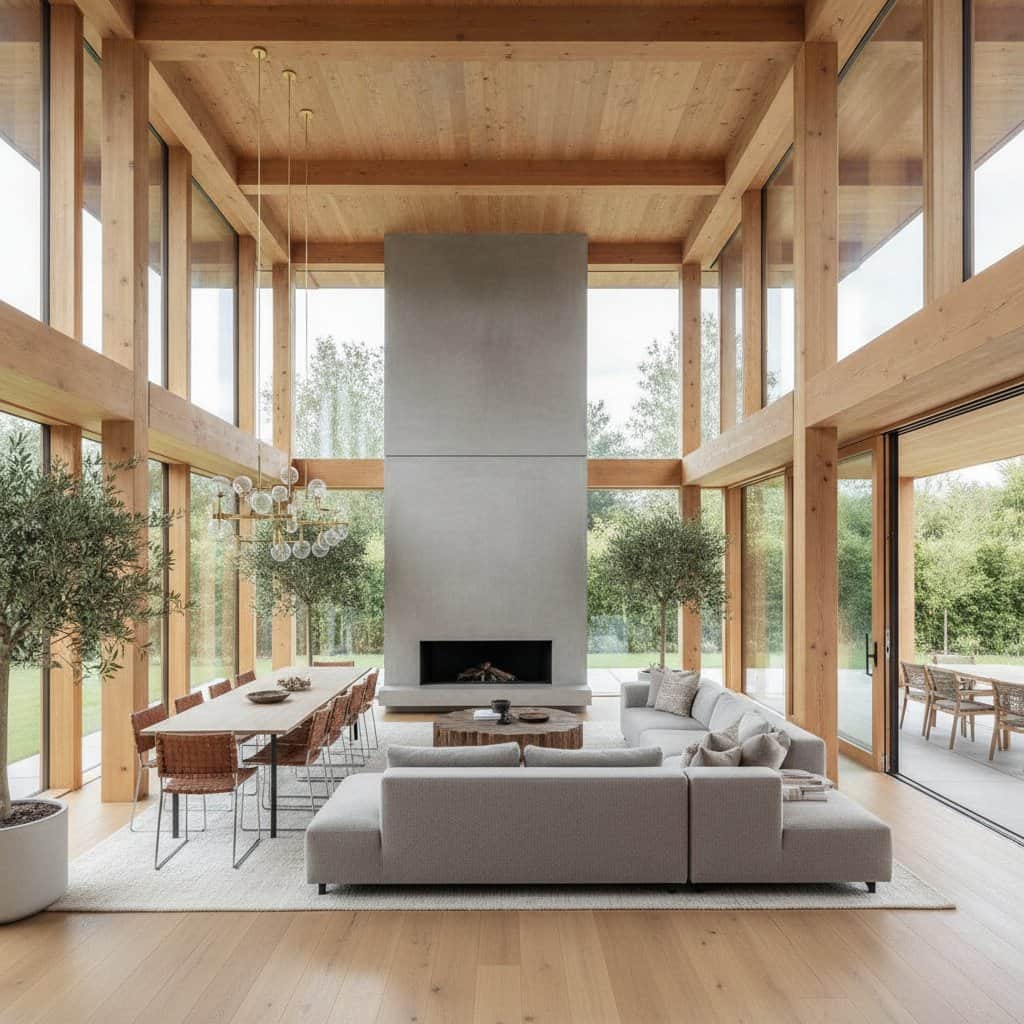
Aesthetic appeal adds value for occupants. Exposed wood interiors create warm, biophilic environments that boost well-being. Designers integrate mass timber with glass and metal for modern facades that harmonize with urban landscapes.
Economic factors favor mass timber over time. Initial material costs align with steel, but savings accumulate through faster erection and reduced foundation needs due to lighter weight. Insurance providers recognize its safety, often offering favorable rates.
Real-World Examples of 15-Story Wood Towers
Several landmark projects illustrate mass timber's potential. In Milwaukee, Wisconsin, the Ascent tower reaches 25 stories, though regulations cap many at 15. This structure uses a hybrid system of mass timber and concrete for stability.
Norway's Mjøstårnet, at 18 stories, sets a global benchmark. Completed in 2019, it features glulam columns and CLT floors, housing offices, apartments, and a hotel. The building withstands harsh Nordic climates while maintaining energy efficiency.
Closer to standard heights, Vancouver's Brock Commons stands at 18 stories but influences 15-story designs. Students reside in this mass timber dorm, benefiting from natural light and ventilation. The project cut embodied carbon by 28 percent.
In the United States, Portland's Framework development plans 12-story wood residences, scalable to 15. These emphasize community spaces and green roofs, integrating mass timber with urban renewal efforts.
The Construction Process Step by Step
Planning begins with architectural design software that models mass timber components. Engineers calculate loads and connections, ensuring compliance with codes like the International Building Code.
-
Material Sourcing and Fabrication: Select sustainable forests certified by organizations such as the Forest Stewardship Council. Factories cut, laminate, and treat wood to specification.
-
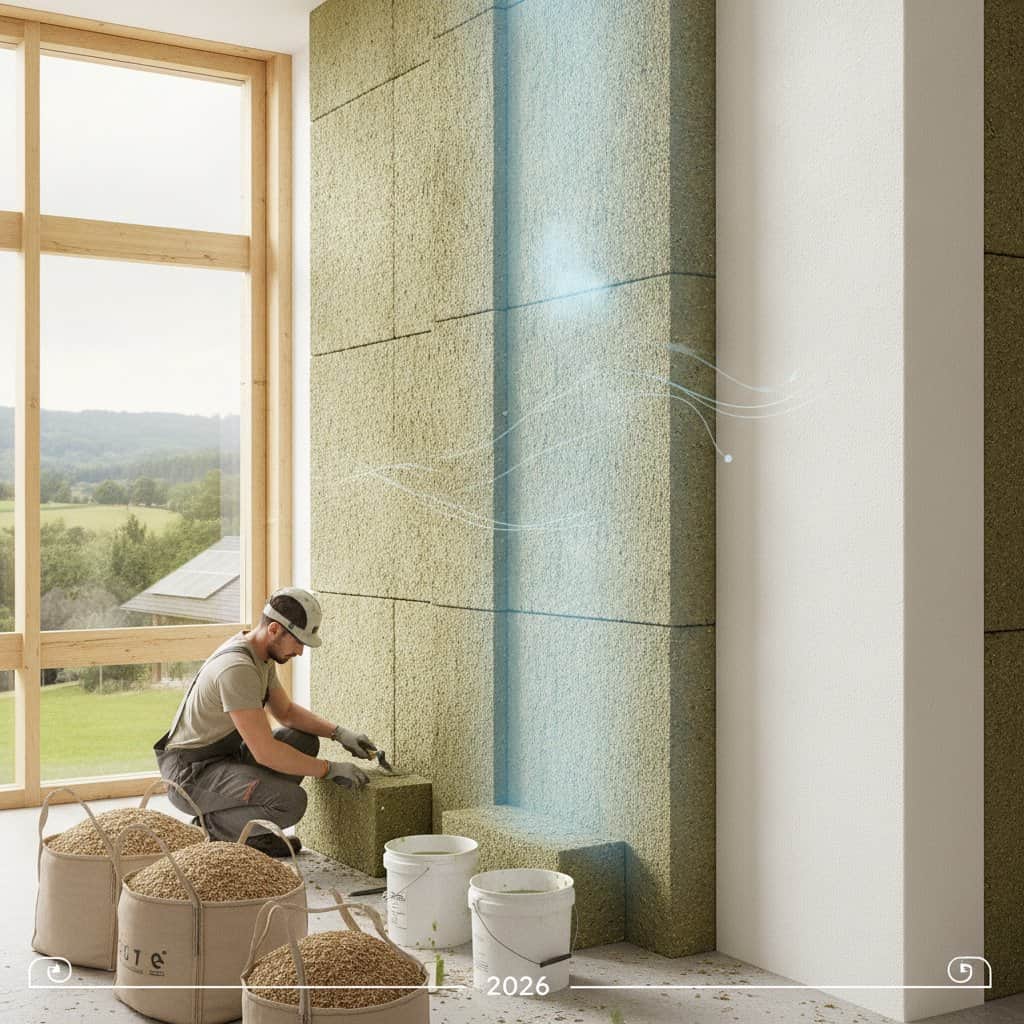
Prefabrication: Assemble panels off-site into wall, floor, and roof modules. Include openings for utilities and integrate insulation for energy performance.
-
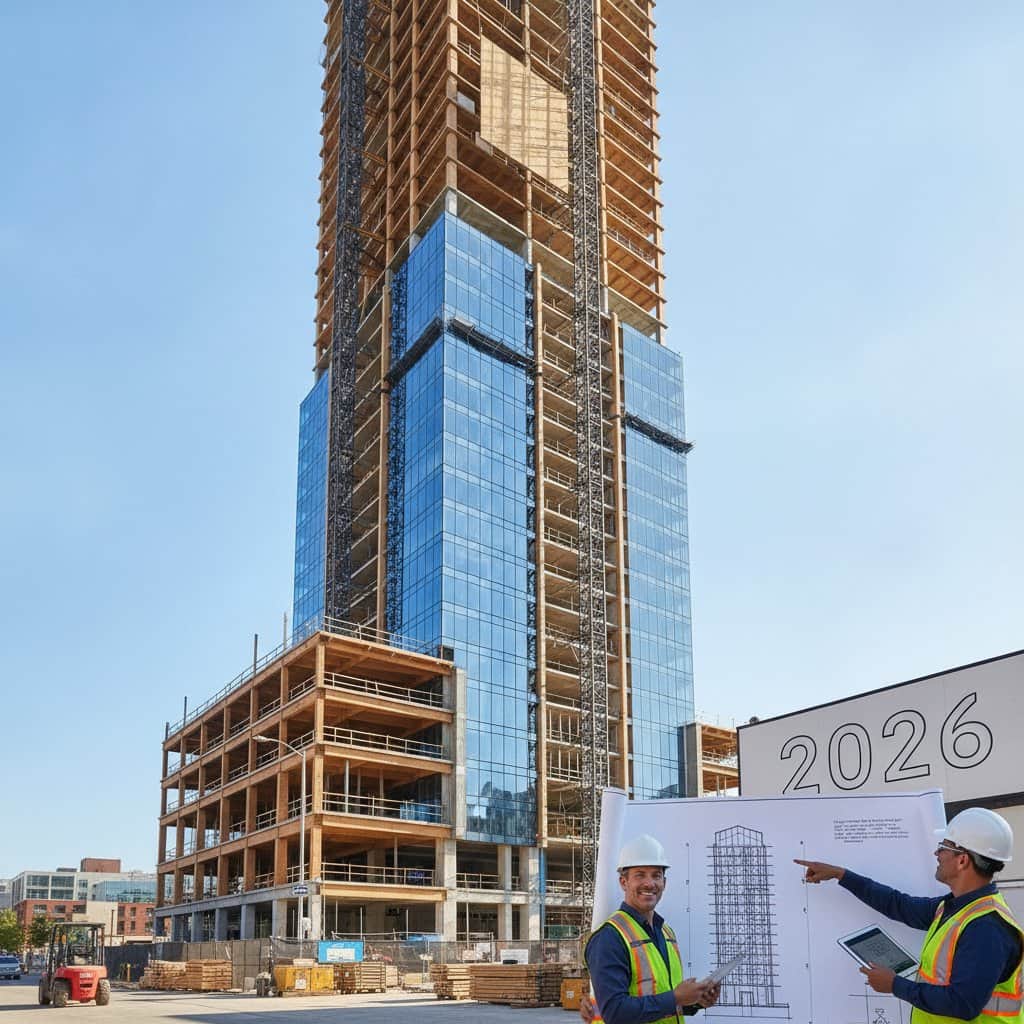
Site Preparation: Erect a concrete base for stability, as hybrid systems combine wood with minimal concrete. Cranes lift panels into place, starting from the foundation.
-
Assembly and Cladding: Connect modules with metal brackets and screws. Apply exterior cladding, such as metal panels or wood siding, to weatherproof the structure.
-
Finishing and Testing: Install mechanical systems, interiors, and safety features. Conduct inspections for structural integrity and fire resistance before occupancy.
This process demands coordination among architects, engineers, and contractors. Training programs equip teams with skills for mass timber handling.
Overcoming Challenges in Mass Timber Adoption
Moisture management requires careful detailing to prevent rot. Designers specify vapor barriers and ventilation, while treatments protect against insects.
Height limitations stem from fire codes in some regions. Advocacy groups push for updates based on performance data, allowing taller wood structures.
Supply chain logistics pose hurdles for remote sites. Partnerships with regional mills ensure availability, reducing transportation emissions.
Cost barriers diminish as production scales. Government incentives, such as tax credits for green buildings, encourage investment.
The Future of Mass Timber High-Rises
Innovations promise even taller wood buildings. Research explores hybrid composites that combine timber with recycled materials for superior strength.
Urban planners envision mass timber districts that lower citywide emissions. Policies in Europe and North America support this shift, targeting net-zero construction by 2050.
For developers, mass timber delivers competitive edges in marketing sustainable properties. Tenants seek eco-friendly homes, driving demand for these innovative towers.
Why Choose Mass Timber for Your Next Project
Mass timber transforms high-rise construction into a sustainable practice. It accelerates builds, enhances safety, and creates inviting spaces. As technology matures, wood reaches new elevations, offering lasting environmental and economic returns.
Projects using mass timber not only meet regulations but exceed expectations for resilience and beauty. Communities benefit from reduced pollution and preserved resources. Embrace this material to lead in responsible development.