Building with Air-Cleaning Concrete
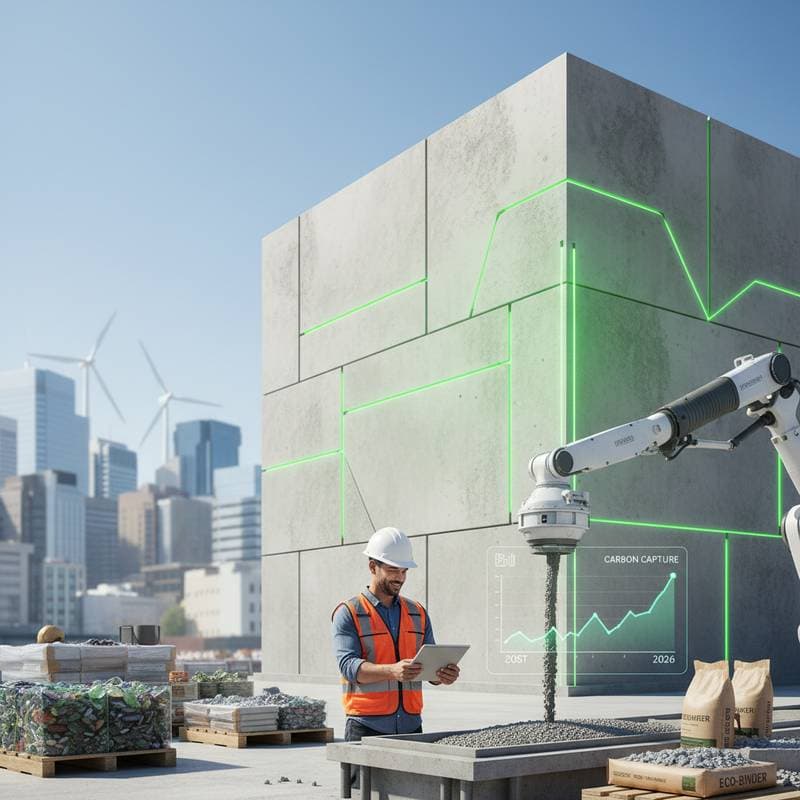
Visualize a construction site where fresh concrete hardens under the sun. Workers pour the mix for a foundation or driveway, creating a sturdy base for a home or structure. This concrete not only supports weight but also absorbs carbon dioxide from the atmosphere, turning a common building material into an environmental ally. By 2026, such carbon-negative concrete could cost 20 percent less than traditional options, making sustainable choices accessible for projects of all sizes.
The construction sector has long relied on concrete for its reliability. Recent advancements, however, address its environmental drawbacks. These innovations position carbon-negative concrete as a viable alternative that balances performance, cost, and planetary health.
Concrete's Environmental Impact
Concrete forms the backbone of modern infrastructure, from roads and buildings to dams and tunnels. Its production, however, contributes significantly to global carbon emissions. The process involves heating limestone to produce clinker, the primary component of Portland cement, which releases carbon dioxide through both fuel combustion and chemical reactions.
This emission occurs at scale. Worldwide, cement manufacturing accounts for about 8 percent of anthropogenic carbon dioxide output. Builders face pressure to reduce this footprint while maintaining material strength and affordability. Alternatives must endure harsh conditions, such as weathering and heavy loads, without compromising safety or longevity.
How Carbon-Negative Concrete Captures Carbon
Carbon-negative concrete reverses the emission cycle by sequestering more carbon dioxide than it produces. Developers achieve this through specialized binders and curing processes that integrate carbon into the material's structure. The result is a product that actively mitigates climate change while performing comparably to conventional mixes.
Key methods include using supplementary cementitious materials, such as fly ash from power plants or ground granulated blast-furnace slag. These byproducts replace portions of Portland cement, reducing the need for energy-intensive clinker production. Additionally, carbonation techniques allow the concrete to bind atmospheric or captured carbon dioxide into stable compounds.
Projections indicate that widespread adoption could lower costs through economies of scale. By 2026, manufacturing efficiencies and material sourcing improvements may reduce prices by 20 percent, positioning this concrete as a competitive option for residential and commercial applications.
Production and Application Process
Creating carbon-negative concrete follows familiar steps with enhanced chemistry. Producers start by selecting low-carbon binders and aggregates, then mix them with water to form the slurry. The innovation lies in integrating carbon capture at multiple stages.
Consider these core steps:
-
Binder Selection: Opt for geopolymer or magnesium-based binders that require lower temperatures for activation, minimizing energy use.
-
Carbon Integration: Introduce carbon dioxide during mixing or curing. In accelerated carbonation, the mix hardens in a chamber with controlled CO2 levels, forming calcium carbonate crystals that strengthen the material.
-
Curing Optimization: Allow the concrete to set under conditions that maximize carbon uptake, often resulting in faster strength gain than air-cured traditional mixes.
-
Performance Validation: Test samples for metrics like compressive strength, which typically reaches 30 to 50 megapascals, suitable for most structural uses.
In practice, this concrete pours and finishes like standard varieties. For a driveway, contractors can use it directly from the truck, applying standard tools for smoothing and edging. Facilities producing these mixes often incorporate recycled aggregates, further boosting sustainability.
Advantages for Construction Professionals
Builders benefit from carbon-negative concrete's compatibility with existing workflows. No specialized equipment is required; it integrates seamlessly into pouring, forming, and finishing routines. The material's enhanced durability reduces long-term maintenance, particularly in areas prone to freeze-thaw damage or chemical exposure.
Homeowners planning additions or renovations gain from upfront savings and environmental gains. A typical 100-square-meter driveway might cost several hundred dollars less by 2026, with added resistance to cracking extending its lifespan. Architects can specify it for projects seeking green certifications, simplifying compliance with sustainability standards.
Sourcing and Regional Availability
Availability varies by location, but production is expanding. Check with local ready-mix suppliers for carbon-reduced options, often labeled as low-carbon or eco-friendly blends. In regions with industrial hubs, byproducts like slag are readily accessible, supporting cost-effective manufacturing.
Pilot programs in urban areas demonstrate feasibility. Suppliers may offer trial batches for testing, allowing builders to verify performance before full adoption.
Performance Metrics and Cost Analysis
Carbon-negative concrete matches or surpasses traditional mixes in critical areas. Its compressive strength supports heavy loads, while improved chemical resistance wards off corrosion from salts or pollutants. Shrinkage during curing is minimized, reducing crack formation over time.
Cost comparisons highlight the shift:
-
Initial Price: Expected to drop 20 percent by 2026 due to scaled production and cheaper raw materials.
-
Lifecycle Savings: Lower repair needs offset any minor premiums in early adoption phases.
-
Thermal Properties: Retains heat storage capacity, aiding energy-efficient building designs.
Aesthetically, it accepts standard finishes like stamping or staining. For a garden path, select aggregates that match local stone for a natural look, ensuring seamless integration with surrounding landscapes.
Broader Environmental Gains
Each cubic meter of this concrete sequesters up to 0.5 kilograms of carbon dioxide net, scaling to significant reductions in large projects. Infrastructure like bridges or parking lots amplifies the impact, supporting community goals for lower emissions. Firms using it streamline reporting for certifications such as LEED, unlocking incentives and tax benefits.
Public initiatives, including walkways and benches in parks, showcase its potential. These applications demonstrate how material choices influence urban air quality without altering design aesthetics.
Key Steps for Implementation
Adopting carbon-negative concrete requires preparation. Verify supplier credentials through environmental product declarations, which detail carbon footprint and composition. Collaborate with contractors to tailor the mix to project specifications, such as required strength for slabs versus walls.
Address curing logistics: Pre-carbonated batches arrive ready for use, while on-site options suit custom pours. Review local codes to ensure compliance, as standards evolve to accommodate innovative materials.
For finishes, test samples to confirm color and texture. Aggregates influence appearance; river gravel yields a smooth surface, while crushed stone adds texture. In warm climates, schedule pours for cooler times to manage setting speed.
Safety protocols remain standard: Wear protective gear during handling to avoid skin or respiratory irritation. Sealed indoor uses, like countertops, provide durable, low-maintenance surfaces.
Future Developments in Sustainable Building
Advancements continue, with integrations like bio-based fibers for added tensile strength and digital tools for tracking carbon sequestration. Small producers adapt equipment for these mixes, broadening access beyond major markets.
As prices align, carbon-negative concrete will influence building norms. Professionals who adopt early position themselves for regulatory changes and client demands favoring sustainability.
Choosing Materials for Lasting Impact
Selecting carbon-negative concrete enhances project value without complexity. It delivers reliable performance, cost efficiency, and environmental responsibility. For your next build, prioritize suppliers offering verified low-carbon options to secure these benefits.
This approach builds not just structures but a foundation for cleaner communities. Explore local resources today to integrate it into upcoming plans.