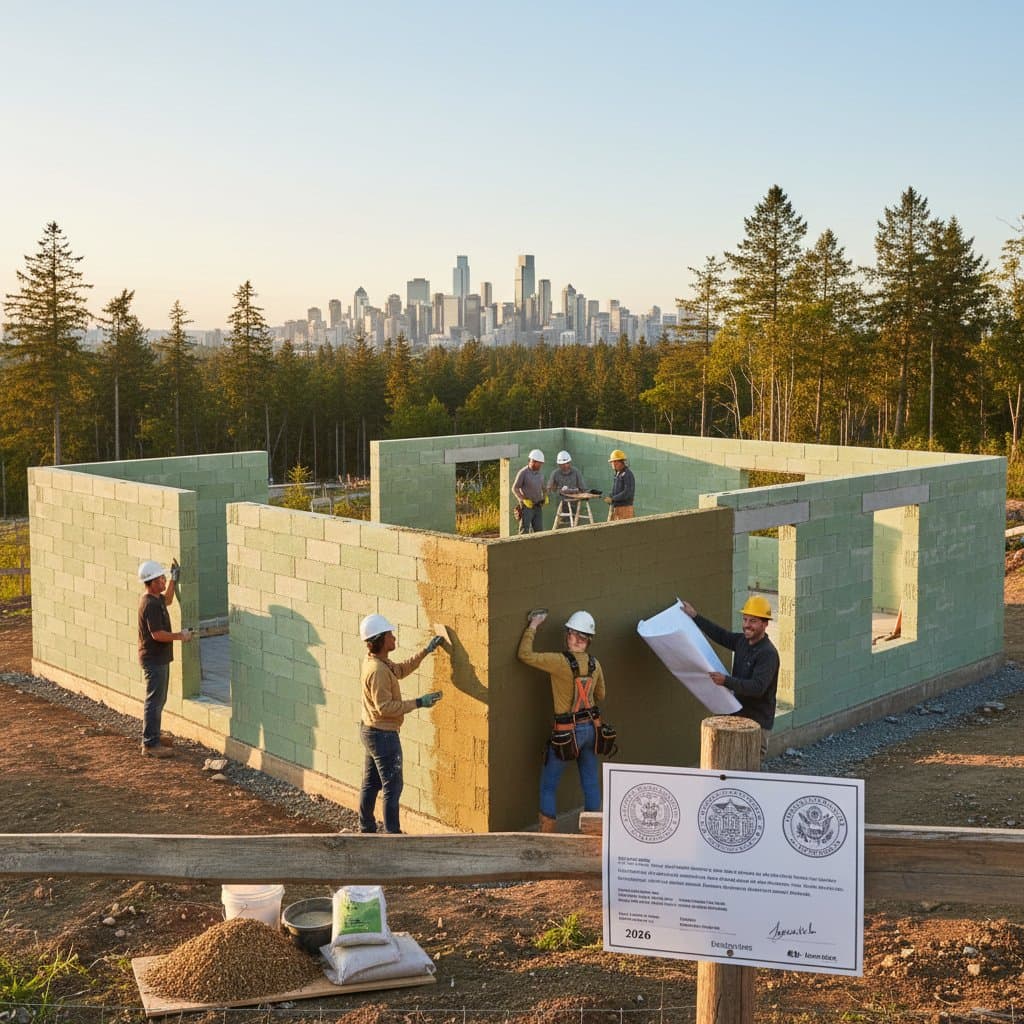
Hempcrete Walls Advance: Securing Nationwide Permits
Hempcrete represents a pivotal advancement in sustainable building materials. This composite, made from hemp hurds, lime binder, and water, forms breathable walls that sequester carbon and regulate indoor environments naturally. As official permits expand across the United States, builders and homeowners gain access to a versatile option that aligns with modern demands for low-impact construction.
Previously confined to experimental projects, hempcrete now integrates into mainstream practices. Regulatory bodies recognize its compliance with safety and performance standards, enabling widespread adoption. For those interested in eco-conscious design, this material offers durability, comfort, and environmental benefits.
Factors Driving Permit Approvals
Hempcrete faced initial hurdles due to unfamiliarity among building officials and gaps in standard codes. Recent developments address these challenges. Authorities in multiple states classify hempcrete under categories for bio-based and low-emission materials, streamlining approval processes.
A key driver is its environmental profile. Hemp plants capture atmospheric carbon during growth, and the resulting hempcrete locks this carbon into building structures for decades. In contrast, conventional concrete production releases substantial greenhouse gases, highlighting hempcrete's superior sustainability.
Scientific validation supports broader acceptance. Independent tests confirm hempcrete's resistance to fire, its thermal insulation capabilities, and structural longevity, often surpassing traditional requirements. This evidence equips builders with documentation to secure permits efficiently, reducing project timelines and uncertainties.
The Construction Process with Hempcrete
Incorporating hempcrete into a build follows established methods with unique adaptations. Projects typically start with a load-bearing frame of timber or metal. Workers then mix the hemp-lime slurry and apply it around the frame using formwork or manual tamping.
Consider these essential aspects:
-
Curing Timeline
Full curing requires two to four weeks, depending on climate and mix proportions. This extended period demands planning but allows for high-quality results through careful application. -
Vapor Permeability
Hempcrete allows moisture to pass through, preventing mold and condensation. Select compatible finishes such as lime-based plasters or silicate paints to maintain this property. -
Structural Role
With a density lower than concrete, hempcrete serves as non-load-bearing infill. It provides insulation and mass while relying on the frame for support. -
Material Sourcing
Procure certified hemp hurds and hydraulic lime from regional suppliers to ensure consistency. This approach minimizes carbon footprint from transport and supports quality control. -
Expert Involvement
Engage architects and contractors experienced in natural materials. Their knowledge of hempcrete's expansion and settling behaviors ensures compliance and performance.
Exploring Design Applications
Hempcrete enhances both contemporary and heritage projects. In new constructions, it complements minimalist elements, such as combining textured walls with glass facades for improved acoustics and natural light diffusion.
Renovations benefit from its retrofit potential. Hempcrete can fill cavities in existing frames, upgrading insulation without compromising breathability. For custom features, cast it into organic shapes for partitions or exterior accents.
The material's versatility extends to smaller endeavors. Garden structures or home extensions allow experimentation with on-site mixing, fostering a connection to the building process. Beyond traditional aesthetics, integrate hempcrete with modern materials like exposed steel for balanced, innovative designs.
Financial and Operational Insights
Upfront expenses for hempcrete may exceed those of synthetic alternatives, primarily from specialized sourcing and labor. However, lifecycle savings emerge through reduced energy use and minimal upkeep. Expect 20 to 30 percent lower heating costs in well-designed installations.
Adaptations for climate vary. In colder regions, thicker walls or hybrid systems with additional insulation optimize efficiency. Exterior protections, such as rainscreen cladding, safeguard against prolonged exposure.
Ongoing care involves periodic inspection of lime finishes. Reapply plaster as needed using basic tools; the process integrates seamlessly with the material's texture. As familiarity grows, permitting fees stabilize, and experienced teams expedite approvals with standardized documentation.
Broader Implications of Adoption
Nationwide permit expansions underscore a commitment to regenerative building practices. Unlike resource-intensive options, hempcrete derives from fast-growing hemp, sequesters emissions, and decomposes harmlessly at end-of-life.
Homeowners experience enhanced well-being from its hygrothermal regulation, which stabilizes humidity and temperature without mechanical intervention. This passive performance fosters healthier living spaces.
On a community level, hempcrete stimulates regional economies. Cultivation and processing generate employment in agriculture and manufacturing, promoting self-sufficient supply chains.
Experiencing Hempcrete in Daily Use
In occupied spaces, hempcrete contributes to subtle environmental harmony. Indoor air quality improves, and sound absorption creates serene atmospheres. Natural patina develops over time, enhancing architectural character.
Test the material on a modest scale before full commitment. An accent wall or outbuilding provides insight into its sensory qualities and practicalities.
Steps to Implement Hempcrete Projects
To proceed, identify certified suppliers and consult local building departments for guidelines. Review completed installations nearby to assess real-world applications. Partner with specialists to develop plans that meet regulatory and performance criteria, paving the way for successful, sustainable builds.