Hempcrete and Mycelium: Sustainable Alternatives to Concrete
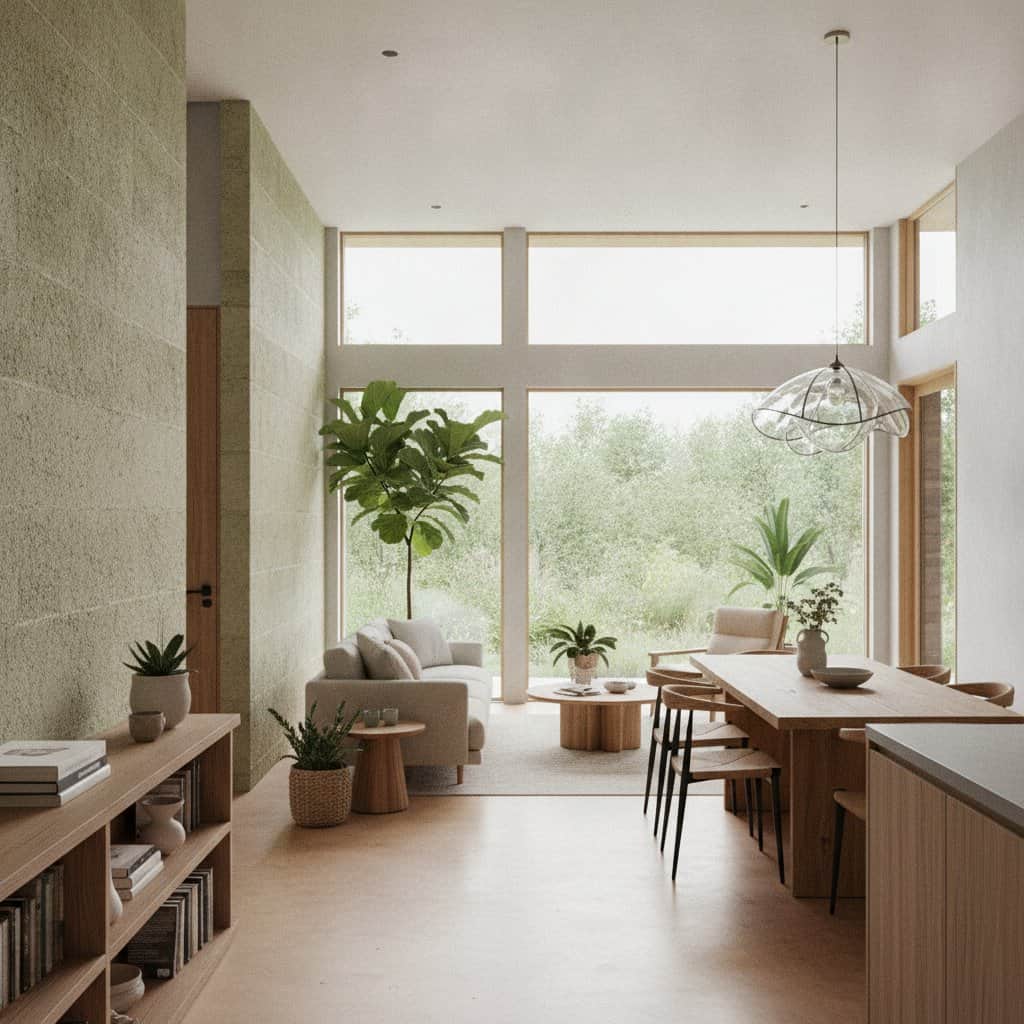
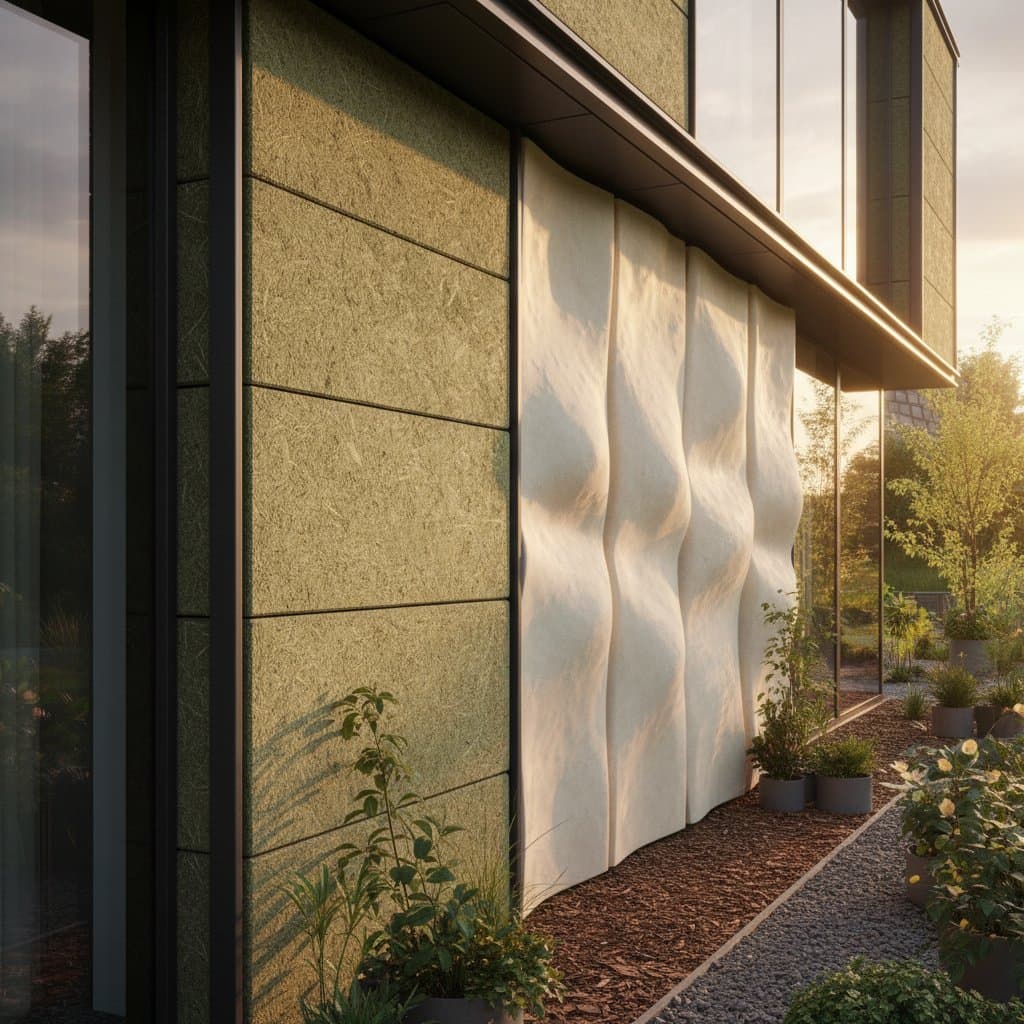
Visualize a wall that absorbs sunlight, maintains a comfortable temperature, and carries a subtle earthy aroma reminiscent of a damp forest. This is not concrete or standard drywall. It is hempcrete, a bio-based material revolutionizing construction. Nearby, mycelium panels, derived from fungal networks, provide organic strength and aesthetic appeal. These innovations create spaces that feel vibrant and connected to nature, contrasting sharply with the inert quality of traditional building materials.
The Environmental Burden of Concrete
Concrete has long dominated construction due to its strength and versatility. However, its production accounts for approximately 8 percent of global carbon emissions, primarily from cement manufacturing. The process releases significant CO2 and generates dust that impacts air quality during site work.
Architects and builders increasingly seek materials that balance durability with ecological benefits. Hempcrete and mycelium address this need by offering renewable options that sequester carbon and reduce energy demands in building envelopes.
Origins and Composition of These Materials
Hempcrete and mycelium derive from fast-growing, natural sources that actively capture atmospheric carbon. Hempcrete consists of hemp hurds, the fibrous inner core of the hemp plant, mixed with a lime-based binder and water. This combination forms a lightweight, porous matrix ideal for insulation.
Mycelium, the vegetative part of fungi, binds substrates such as agricultural byproducts including straw or wood chips. Grown in controlled environments, it creates composite materials without high-energy processing.
Both materials promote a regenerative approach, enhancing indoor environments through natural properties like humidity control and thermal regulation.
Mechanics of Hempcrete in Construction
Hempcrete serves as a non-load-bearing infill in framed structures, typically around timber or steel. The mixture cures through carbonation, where lime reacts with CO2 to strengthen the material while sequestering carbon over its lifespan.
**Primary benefits of hempcrete:
- Superior insulation: Provides R-values comparable to fiberglass, reducing heating and cooling needs by up to 50 percent.
- Humidity management: Absorbs and releases moisture to maintain optimal indoor levels, minimizing mold risk.
- Fire safety: Achieves Class 0 fire rating due to the lime component, outperforming many synthetic insulators.
- Durability: Structures endure for over 100 years with proper installation, requiring little upkeep.
Application involves casting the wet mix into forms or spraying it onto surfaces. Curing takes 4 to 6 weeks, during which the material gains density and acoustic damping qualities.
Cultivation and Application of Mycelium
Mycelium materials form through biological growth rather than mechanical assembly. Substrate is inoculated with fungal spores in molds, allowing the mycelium to colonize and bind the material in 5 to 7 days. A brief heat treatment halts growth, yielding rigid yet lightweight composites.
**Key advantages of mycelium:
- Structural efficiency: Offers compressive strength similar to particleboard at one-tenth the weight.
- Eco-disposal: Fully composts in soil within months, eliminating landfill waste.
- Design versatility: Molds enable complex geometries for panels, tiles, or fixtures.
- Noise reduction: Absorbs up to 50 percent more sound than foam alternatives.
These properties suit mycelium for non-structural uses, such as partitions or packaging, where customization enhances functionality.
Key Differences and Complementary Uses
Hempcrete provides robust thermal mass for exterior walls in moderate climates, integrating seamlessly with natural finishes. Mycelium excels in interior, low-load applications, allowing for innovative forms that add visual interest.
**Select hempcrete for:
- Projects prioritizing air quality and energy efficiency.
- Textured, monolithic surfaces in residential settings.
- Framed constructions needing infill insulation.
**Choose mycelium for:
- Modular elements like ceiling baffles or room dividers.
- Prototyping sustainable prototypes in design studios.
- Applications requiring end-of-life biodegradability.
Together, they enable hybrid systems that optimize performance across building types.
Implementation Strategies for Projects
Initial costs for hempcrete range from $10 to $20 per square foot, often comparable to premium insulation after factoring long-term savings. Mycelium remains pricier at $15 to $30 per panel due to emerging production scales, but grants for green building can offset expenses.
Source materials locally to minimize transport emissions; hemp regions in Europe and North America support established supply chains. Consult certified installers for compliance with building codes, which increasingly recognize these materials in energy-efficient standards.
**Essential guidelines for integration:
- Monitor environmental conditions during installation to ensure even curing.
- Apply vapor-permeable coatings to preserve breathability.
- Pair with compatible elements like reclaimed wood for holistic designs.
- Follow safety protocols, including ventilation, to handle binders effectively.
Maintenance involves periodic inspections for cracks, repaired with matching mixes, ensuring longevity without synthetic interventions.
Case Studies and Emerging Applications
Eco-villages in the UK employ hempcrete for self-build homes, achieving 40 percent lower embodied carbon than concrete equivalents. In the US, mycelium features in office acoustics, reducing echo while showcasing biophilic design.
Workshops offered by green building organizations demonstrate hands-on techniques, from mixing hempcrete to inoculating mycelium substrates. These initiatives foster adoption by revealing the materials' tactile and performative qualities.
Experiencing the Benefits in Daily Use
Spaces constructed with these materials exhibit stable microclimates, with temperature fluctuations reduced by 5 to 10 degrees Celsius. Air quality improves through natural filtration, contributing to occupant well-being.
Visitors often note the tactile warmth and subtle patterns, prompting discussions on sustainable practices. Such interactions highlight how these materials transcend utility to enhance lived experiences.
Steps to Incorporate in Your Build
Begin with pilot elements, such as hempcrete plasters in renovations or mycelium accents in interiors. Engage suppliers early to assess feasibility and secure materials. By starting modestly, projects build expertise while delivering measurable environmental gains.
These bio-materials transform construction into a restorative process, aligning structural integrity with planetary health.