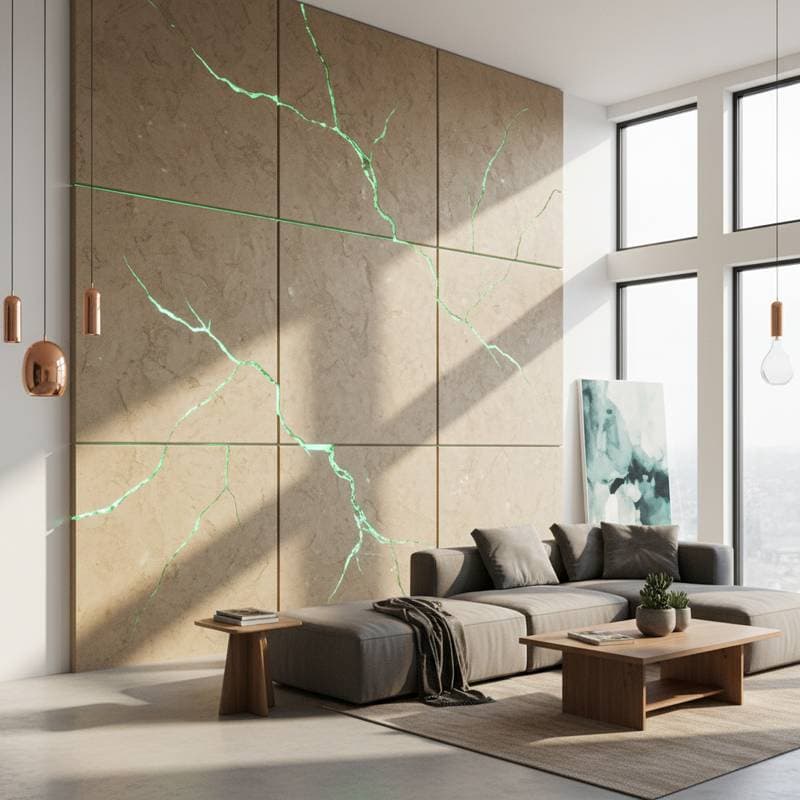
Key Takeaways
- Biocement walls incorporate living microorganisms to enable self-growth and repair.
- These materials reduce long-term maintenance requirements and material waste.
- They support sustainable homebuilding by offering durable, low-emission alternatives to conventional concrete.
Understanding Biocement Walls
Biocement represents a breakthrough in construction technology, where building materials embed viable microorganisms to facilitate self-healing properties. Unlike traditional concrete, which often requires ongoing repairs for cracks and degradation, biocement activates biological processes to restore integrity autonomously.
The core principle involves integrating bacteria, such as species from the Bacillus genus, into the cement matrix during production. These bacteria remain dormant until triggered by environmental factors like water infiltration. Upon activation, they metabolize nutrients within the material to precipitate calcium carbonate, effectively sealing fissures and reinforcing the structure.
This process not only addresses immediate damage but also contributes to gradual strengthening over time. Research indicates that self-healed cracks in biocement can regain up to 80 percent of their original strength, extending the lifespan of walls and reducing the frequency of interventions.
The Mechanism Behind Self-Healing
To grasp how biocement functions, consider the biological and chemical interactions at play. The bacteria are encapsulated in protective spores mixed into the cement aggregate. When a crack forms—perhaps due to settling, thermal expansion, or minor seismic activity—water penetrates the breach.
This moisture rehydrates the spores, awakening the bacteria. The organisms then utilize calcium ions and urea or other substrates present in the mix to produce calcite crystals through a process known as microbial-induced calcite precipitation. These crystals fill the void, bonding seamlessly with the surrounding material.
Key advantages emerge from this mechanism:
- Autonomous Repair: Cracks up to 0.8 millimeters wide can heal within weeks under typical humidity conditions.
- Eco-Efficiency: Production requires less heat and energy compared to Portland cement, cutting emissions by up to 50 percent.
- Waste Reduction: Fewer repairs mean less demolition and replacement, conserving resources.
- Enhanced Durability: The material resists further degradation, performing well in varied climates.
Engineers have tested biocement in real-world scenarios, including bridge repairs and facade panels, demonstrating its reliability. For residential applications, this translates to walls that maintain structural integrity without constant oversight.
Benefits for Sustainable Construction
Adopting biocement aligns with global pushes toward greener building practices. Traditional concrete production accounts for approximately 8 percent of worldwide carbon dioxide emissions, largely from limestone calcination. Biocement mitigates this by incorporating industrial byproducts like fly ash or slag, which serve as bacterial nutrients and reduce reliance on virgin materials.
Homeowners benefit from lower lifecycle costs. Initial investments may exceed those of standard concrete by 10 to 20 percent, but savings accrue through diminished repair expenses and energy-efficient performance. Insulated biocement walls, for instance, provide thermal regulation, potentially lowering heating and cooling demands by 15 percent.
Environmentally, these walls support biodiversity integration. Some formulations allow for embedded plant-friendly substrates, fostering living facades that improve air quality and urban ecosystems. This holistic approach positions biocement as a cornerstone of regenerative architecture.
Considerations Before Incorporating Biocement
While promising, biocement demands careful planning to maximize effectiveness. Builders must evaluate site-specific factors to ensure optimal performance.
Selecting Experienced Professionals
Engage contractors with expertise in bio-based materials. Verify their portfolio for projects involving microbial technologies or sustainable composites. Organizations like the International Union of Laboratories and Experts in Construction Materials offer certifications that signal proficiency. During consultations, discuss integration with existing designs, such as combining biocement panels with steel framing for hybrid strength.
Managing Environmental Conditions
Biocement thrives in environments with moderate humidity, ideally between 40 and 70 percent. In arid regions, incorporate vapor-permeable finishes to retain necessary moisture without promoting mold. For humid climates, ensure ventilation systems prevent excess water accumulation, which could overstimulate bacterial activity. Climate modeling tools can predict long-term exposure and guide adjustments.
Navigating Regulatory and Cost Aspects
Check local building codes, as biocement may require special approvals for its biological components. Costs vary by scale; small residential projects might add $5 to $10 per square foot, offset by incentives from green building programs. Pilot testing a sample wall section allows assessment of performance before full commitment.
Embracing Emerging Technology
As an evolving field, biocement benefits from ongoing research. Collaborate with material suppliers who provide lab-verified strains of bacteria tailored to regional conditions. Stay informed through industry forums to adopt refinements, such as genetically enhanced microbes for faster healing.
Daily Life with Biocement Walls
Once installed, biocement walls demand minimal upkeep, blending seamlessly into daily routines. Routine cleaning with mild, pH-neutral solutions preserves the material's porosity, allowing bacterial activation when needed. Avoid impermeable paints or sealants that could block moisture exchange.
Over years, the walls may exhibit subtle aesthetic changes, such as a mottled texture from mineral deposition, adding character to interiors and exteriors. This organic evolution enhances the sense of a responsive living space. Residents report greater peace of mind, knowing their home adapts to wear without disruptive fixes.
Integration with smart home systems further simplifies maintenance. Sensors can monitor humidity and crack formation, alerting owners to optimal conditions for healing or minor adjustments.
Frequently Asked Questions
Can biocement fully substitute traditional concrete in large-scale projects?
Currently, it suits non-load-bearing elements like walls and partitions. Advances in bacterial density and mix ratios are expanding applications to beams and foundations, with prototypes showing promise for broader use.
Do the bacteria in biocement pose health risks to occupants?
No, the selected strains are non-pathogenic and remain inert without water. Encapsulation ensures they do not migrate into living spaces, and testing confirms safety comparable to standard building materials.
How long does the self-healing process take?
Healing initiates within days of water exposure and completes in 2 to 4 weeks, depending on crack size and ambient conditions. Larger fissures may require multiple cycles for full restoration.
Is biocement suitable for all climates?
It performs best in temperate zones but adapts to extremes with formulation tweaks. Freeze-thaw cycles in cold areas necessitate protective additives to safeguard bacterial viability.
Realizing the Potential of Self-Healing Homes
Biocement walls embody a shift toward architecture that collaborates with nature rather than resisting it. By enabling structures to mend and fortify themselves, this technology not only cuts environmental costs but also delivers enduring value to inhabitants. As adoption grows, expect biocement to redefine resilience, making homes that are as dynamic and sustainable as the world they inhabit.