TL;DR
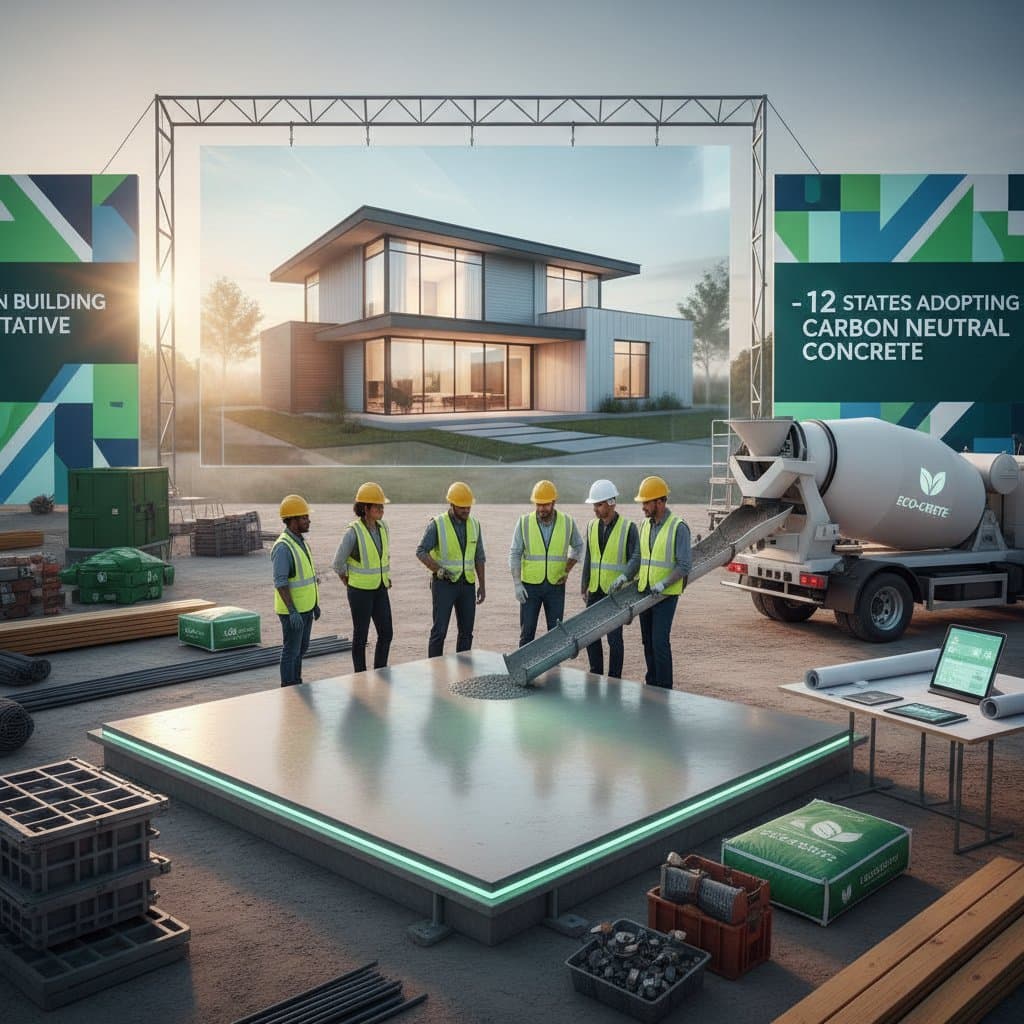
- Twelve states require carbon-neutral concrete for public projects.
- Builders and homeowners maintain budgets through strategic material selection.
- Early adoption of sustainable concrete enhances property value and ensures compliance with evolving standards.
Understanding Carbon-Neutral Concrete
Carbon-neutral concrete achieves a balance in carbon emissions produced during its manufacturing process. Traditional cement production involves heating limestone, a step that releases significant carbon dioxide. Manufacturers of carbon-neutral concrete replace a portion of the cement with supplementary materials such as fly ash, slag, or calcined clay. Additionally, some facilities implement carbon capture technologies to prevent emissions from entering the atmosphere.
This approach yields a product that matches the performance of conventional concrete while minimizing environmental impact. The material retains equivalent strength, durability, and aesthetic qualities. Builders achieve these benefits without sacrificing structural integrity.
Key Features:
- Incorporates recycled or alternative materials to lower emissions.
- Delivers performance comparable to traditional concrete.
- Complies with most state building codes and regulatory agencies.
- Involves a modest upfront cost increase, offset by potential long-term savings through efficiency and incentives.
Impact of State Mandates on Construction Projects
State mandates influence material selection and project timelines in construction. Twelve states have implemented requirements for certified carbon-neutral or low-carbon concrete in public projects. Private developments face no universal obligation at present, yet suppliers increasingly transition away from high-emission mixes. Consequently, even non-mandated builds incorporate sustainable options as availability shifts.
Consider a practical case: A contracting firm in a mandated state sourced concrete from a local plant. Following the policy change, the supplier modified its production to meet standards. The price adjustment amounted to approximately three percent, yet the firm reported enhanced client satisfaction due to alignment with green building trends.
Adopting these materials ahead of requirements positions properties favorably in the market. Prospective buyers prioritize features like carbon-neutral construction, which signal long-term sustainability and potential resale advantages.
Advantages and Disadvantages of Carbon-Neutral Concrete
Carbon-neutral concrete offers environmental benefits and durability, though it presents minor challenges in cost and logistics.
Advantages:
- Reduces carbon emissions by up to 70 percent compared to standard mixes.
- Exhibits enhanced strength and longevity in load-bearing applications, with some formulations surpassing traditional benchmarks.
- Improves thermal mass properties, contributing to better energy efficiency in buildings.
- Qualifies projects for incentives, including tax credits and certifications under programs like LEED.
**Disadvantages:**n- Entails a higher initial cost, typically 5 to 10 percent more than conventional options.
- Demands precise planning, including specific curing protocols to optimize performance.
- Availability fluctuates based on regional supply chains and production capacity.
Initial pricing comparisons may appear daunting, but factors such as reduced offset requirements and incentive programs often balance the equation. As mandates proliferate, economies of scale drive costs downward, making sustainable choices more accessible.
Essential Questions for Builders and Suppliers
Effective communication ensures informed decisions in material selection. Focus inquiries on certification, performance, and practicality to align with project goals.
Recommended Questions:
- Does the concrete mix hold certification for carbon neutrality from an accredited organization, such as the Carbon Leadership Forum?
- What percentage of carbon reduction does this mix achieve relative to standard formulations?
- Are special curing methods or additives necessary for optimal results?
- What is the expected lead time for delivery and installation?
- Can examples of completed projects using this mix be provided, including performance data?
These questions demonstrate a commitment to quality and regulatory adherence, fostering productive partnerships with suppliers.
Frequently Asked Questions
Question: Does carbon-neutral concrete differ in appearance from traditional concrete?
Answer: No significant visual differences exist after curing. The material supports standard finishing techniques, including staining, polishing, and stamping.
Question: Is carbon-neutral concrete suitable and reliable for foundation work?
Answer: Yes, it meets or exceeds safety standards. Testing often reveals superior compressive strength and resistance to water penetration.
Question: Can carbon-neutral concrete be specified for private projects in non-mandated states?
Answer: Yes, suppliers commonly provide these options voluntarily, allowing proactive adoption of sustainable practices.
Question: How might carbon-neutral concrete influence project timelines?
Answer: Minor delays of a few days may occur due to curing variations or sourcing logistics. Advance coordination with contractors mitigates these effects.
Question: Does using carbon-neutral concrete support access to tax benefits or certifications?
Answer: Frequently, it contributes to green building qualifications, elevating a property's efficiency rating and eligibility for financial incentives.
Strategies for Sustainable Construction Success
Integrating carbon-neutral concrete streamlines the path to eco-friendly building. Select experienced professionals, evaluate supplier certifications, and incorporate timeline buffers for seamless execution. These steps not only ensure compliance but also deliver enduring value through reduced environmental impact and enhanced market appeal.