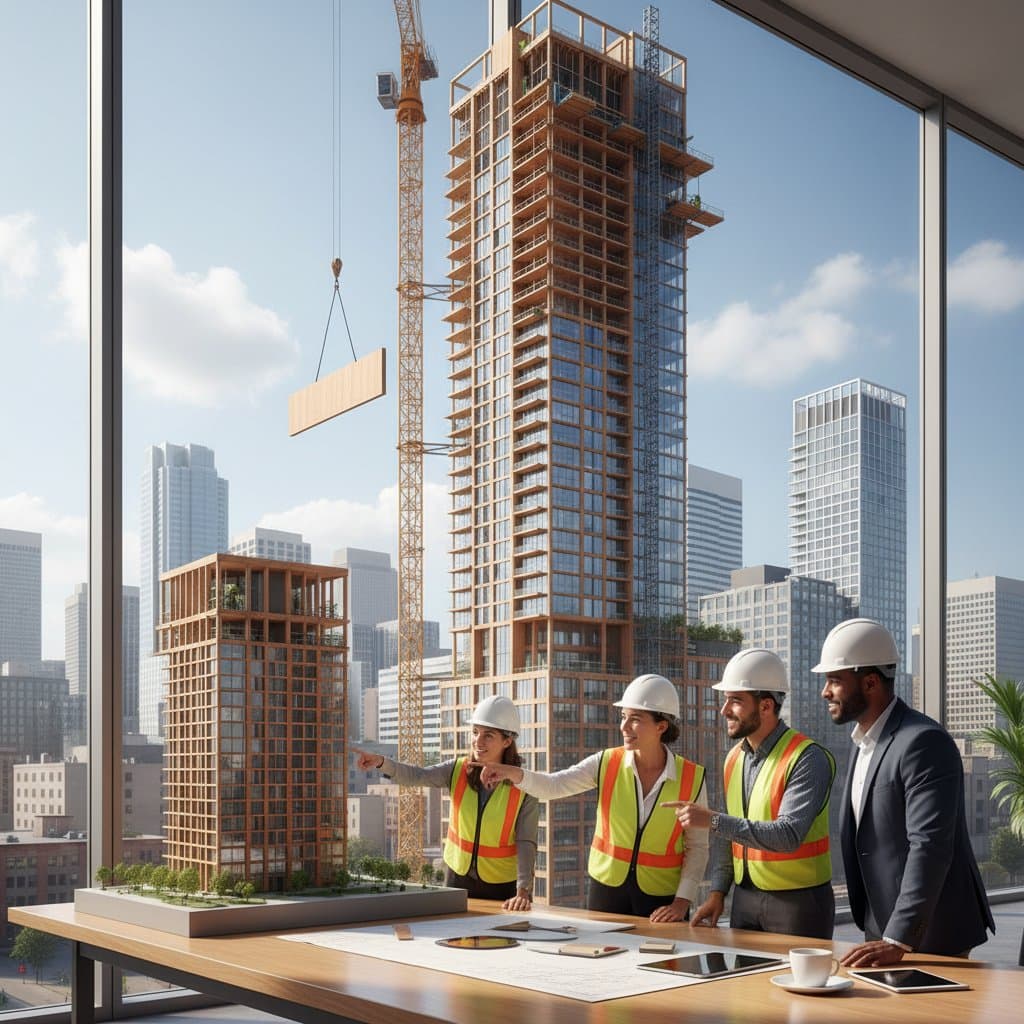
Mass Timber Emerges: 2026 Codes Permit 18-Story Heights
Visualize a city skyline where structures blend natural warmth with modern height. Mass timber buildings feature visible wood grains through glass facades, creating an inviting urban presence. These developments signal a shift toward sustainable construction practices.
Mass timber introduces a serene quality to interiors that concrete structures lack. Walls appear vital, and acoustics soften ambient noise. The 2026 code changes, which allow towers up to 18 stories, extend this appeal to larger scales.
Opportunities for Builders and Designers
Mass timber gains traction through prefabricated components that ensure precision. Designers value the inherent warmth of exposed wood surfaces. Previous height limits confined projects to mid-rise levels, but the updated codes enable taller applications.
This evolution transcends technical aspects. Cities now prioritize sustainability, construction speed, and aesthetic integration. Wood serves as a renewable resource, weighs less than concrete, and assembles more rapidly. Developers of major projects can leverage these attributes to influence future skylines.
Defining Mass Timber
Mass timber encompasses engineered wood products formed by layering and bonding lumber for enhanced strength. Cross-laminated timber, or CLT, involves gluing lumber layers at perpendicular angles and stands as the most recognized variant. Other forms include glue-laminated beams and nail-laminated panels, each suited to specific structural roles.
Engineers achieve stability by alternating grain directions, which minimizes warping and supports substantial loads. Fire resistance exceeds common expectations. Exposure to heat causes an outer char layer that insulates the interior, yielding a consistent burn rate for reliable safety modeling.
Significance of 18-Story Permissions
The 18-story limit aligns mass timber with conventional concrete and steel frameworks. Developers can now employ timber as the primary structural element in residential complexes, hotels, and office buildings, rather than limiting it to finishes.
Environmental benefits prove compelling. Timber sequesters carbon during growth and maintains it in structures. Manufacturing demands lower energy inputs, and sourcing from managed forests supports ecological balance. Projects often reduce overall building weight by up to 50 percent, which lowers foundation requirements and crane usage.
Such efficiencies scale effectively in high-rises, yielding reductions in construction timelines and emissions. These buildings deliver contemporary aesthetics alongside responsible performance.
Shifts in Construction Workflow
Mass timber construction diverges from standard methods through off-site preparation. Components arrive pre-engineered for seamless integration, resembling large-scale assembly. Workers focus on accurate positioning rather than extensive on-site fabrication.
The typical sequence includes:
- Design and simulation: Teams create detailed digital models to specify connections and joints.
- Off-site production: Specialized mills manufacture panels, often using regional facilities for CLT.
- Site erection: Cranes position oversized panels, secured by bolts and metal connectors for swift installation.
- Surface treatment: Coatings protect exposed wood, enhancing grain visibility while guarding against moisture.
Observers note that mid-rise timber projects complete framing in weeks, minimizing noise and site disruption. Precise panel fits create an efficient, puzzle-like progression.
Developer Considerations
Budget concerns dominate initial evaluations. Material costs per unit may align with concrete, yet savings arise from reduced labor, fewer shipments, and simplified foundations. Total structural expenses often match mid-tier alternatives, with superior durability over time.
Maintenance requires attention to environmental factors. Control moisture levels, apply permeable finishes, and schedule joint inspections. Select suppliers versed in regional conditions; coastal projects benefit from humidity-resistant treatments, while arid zones suit minimal sealants that retain natural hues.
Reputable regional producers include SmartLam, Structurlam, and Freres Lumber. These entities provide tailored fabrication and prompt delivery. Local sourcing cuts transport emissions and expenses.
Aesthetic and Functional Advantages
Mass timber transforms interior environments with its tonal range, from light spruce to rich Douglas fir, fostering warmth unattainable through coatings. Sunlight interacts softly with surfaces, diffusing rather than glaring.
Designers account for specific traits:
- Illumination: Deeper wood shades absorb light; pair with expansive glazing or reflective elements.
- Sound management: Wood alters reverberation compared to gypsum boards; integrate absorbers or textiles for equilibrium.
- Compliance: Collaborate with authorities to align fire test results with jurisdiction standards.
These elements integrate readily once addressed. Routine care involves gentle cleaning tools to maintain beam surfaces, as textures resist marks effectively.
Urban Transformations
Rising mass timber towers extend benefits beyond architecture. Regional economies grow through expanded lumber processing and employment in forestry. Carbon retention integrates into city frameworks, while diversified supply chains lessen reliance on global steel and cement imports.
Occupants experience enhanced comfort in these structures. Natural humidity regulation promotes healthier air quality. Professionals report lower stress levels in timber offices, attributing calm to biophilic connections amid urban density.
Integrating Mass Timber Projects
Prospective users begin by consulting suppliers and inspecting existing installations. Engage engineers with proven timber expertise. Industry networks facilitate knowledge sharing among practitioners.
Mass timber evolves from experimental choice to standard option, harmonizing innovation with ecological priorities. Proactive preparation positions projects advantageously as codes activate. This approach builds on solid foundations, layer by layer, toward elevated, sustainable urban forms.