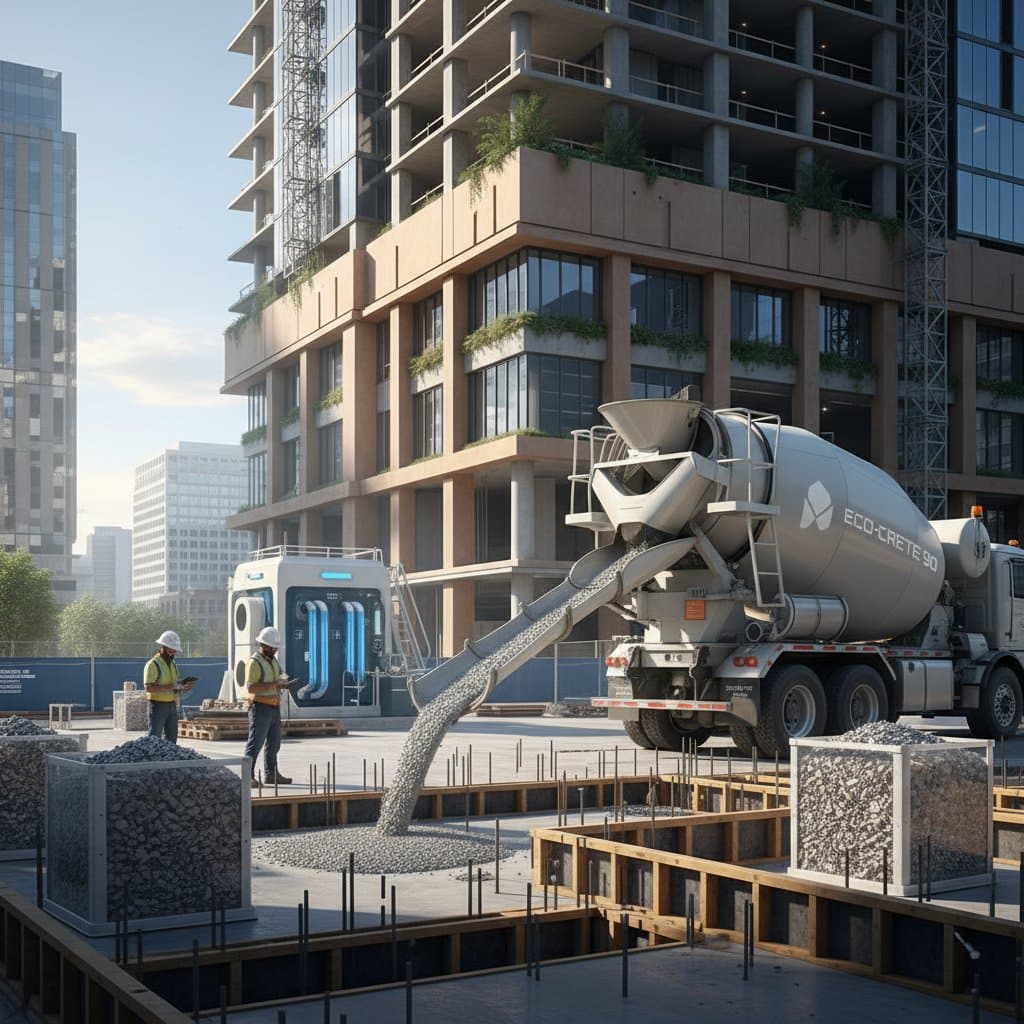
2026 Concrete Reduces Builder Emissions by 90 Percent
Picture a newly poured concrete slab that remains cool to the touch. A faint scent of fresh cement fills the air as you survey the construction site and recognize a significant advancement. The material applied here differs from the carbon-intensive concrete used for generations. This advanced formulation slashes emissions by nearly 90 percent and has the potential to redefine the creation of homes, pathways, and high-rises.
During my initial experience with an eco-friendly concrete blend on a modest patio installation, the supplier explained its composition of recycled aggregates and captured carbon. Skepticism gave way to interest as it flowed evenly, set uniformly, and appeared indistinguishable from standard concrete. The true distinction lay in the reduced environmental impact and the implications for construction's evolution.
This development extends beyond a single material. It represents a fundamental change for contractors, architects, and property owners seeking durability, visual appeal, and environmental responsibility in a single application.
Turning Concrete into a Climate Asset
Advancements in materials engineering transform concrete from an environmental challenge into an asset for sustainability. The 2026 concrete formulation, now attracting widespread interest, integrates low-carbon cement, recycled aggregates, and carbon capture methods to achieve substantial emission reductions while preserving structural performance and longevity.
Builders achieve up to a 90 percent decrease in carbon output relative to conventional mixtures. On major infrastructure projects, this reduction proves transformative. Even residential endeavors accumulate meaningful environmental benefits over time.
These modern concretes maintain the familiar appearance and handling characteristics of traditional options. Contractors require no alterations to equipment, personnel, or processes. Selection of an enhanced mixture suffices for immediate progress.
Key Factors for Builders and Property Owners
Adopting eco-conscious materials demands alignment with project constraints such as budget, timeline, and upkeep requirements. Consider the following aspects when evaluating low-carbon concrete for implementation.
Pricing and Accessibility
Costs fluctuate by location, yet these specialized mixtures typically incur only a modest premium over standard varieties. The variance often stems from proprietary cement compositions or integrated carbon sequestration processes. Widespread use anticipates further price stabilization.
For residential upgrades like patios or bases, the incremental expense remains minimal. In expansive developments, incentives from carbon offset programs or sustainability certifications frequently balance the upfront investment.
Local distributors prove essential in my experience. Inquire with manufacturers such as Holcim or Lafarge, alongside regional innovators developing reduced-emission options. These providers readily supply performance metrics and trial quantities.
Structural Integrity and Functionality
Extensive testing confirms that contemporary formulations equate or exceed the load-bearing capacity of legacy mixes. Certain variants demonstrate superior resistance to compression or moisture infiltration. Such reliability supports applications from foundational supports to ornamental features.
In regions with harsh weather, review curing protocols carefully. Eco-variants may require extended setting periods or regulated humidity to optimize outcomes.
Handling and Surface Quality
Mix consistency can differ subtly among low-carbon options. Some offer a smoother viscosity, others a coarser grain. Skilled applicators adjust with ease. Employing a moistened trowel often yields uniform finishes.
Aesthetic treatments remain fully compatible. Polishing, coloring, or texturing proceeds identically to conventional concrete, preserving design flexibility.
Upkeep and Endurance
Carbon-sequestering concrete develops greater density over time, enhancing resistance to fracturing and wear. This trait translates to reduced repairs and extended service life. From an ecological standpoint, prolonged usability minimizes resource consumption and additional emissions.
Inspection of an early low-carbon installation revealed pristine condition after enduring multiple cycles of precipitation and freezing temperatures. Observing such resilience underscores the dual benefits of sustainability and practicality.
Steps for Seamless Adoption
Incorporating sustainable materials need not disrupt operations. Follow these structured approaches to integrate low-carbon concrete into upcoming constructions or refurbishments.
- Initiate with modest applications. Test the material on non-critical elements like garden paths, outbuilding foundations, or entryways to familiarize teams with its properties.
- Engage suppliers promptly. Request details on formulations, delivery schedules, and setting recommendations. Providers typically furnish comprehensive datasheets and test results.
- Prepare the workforce. Minor modifications in water ratios or surface preparation ensure optimal execution, despite the similarities to standard practices.
- Inform stakeholders. Highlight the environmental advantages to clients, fostering appreciation for the project's reduced impact and enhancing satisfaction.
- Record outcomes. Capture images of installation phases, log setting durations, and assess long-term performance to build evidence for future decisions.
Case Studies in Large-Scale Application
Urban initiatives and commercial operations demonstrate the viability of low-carbon concrete in demanding environments. Public walkways, multilevel garages, and housing bases now utilize these mixtures with consistent success. Participants note streamlined regulatory adherence alongside reliable results.
A coastal contractor applied a carbon-capturing variant to a pier access path. The material withstood corrosive marine conditions effectively, surpassing prior benchmarks, while the owner valued its role in atmospheric carbon retention. Similarly, a residential specialist installed a low-emission driveway for a sustainability-focused client. The outcome featured enhanced smoothness and thermal comfort during warm weather.
These accounts illustrate that eco-innovations operate effectively today, advancing one project at a time.
Building on Sustainable Ground
Opting for near-zero-emission concrete surpasses mere compliance. It establishes a base that actively contributes to planetary health. Each installation with minimized emissions curtails atmospheric pollutants and reinforces ethical construction principles.
Design elements remain unaltered in texture or appearance. Polished thresholds, seamless counters, or textured outdoor spaces retain their intended character. The underlying transformation proves subtle yet profound, exemplifying deliberate advancement in the field.