Hempcrete Walls: Fire-Safe and Carbon-Negative Construction
An old photograph of a traditional farmhouse, with its sturdy stone walls bathed in afternoon light, evokes a sense of enduring simplicity. Modern builders seek that same reliability in sustainable materials like hempcrete, which blends ancient principles with innovative performance.
Hempcrete emerges as a compelling option in contemporary construction. Professionals and homeowners alike recognize its potential for creating comfortable, environmentally responsible structures. The material integrates seamlessly into designs that prioritize both aesthetics and functionality.
Understanding Hempcrete Composition
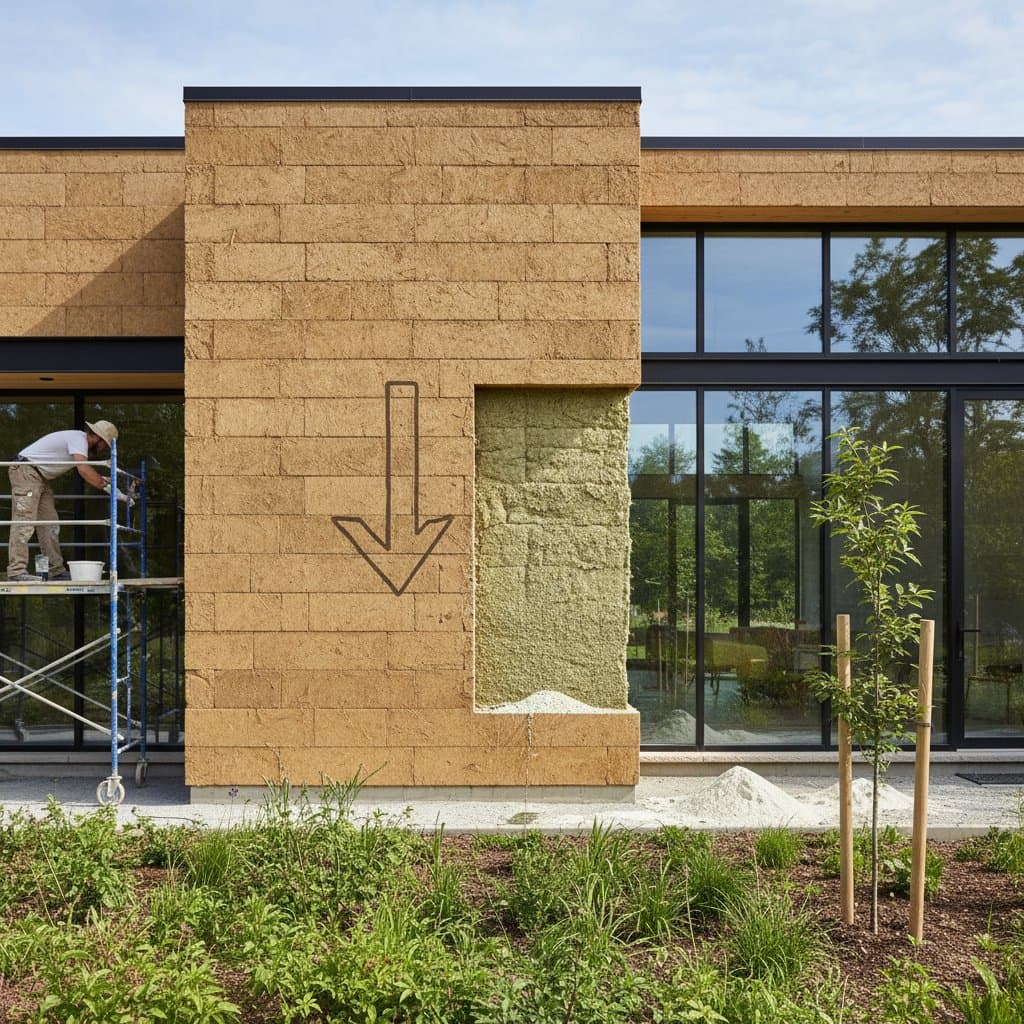
Hempcrete consists of hemp hurds, hydraulic lime, and water. These components form a lightweight, porous mixture that cures into a durable, insulating wall infill. It complements structural elements such as timber frames, providing thermal and moisture regulation without bearing load.
The finished surface offers a tactile appeal, with a subtle texture from embedded hemp fibers. This natural composition contributes to acoustic absorption and a neutral, non-toxic environment.
Key Advantages Driving Adoption
Hempcrete gains traction among builders due to its fire resistance, carbon sequestration capabilities, and contributions to indoor air quality. These attributes address common concerns in conventional building practices, such as flammability, emissions, and moisture-related issues.
-
Fire Resistance
Hempcrete achieves high fire ratings through its lime-based binder, which forms a protective char layer during exposure. Independent tests demonstrate that walls maintain integrity for over two hours under standard fire conditions, outperforming many synthetic insulations. -
Carbon-Negative Properties
Hemp plants sequester carbon dioxide rapidly during growth, capturing up to 15 tons per hectare annually. The lime in hempcrete reabsorbs additional CO2 during carbonation, resulting in a net carbon sink that offsets emissions from production and use. -
Improved Indoor Air Quality
The material's vapor permeability allows walls to absorb and release moisture, maintaining humidity levels between 40 and 60 percent. This process inhibits mold growth and reduces reliance on mechanical ventilation systems.
Experiencing Hempcrete in Daily Life
Residents in hempcrete homes report consistent indoor temperatures, with variations limited to 2-3 degrees Celsius throughout the day. The material's thermal mass absorbs daytime heat and releases it gradually at night, fostering a stable microclimate.
Light interacts softly with the textured surfaces, creating diffused illumination that enhances spatial comfort. The absence of volatile organic compounds ensures cleaner air, promoting well-being without artificial additives.
Practical Applications for Projects
Hempcrete suits a range of construction scenarios, from new builds to retrofits. Consider its use in non-load-bearing elements to maximize benefits while adhering to local codes.
- Exterior Walls: Provides insulation values equivalent to R-20 per 12 inches, ideal for energy-efficient envelopes.
- Interior Partitions: Enhances soundproofing in multi-room layouts.
- Climate Adaptability: Excels in temperate zones by managing seasonal humidity fluctuations.
Finishes include limewash for breathability or earth plasters for added durability. Proper installation ensures longevity exceeding 100 years with routine checks.
The Construction Process
Hempcrete application involves straightforward steps that emphasize precision and natural curing.
- Preparation: Blend hemp hurds with lime and water to achieve a damp, packable consistency.
- Installation: Pack the mixture into formwork around structural framing, aiming for uniform density of 300-400 kg per cubic meter.
- Curing Period: Allow 28 days for initial set, with full strength developing over six months in controlled conditions.
- Surface Treatment: Remove forms and apply protective coatings if desired, preserving the material's permeability.
This method encourages hands-on involvement, yielding walls with organic variations that add character.
Evaluating Costs and Value
Initial costs for hempcrete range from 20 to 50 percent higher than fiberglass insulation due to specialized labor. However, lifecycle savings from reduced energy use, estimated at 30 percent lower bills, offset premiums within five to seven years.
Strategic implementation, such as in high-exposure areas, optimizes budgets. Pairing with passive design elements amplifies returns on investment.
The Broader Impact of Hempcrete
As awareness of climate challenges grows, materials like hempcrete support regenerative building. Hemp cultivation enriches soil and requires minimal inputs, aligning with circular economy principles.
This approach enables structures that contribute positively to ecosystems, reducing the construction sector's 39 percent share of global emissions.
Integrating Hempcrete into Your Build
To incorporate hempcrete effectively, consult certified installers familiar with regional regulations. Prototype small sections to assess integration with existing designs.
Combine with complementary materials like straw bale or rammed earth for hybrid systems that enhance resilience. This thoughtful selection creates homes that endure while minimizing environmental footprint.
Hempcrete redefines wall performance, offering protection, sustainability, and subtle elegance.