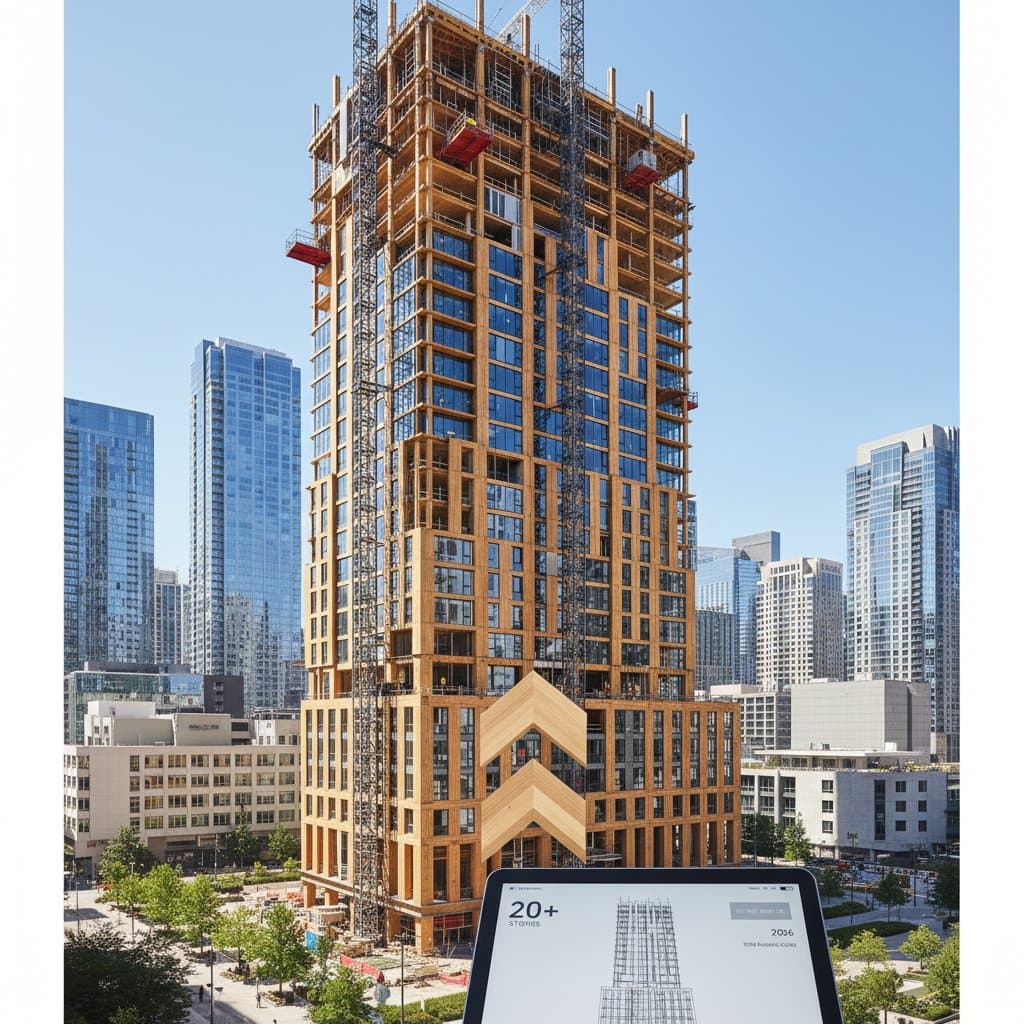
Mass Timber Codes Unlock Taller Wood Buildings in 2026
Mass timber construction represents a shift toward sustainable building practices. These engineered wood products, such as cross-laminated timber, offer robust alternatives to traditional materials like steel and concrete. As urban areas expand, the demand for eco-friendly high-rises grows, and upcoming code changes will facilitate this progress.
The 2026 updates to international building codes mark a pivotal moment. They expand height limits for wood-framed structures, previously capped at lower levels due to fire and structural concerns. Architects and developers now face exciting opportunities to integrate mass timber into mid- and high-rise designs.
Understanding Mass Timber Basics
Mass timber consists of layers of wood glued together under pressure, creating panels and beams with superior load-bearing capacity. Cross-laminated timber, or CLT, stands out for its versatility in walls, floors, and roofs. Unlike dimensional lumber, mass timber achieves the scale needed for large buildings.
Engineers value its predictability; properties like density and strength remain consistent across panels. This reliability supports complex designs without compromising safety. Sustainability drives its appeal, as wood sequesters carbon and renews faster than other materials.
Production emphasizes responsible forestry. Certified sources ensure minimal environmental impact, aligning with global green standards. For projects aiming for LEED certification, mass timber provides a clear path to reduced embodied carbon.
The Evolution of Wood Building Codes
Building regulations have long favored non-combustible materials for tall structures. Early codes restricted wood to low-rise applications, citing fire risks. Over decades, research demonstrated that mass timber performs well under fire exposure, charring slowly to protect inner layers.
The 2018 International Building Code introduced provisions for taller wood buildings, up to 18 stories in some cases. These changes spurred innovation in cities like Vancouver and Portland. Testing revealed mass timber's resilience to earthquakes and winds, broadening its applications.
By 2021, further amendments allowed Type IV construction, fully encased mass timber assemblies. This classification treats wood as a primary structural element. Jurisdictions worldwide adopted similar rules, paving the way for 2026 enhancements.
Key Updates in the 2026 Building Codes
The forthcoming 2026 codes will raise mass timber height limits to 20 stories or more, depending on local adoption. Encapsulation requirements evolve, permitting exposed timber in certain areas with enhanced fireproofing. Sprinkler systems and compartmentation remain mandatory, but designs gain flexibility.
Structural provisions address connections and load paths. Bolted and dowelled joints must meet rigorous testing standards to ensure integrity. Seismic zones receive specific guidelines, incorporating mass timber's lightweight advantages for better performance.
Sustainability metrics integrate into code language. Projects using mass timber qualify for incentives in energy modeling. These updates encourage hybrid systems, combining wood with steel or concrete for optimal results.
- Height Expansion: Structures up to 20 stories permitted in Type IV-A construction.
- Fire Safety Enhancements: Reduced encapsulation in low-risk zones, with performance-based alternatives.
- Seismic Adaptations: Guidelines for damping systems tailored to wood's flexibility.
- Sustainability Credits: Alignment with carbon accounting in permitting processes.
Benefits of Taller Mass Timber Buildings
Taller wood structures accelerate construction timelines. Prefabricated panels assemble on-site quickly, cutting labor costs by up to 30 percent. This efficiency appeals to developers facing tight schedules in competitive markets.
Environmental gains prove substantial. Mass timber reduces greenhouse gas emissions compared to concrete high-rises. A single building can offset thousands of tons of CO2 through stored carbon in its framework.
Economic advantages extend to long-term operations. Wood buildings offer superior insulation, lowering energy bills. Their aesthetic warmth enhances occupant well-being, potentially boosting property values.
Safety records support widespread adoption. Rigorous testing confirms mass timber withstands extreme conditions. Insurance providers recognize these strengths, often providing favorable rates.
Design Strategies for Mass Timber Projects
Successful integration starts with early collaboration among architects, engineers, and fabricators. Model the structure in 3D software to verify connections and optimize material use. Consider hybrid elements, such as concrete cores for stability in very tall designs.
Fire design demands attention to detail. Layer intumescent coatings on exposed surfaces for added protection. Plan evacuation routes with wood's acoustic properties in mind, ensuring clear communication.
Sustainability extends to detailing. Specify low-VOC adhesives and finishes to maintain indoor air quality. Source timber from FSC-certified forests to meet ethical standards.
- Evaluate site-specific wind and seismic loads before finalizing heights.
- Incorporate renewable energy systems, like solar-integrated facades, to maximize green credentials.
- Budget for off-site fabrication to control quality and reduce waste.
Budgeting requires careful planning. Initial material costs may exceed steel, but lifecycle savings offset this. Factor in incentives from green building programs to improve returns.
Real-World Examples and Lessons Learned
The Brock Commons Tallwood House in Vancouver reaches 18 stories, showcasing mass timber's potential. Completed in 2017, it used CLT and glulam beams, achieving rapid assembly in under 70 days. Post-occupancy studies highlight its energy efficiency and resident satisfaction.
In Milwaukee, the Ascent tower pushes boundaries at 25 stories, blending mass timber with concrete. Set for completion soon, it demonstrates hybrid viability under current codes. Challenges included permitting delays, resolved through data-driven advocacy.
European projects, like Amsterdam's De Karel Doorman, illustrate urban integration. This 13-story residential building employs mass timber for its facade, blending with historic surroundings. Lessons emphasize community engagement to address aesthetic concerns.
These cases reveal common themes: thorough prototyping prevents errors, and stakeholder buy-in accelerates approvals. As codes evolve, expect more such landmarks worldwide.
Advancing Projects with 2026 Code Insights
Prepare for 2026 by reviewing local amendments early. Engage code consultants to navigate variations across regions. Prototype designs now to build expertise and refine workflows.
These updates open doors to innovative, resilient cities. Mass timber not only meets performance demands but elevates environmental stewardship. Developers who embrace this shift will lead in creating sustainable skylines.
Focus on holistic benefits: from carbon reduction to construction speed. Your next project can pioneer taller wood buildings, delivering value to clients and communities alike.