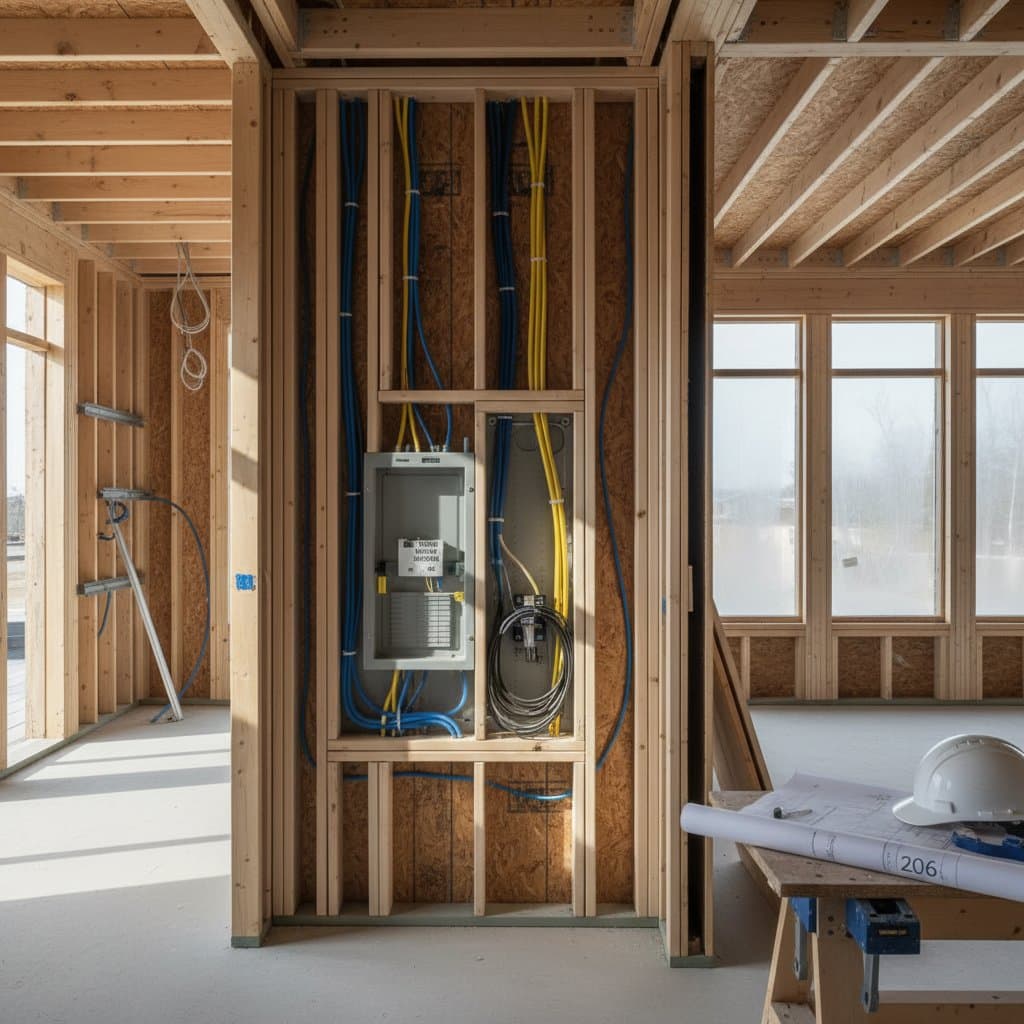
Why 2026 Building Codes Require Battery-Ready Wiring
Visualize entering your garage at the end of a demanding day. You connect your electric vehicle to charge, confident that the infrastructure supporting your home during power disruptions operates seamlessly nearby. Building codes effective in 2026 mandate wiring for battery readiness in new constructions and major renovations. This preparation equips homes for integration with energy storage systems, influencing decisions for builders, homeowners, and remodelers alike.
Energy efficiency once focused primarily on insulation and lighting upgrades. Current standards extend to homes capable of generating, storing, and distributing power intelligently. Battery-ready wiring provides the foundational infrastructure, allowing seamless connection to storage solutions without extensive modifications.
These codes do not require immediate battery installation. Instead, they ensure homes possess the adaptability to incorporate such systems as energy storage becomes ubiquitous, comparable to essential appliances like water heaters.
Reasons for the Code Updates
The adoption of battery-ready wiring stems from evolving energy trends observed by builders, engineers, and regulatory bodies. Residential solar installations have surged, particularly in sunny regions, while electric vehicle adoption increases household electricity demands. Energy storage addresses these shifts by enabling homes to capture excess renewable generation and deploy it during high-use periods.
Updated codes facilitate this integration, reducing pressure on municipal grids. Stored energy supports peak-hour demands, minimizing blackouts and stabilizing supply. In emergencies, batteries sustain critical functions, such as refrigeration, lighting, and medical devices, enhancing household security.
Homeowners in outage-prone areas benefit significantly. A solar-paired battery system maintains operations during grid failures, preserving normalcy amid disruptions. These codes position residences to achieve similar reliability as standard features.
Advantages of Battery-Ready Infrastructure
Preparation for battery integration yields tangible gains, even without immediate installation.
1. Reduced Long-Term Expenses
Incorporating conduit and designated space during initial construction adds minimal cost, typically a few hundred dollars. Post-construction retrofits demand extensive work, including wall openings and rewiring, escalating expenses to thousands. Pre-wiring eliminates these disruptions and associated labor fees.
2. Enhanced Market Value
Prospective buyers prioritize sustainable features. Homes with battery-ready setups command premium prices and attract quicker sales. Appraisers recognize this infrastructure as a forward-thinking investment, differentiating properties in competitive markets.
3. Simplified Solar System Compatibility
Future solar additions integrate effortlessly with existing wiring. Installers verify battery readiness to streamline storage connections, avoiding delays or additional infrastructure needs.
4. Improved Emergency Preparedness
The wiring framework supports rapid battery deployment during crises. As weather events intensify, this capability ensures uninterrupted power for essentials, bolstering overall resilience.
5. Broader Sustainability Impacts
Battery-ready designs alleviate utility burdens by shifting peak loads to stored reserves. Widespread adoption fosters communities with lower fossil fuel dependence, promoting cleaner air and reliable energy distribution.
Implementation Costs and Key Factors
Battery-ready wiring remains affordable within construction budgets. Expect the following estimates:
- Conduit and wiring supplies: $200 to $500, varying by panel distance.
- Electrical labor: 3 to 5 hours.
- Subpanel installation and circuit labeling: $300 to $600, based on system intricacy.
Total outlay during new builds seldom exceeds $1,000. Retrofitting doubles or triples this figure, factoring in structural alterations.
Site battery locations thoughtfully:
- Ventilation and climate control: Select areas with stable temperatures, such as garages or utility spaces, to optimize battery performance.
- Surface preparation: Opt for moisture-resistant, non-slip flooring like epoxy-sealed concrete.
- Illumination: Install adequate lighting for safe access and routine checks.
Local distributors, including electrical supply outlets, carry compatible components. Electricians source materials efficiently, ensuring compliance with code specifications.
Integrating Battery-Ready Features into Daily Life
Battery-ready homes operate without noticeable changes in routine. The embedded wiring remains dormant until activated, preserving aesthetic and functional simplicity.
Activation unlocks practical advantages, such as sustaining a home office or preserving food during outages. This reliability elevates standard living standards.
The design complements complementary upgrades. Solar systems connect directly, while electric vehicle chargers share the subpanel for unified management. This synergy streamlines operations and maximizes efficiency.
Upon resale, highlighting battery readiness appeals to eco-conscious purchasers, underscoring the home's adaptability to emerging technologies.
Steps to Achieve Battery Readiness
Consult certified electricians early in planning phases to map wiring routes and subpanel placements. Review local code interpretations, as jurisdictions may specify additional requirements. Budget for these elements alongside other electrical work to maintain project timelines.
Select scalable solutions, allowing future expansions without rework. Document installations thoroughly for warranty and resale purposes. This proactive approach secures long-term value and peace of mind in an energy-evolving landscape.