TL;DR
- Mass timber structures now qualify for heights up to 18 stories under updated building codes.
- These materials provide exceptional strength, environmental benefits, and rapid assembly times.
- For anyone considering construction projects, grasping these developments proves essential.
Understanding Mass Timber
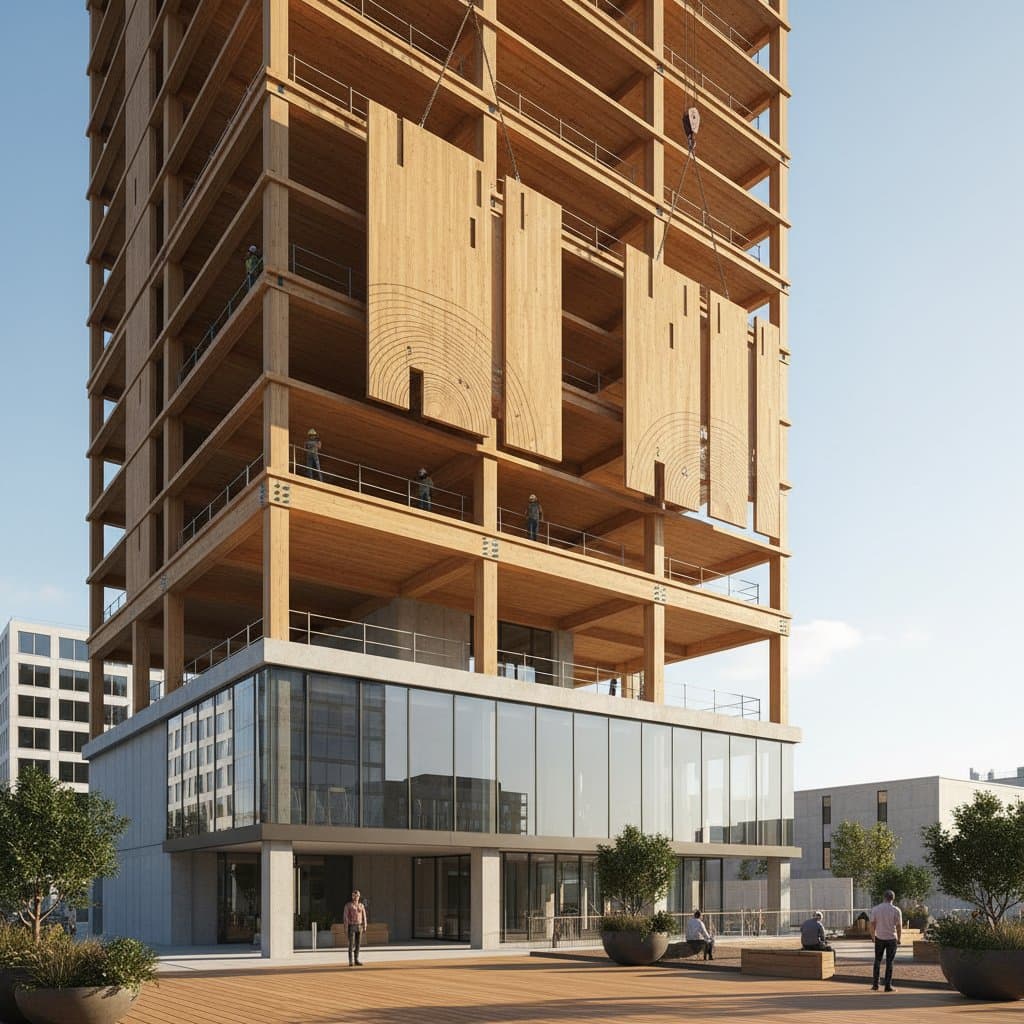
Mass timber consists of engineered wood products, such as large panels and beams, constructed by laminating or gluing layers of lumber. This process enhances structural integrity far beyond traditional wood elements. Cross-laminated timber, or CLT, represents a primary variant, where boards align in perpendicular layers to form robust assemblies.
These panels exhibit remarkable load-bearing capacity, suitable for multi-story applications. Fire performance improves through charring, which forms a protective barrier that insulates the interior. Sourcing from renewable forests underscores their ecological advantages, while reduced weight simplifies logistics and installation.
Engineers and contractors appreciate the precision of prefabricated components, which assemble efficiently on site. Visual warmth and natural textures distinguish mass timber from colder alternatives, influencing architectural choices across residential and commercial designs.
Key Advantages
- Structural Performance: Panels support significant vertical and lateral forces, rivaling conventional materials.
- Environmental Impact: Production emits fewer greenhouse gases compared to steel or concrete, with carbon sequestration in the wood itself.
- Construction Efficiency: Modular design accelerates timelines, often completing frames weeks faster than traditional methods.
- Design Flexibility: Exposed finishes allow for aesthetic integration, reducing the need for additional cladding.
Essential Considerations for Mass Timber Projects
Mass timber demands specialized handling distinct from standard lumber practices. Early integration into project planning ensures optimal outcomes. Below are critical strategies derived from established construction experiences.
Strategy 1: Finalize Designs Prior to Fabrication
Panels manufacture off-site, requiring complete architectural drawings before production begins. Alterations post-fabrication incur substantial costs due to material waste and delays. Collaborate closely with engineers to lock in layouts during initial phases.
Strategy 2: Implement Moisture Management Protocols
Exposure to prolonged dampness compromises wood integrity. Protect components with weatherproof coverings during transit and erection. Site teams often deploy temporary enclosures or sealants to mitigate rain exposure, preventing warping or mold growth.
Strategy 3: Integrate Fire Safety Measures from the Outset
The charring mechanism of mass timber provides inherent resistance, yet compliance with local regulations remains paramount. Engage fire marshals early to align designs with code requirements, such as encapsulation or sprinkler integration. This proactive approach streamlines approvals.
Strategy 4: Optimize Connection Systems
Mechanical fasteners and joints form the backbone of structural stability. Select manufacturer-tested connectors to ensure load transfer efficiency. Detailed engineering reviews verify that assemblies withstand seismic and wind forces effectively.
Comparing Mass Timber to Traditional Materials
Mass timber complements rather than supplants steel and concrete, offering unique attributes for mid-rise developments. Each material suits specific project demands, from height constraints to environmental goals.
| Material | Strength | Weight | Sustainability | Construction Speed | Aesthetic Qualities |
|---|---|---|---|---|---|
| Steel | Exceptional | Heavy | Resource-intensive | Moderate | Metallic, modern |
| Concrete | Substantial | Very heavy | Carbon-intensive | Deliberate | Versatile, subdued |
| Mass Timber | Substantial | Light | Renewable, low-impact | Accelerated | Organic, inviting |
This comparison highlights mass timber's role in promoting efficiency and sustainability. Projects benefit from its lighter foundation requirements and shorter build cycles, which lower overall expenses.
Addressing Key Concerns
Question: How does mass timber perform in fire scenarios?
Thick sections char externally, creating an insulating layer that preserves structural integrity. Testing confirms evacuation times align with or exceed those of non-combustible alternatives, provided designs incorporate required protections.
Question: Does mass timber production accelerate deforestation?
Suppliers prioritize certified sustainable forests, utilizing species with rapid regrowth rates. Certification programs like FSC ensure replanting offsets harvesting, maintaining ecological balance over time.
Question: Can mass timber support expansive, column-free interiors?
Panels achieve long spans, enabling open layouts ideal for collaborative spaces or residences. Structural modeling confirms feasibility without excessive supports, enhancing spatial freedom.
Question: How is acoustic performance managed in multi-story designs?
Incorporating resilient channels, insulation, and flooring underlays effectively dampens sound transmission. Acoustic testing verifies performance comparable to concrete assemblies when properly detailed.
Question: What are the cost implications relative to other materials?
Initial material expenses may exceed those of steel by a modest margin, yet faster erection and minimal site labor offset differences. Scaling production promises further economies as adoption grows.
Advancing Your Mass Timber Initiative
Recent code amendments, such as those permitting 18-story heights, open doors for innovative applications. Suppliers expand capacity, and design professionals refine techniques to maximize benefits. Consult experienced structural engineers to assess site-specific viability.
This evolution extends beyond elevation limits, fostering resilient communities through accessible, low-carbon construction. Projects embracing mass timber contribute to broader sustainability objectives while delivering enduring value. Begin exploration with feasibility studies to position your endeavor at the forefront of this transformation.