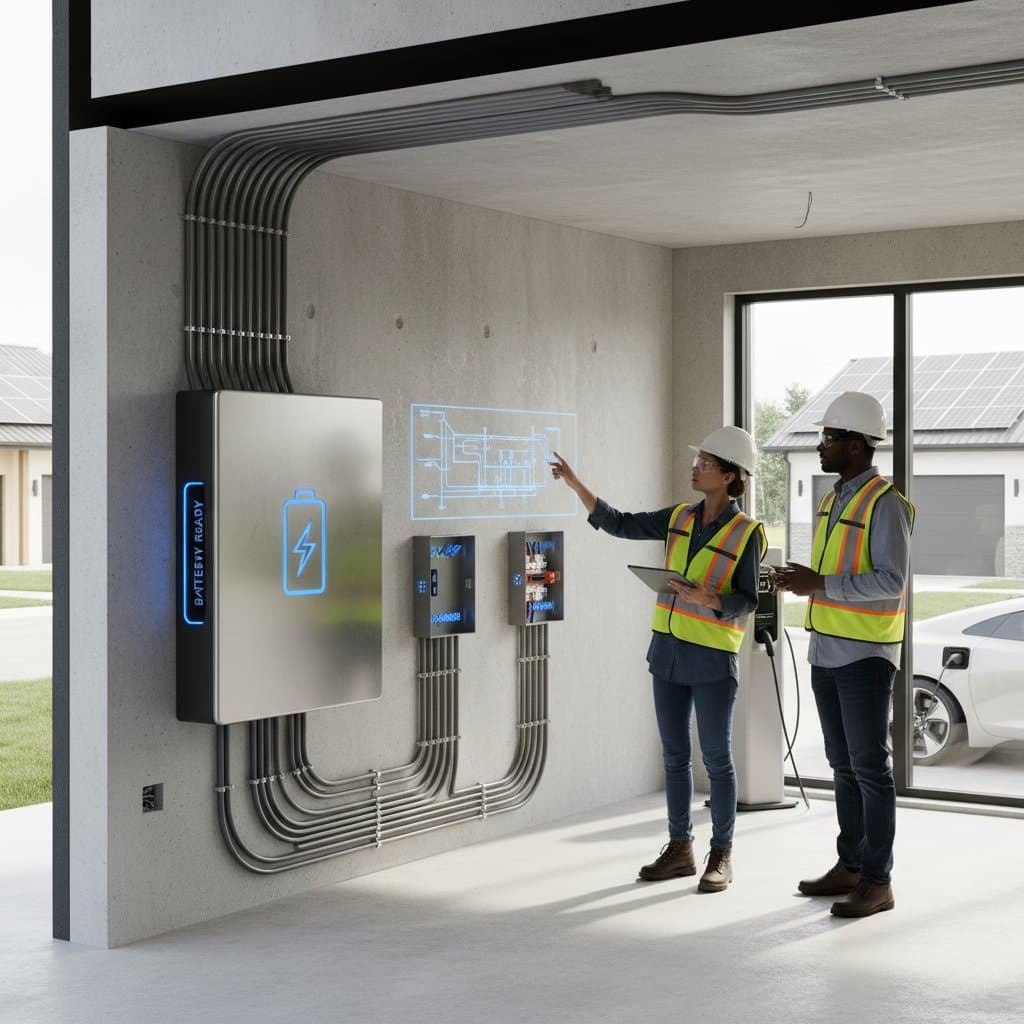
Understanding Battery-Ready Wiring
Battery-ready wiring refers to the strategic installation of electrical infrastructure designed to accommodate future energy storage systems. Homeowners who incorporate this approach during new construction or major renovations position themselves for effortless integration of home batteries. Such foresight eliminates the need for disruptive and expensive modifications down the line.
This wiring typically includes dedicated conduits, subpanels, and reinforced circuits that support high-capacity battery banks. Builders often overlook these elements in standard projects, leading to challenges when homeowners later adopt renewable energy solutions. By prioritizing battery readiness, you ensure your electrical system aligns with evolving energy demands.
The concept gains urgency as battery technology advances rapidly. Projections indicate that by 2026, affordable, high-efficiency batteries will become standard in residential settings. Early preparation transforms potential obstacles into smooth transitions.
The Financial Advantages of Pre-Wiring
Retrofitting an existing home for battery storage can cost thousands of dollars due to the labor involved in accessing walls and ceilings. In contrast, adding battery-ready wiring during construction increases upfront expenses by only a modest amount, often less than five percent of the total electrical budget. This investment yields substantial savings over time.
Consider a typical scenario: a family installs solar panels without pre-wiring and later decides to add batteries. The retrofit process requires tearing into finished spaces, hiring specialized electricians, and potentially upgrading the main service panel. These steps can escalate costs to ten thousand dollars or more, depending on home size and location.
Pre-wiring avoids such disruptions. It allows for direct connections to battery inverters and charge controllers, minimizing material waste and labor hours. Financial analyses from energy experts show that the payback period for this preparation shortens significantly when paired with incentives for green building practices.
Beyond direct savings, battery-ready homes often qualify for higher property values. Appraisers recognize the value in energy-efficient features, which appeal to eco-conscious buyers. This preparation not only protects your wallet but also enhances marketability.
Key Components of Battery-Ready Infrastructure
Effective battery-ready wiring begins with a dedicated subpanel. This component isolates energy storage circuits from general household loads, preventing overloads and ensuring safety. Position the subpanel near potential battery installation sites, such as garages or utility rooms, for optimal accessibility.
Incorporate empty conduits throughout the home to future-proof pathways for cabling. These PVC or metal pipes provide routes for running wires without demolition. Builders recommend placing conduits from the main panel to roof areas for solar integration and to outdoor spaces for EV charging stations.
Select wiring gauges that exceed current code minimums to handle increased amperage from batteries. For instance, use 6-gauge copper for main feeds instead of the standard 8-gauge. This upgrade supports not only batteries but also whole-home backups and smart grid connections.
Integrate smart metering and monitoring points during the wiring phase. These allow real-time tracking of energy flows, which proves essential for optimizing battery performance. Such features lay the groundwork for automated systems that balance loads and maximize savings.
Steps to Implement During Construction
Start by consulting with a licensed electrician experienced in renewable energy systems. Discuss your long-term goals, such as solar adoption or EV ownership, to tailor the wiring plan. This collaboration ensures compliance with local codes and national standards like those from the National Electrical Code.
- Assess the home layout to identify optimal locations for batteries and related equipment.
- Install the subpanel and conduits as part of the initial rough-in phase.
- Run oversized conductors to key areas, labeling them clearly for future reference.
- Test all circuits before closing walls to verify integrity and capacity.
- Document the setup in building plans for easy reference during later installations.
Involve your builder early to align wiring with structural elements. For example, route conduits alongside HVAC ducts to save space. This methodical approach keeps the project on schedule while embedding future flexibility.
Homeowners in regions with frequent power outages benefit most from these steps. Reliable battery integration provides peace of mind and reduces dependence on utility grids.
Seamless Integration with Solar and EV Systems
Battery-ready wiring complements solar photovoltaic installations by enabling direct DC coupling. This configuration minimizes energy conversion losses, allowing batteries to store excess solar production efficiently. Without pre-wiring, achieving this setup requires complex adaptations that compromise performance.
For electric vehicle chargers, dedicated circuits prevent interference with battery operations. Pre-wired homes support Level 2 chargers that draw from the same subpanel, optimizing charging during off-peak hours. This synergy extends battery life and lowers overall electricity bills.
Advanced systems, such as microgrids, become feasible with proper infrastructure. These setups allow portions of the home to operate independently during outages, powered by solar and batteries. Pre-wiring facilitates the addition of transfer switches and inverters without major overhauls.
Energy management software thrives in pre-wired environments. It coordinates charging, discharging, and usage to prioritize cost savings and sustainability. Homeowners gain control through apps that provide insights and automation.
Long-Term Benefits for Energy Resilience
A battery-ready home adapts to technological advancements without repeated investments. As battery capacities improve and prices drop, your infrastructure remains compatible, avoiding obsolescence. This resilience proves invaluable in an era of climate-driven energy shifts.
Environmental impacts extend beyond finances. Efficient wiring reduces waste from retrofits and supports lower carbon footprints through optimized renewables. Communities encourage such practices through rebates and streamlined permitting.
Finally, this preparation empowers informed decision-making. You select batteries based on performance rather than installation constraints, ensuring the best fit for your needs.
Building a Sustainable Future Today
Investing in battery-ready wiring positions your 2026 home as a model of foresight. It delivers immediate cost efficiencies and unlocks enduring energy independence. Take the first step by incorporating these elements into your build plans; the rewards will compound for years to come.