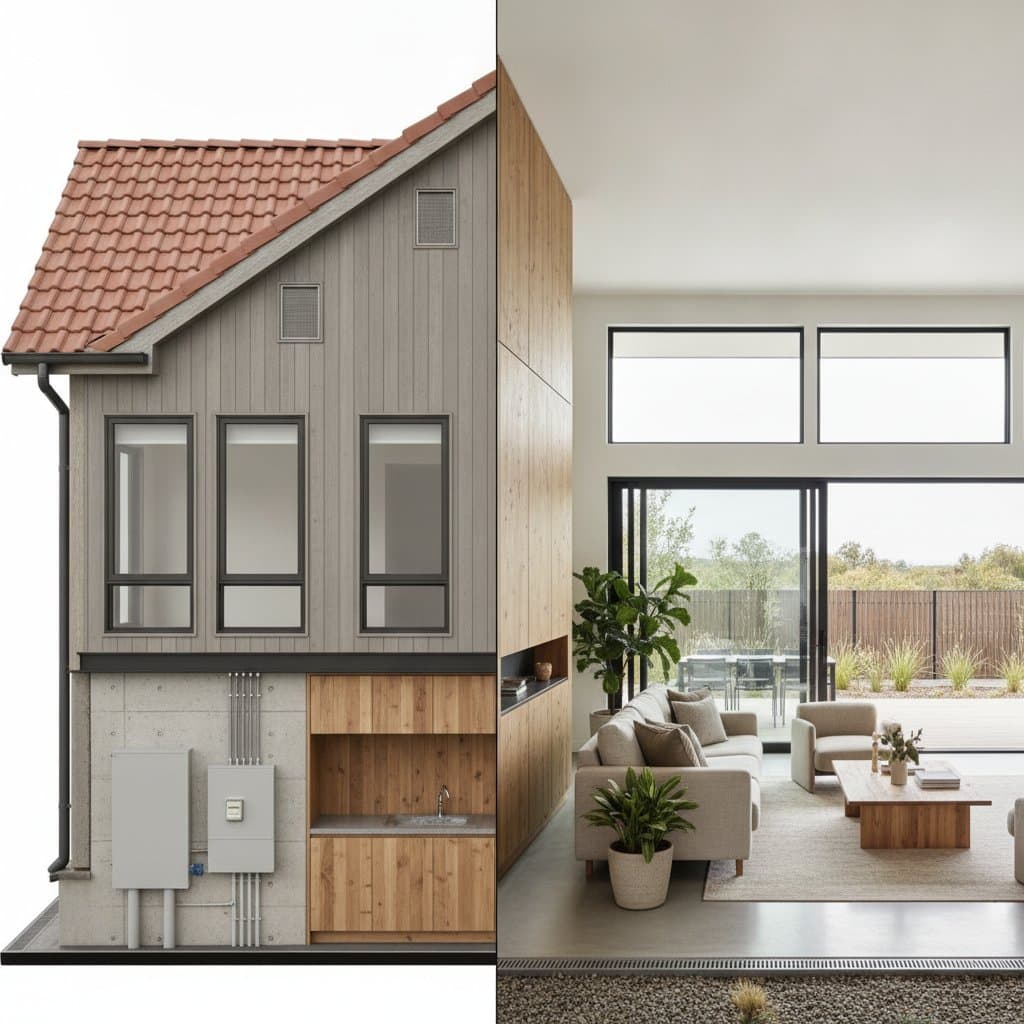
Climate Proof Homes: Wildfire and Flood Materials
A calm afternoon can shift quickly into concern when smoke drifts across the windows or heavy rain overwhelms the gutters. The materials surrounding your house suddenly feel like a critical decision. Climate resistant construction begins with these everyday details and builds toward a safer, more comfortable living space.
Whether you are planning a new build or updating an older property, wildfire and flood preparation can appear costly and complex. The good news is that you do not need to change everything at once. A thoughtful combination of rated building materials, careful drainage, and practical design choices can prepare your home for local conditions.
Understanding Your Property Risks
Every property faces a different combination of risks. A hillside home may need protection from embers and radiant heat, while a low lying house may need flood resistant floors, raised utilities, and water tolerant walls. Some locations require both.
The first step is to examine your site closely. Notice how water moves after a storm, where dry leaves collect, and which parts of the garden sit closest to the house. Check local building requirements and insurance guidance before selecting products. Rules vary by region, and some wildfire rated building assemblies must be installed as complete systems rather than separate products.
The goal is to combine sensible protection with materials that still feel welcoming. A home should not resemble a fortress. Textured timber, warm stone, patterned tiles, and filtered morning light can all belong in a resilient design.
Wildfire Protection Materials
Wildfire protection often begins at the roof. Embers can travel ahead of the main fire and settle in small gaps, gutters, and roof valleys. A noncombustible roof made from metal, clay tile, concrete tile, or suitable composite products reduces the chance of ignition.
Roof shape matters as well. Simple forms with fewer valleys give embers fewer places to collect. Keep gutters clear and consider metal gutter guards that resist heat while allowing rainwater to pass through. Regular cleaning remains essential, since dry leaves can become fuel.
Exterior walls benefit from materials that resist heat and flame. Fiber cement siding, stucco, brick, stone, and some treated masonry products offer stronger protection than exposed wood. If you prefer the appearance of timber, use it thoughtfully in sheltered areas and pair it with noncombustible cladding near the ground.
Windows require careful attention. Multi pane tempered glass is stronger than ordinary single pane glass and offers better resistance to heat and flying debris. Solid shutters or exterior screens can add another layer of protection. Window frames and seals also matter, since gaps can allow embers to enter.
Small openings around vents are easy to overlook. Fine metal mesh can help block embers from entering roof spaces, crawl spaces, and underfloor areas. Avoid plastic screens in high risk locations, since they can melt.
Creating a Defensible Perimeter
Establish a five foot zone around the house with gravel, paving, stone, or carefully maintained low plants. This simple edge can reduce nearby fuel while giving paths and patios a clean, finished appearance.
Flood Resistant Materials
Flood resistant materials need to tolerate moisture, dry out efficiently, and resist mold. Concrete floors, ceramic tile, porcelain tile, and sealed masonry are practical choices for lower levels. Patterned tiles with quiet charm can make an entryway or utility room feel considered rather than purely functional.
For walls, cement board, concrete block, brick, and closed cell insulation are often better suited to damp conditions than paper faced drywall or fibrous insulation. In areas that may get wet, choose wall finishes that can be removed and replaced without opening the whole room. A tiled lower section with washable paint above it offers a useful balance.
Cabinetry can also be planned around water. Metal, marine grade plywood, and certain plastic composite cabinets are less vulnerable than standard particleboard. If you prefer timber, use sealed plywood construction and raised legs where possible. This keeps moisture away from the cabinet base and makes cleaning easier.
Floor level is another important consideration. A raised foundation, elevated utilities, or a carefully designed lower level can limit damage. Water heaters, electrical panels, boilers, and heating equipment should sit above expected flood levels when local rules allow. This work usually requires a qualified professional, especially when wiring or structural changes are involved.
Doors, Decks, and Outdoor Structures
Doors are frequent weak points during both fire and flood events. Solid core exterior doors with strong seals can help block heat, smoke, and wind driven rain. A weather resistant threshold keeps water from slipping under the door, while a covered entry gives the opening extra shelter.
For decks and porches, consider concrete, stone, metal, or tested composite decking. Some composite boards resist moisture well, yet their wildfire performance differs by product. Read the manufacturer guidance instead of assuming every composite material has the same rating.
Fences deserve attention as well. A timber fence connected directly to the house can carry flames toward siding or eaves. A gap filled with gravel, a metal section, or a masonry transition near the home can interrupt that path. It is a small design change with a surprisingly practical benefit.
Budget Planning for Climate Resistance
A climate resistant renovation can be staged. Start with the most exposed areas, such as the roof, gutters, vents, drainage, and door thresholds. These upgrades often provide useful protection without requiring a full remodel.
Next, replace vulnerable finishes as rooms are renovated. Choose tile instead of carpet in flood prone entry areas, or fiber cement siding when exterior cladding needs replacement. Paying for installation quality matters just as much as selecting the product. Poor seals, open joints, and badly fitted flashing can weaken an otherwise strong material.
Ask for product testing details, maintenance instructions, and realistic service expectations. A wildfire rated building assembly may require specific fasteners, underlayment, or spacing. A flood resistant product may still fail if water remains trapped behind it.
Maintaining Comfort and Appearance
Resilient design does not require a cold palette or industrial look. Earthy tones such as mustard, sand, olive, and warm terracotta work beautifully with masonry, tile, and metal. Textured timber can add warmth when used away from the most exposed zones. Deep window reveals, linen curtains, and soft lighting help balance harder protective surfaces.
Ventilation and moisture control matter for everyday comfort. Good bathroom fans, kitchen extraction, insulation, and shaded windows can reduce condensation and heat. A home that dries quickly after ordinary spills is easier to maintain long before a serious weather event arrives.
Ongoing Property Maintenance
Walk around your property after a strong rain and inspect the roof, drains, doors, and lower walls. After dry weather, clear leaves and check vents, gutters, and the five foot perimeter. Keep a simple maintenance list so small tasks do not become overwhelming.
It is not just about choosing tough materials. It is about fitting them into daily life. Start with the risks closest to your home, select products that suit your climate, and bring in qualified help for structural, electrical, or drainage work.