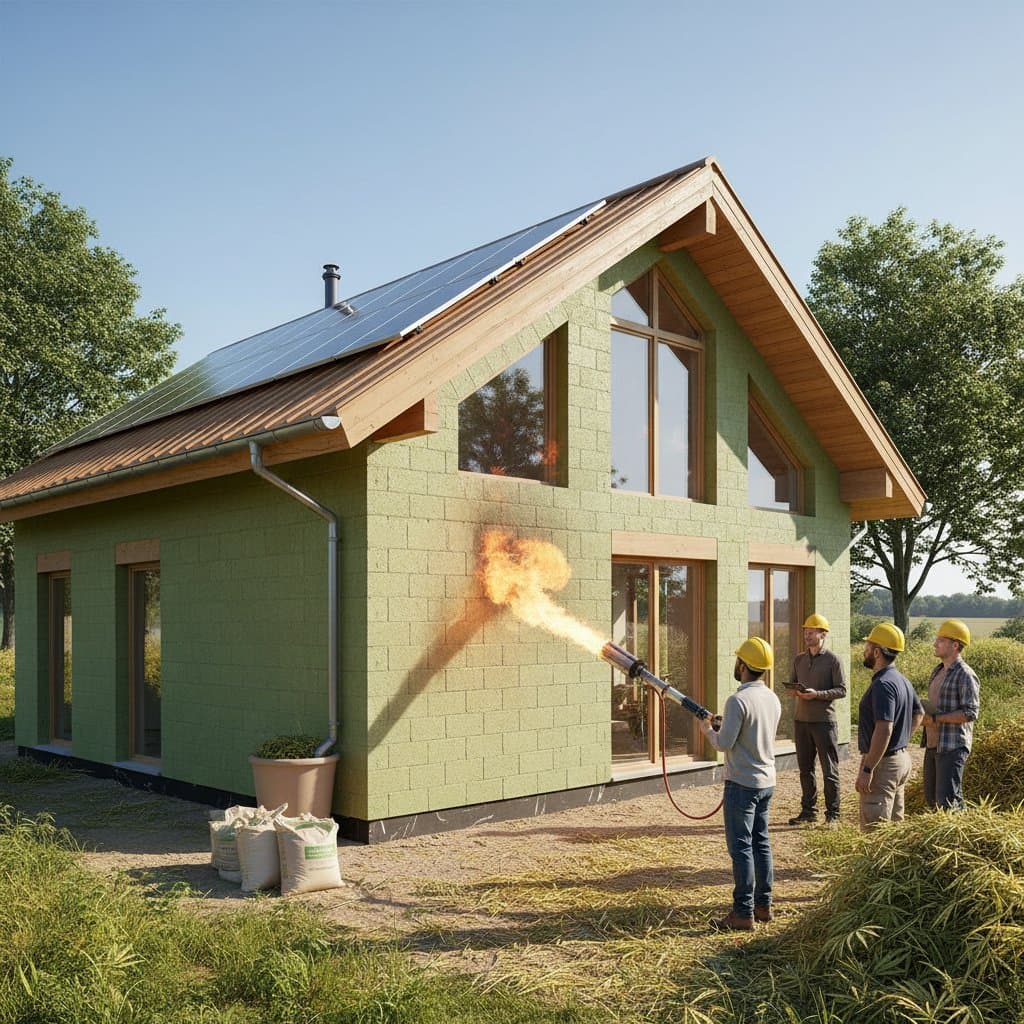
Summary
Hempcrete walls challenge conventional notions of safe and sustainable residential construction. These walls exhibit natural fire resistance, breathability, and energy efficiency. When installed by experienced professionals, hempcrete maintains comfortable indoor environments, reduces noise, and aligns closely with budgetary expectations.
Key Advantages
Hempcrete offers several compelling benefits that distinguish it from standard building materials.
- Fire Resistance and Safety: Hempcrete does not ignite; instead, it chars gradually, safeguarding the underlying structural elements during a fire event.
- Environmental Sustainability: Derived from renewable hemp sources, hempcrete sequesters carbon throughout its lifecycle, contributing to a reduced atmospheric footprint.
- Thermal Performance: The material provides inherent insulation, maintaining stable indoor temperatures across seasons without supplemental synthetic products.
- Minimal Upkeep: Hempcrete requires no chemical coatings or moisture barriers, simplifying long-term maintenance.
- Acoustic Insulation: Its composition effectively absorbs sound waves, fostering quieter and more serene living spaces.
These attributes make hempcrete an ideal choice for homeowners seeking durability and health-conscious design.
Comparison to Conventional Wall Systems
Traditional residential walls typically consist of wood framing, fiberglass insulation, and gypsum board. Such systems prioritize speed and affordability, yet they present limitations in safety, moisture management, and ecological impact. Hempcrete introduces innovative properties that address these shortcomings.
Consider the following contrasts:
- Fire Safety: Hempcrete demonstrates superior resistance to flames compared to gypsum board, which provides only temporary protection before compromising.
- Moisture Regulation: Unlike impermeable materials, hempcrete allows vapor to pass through, preventing mold growth and ensuring a healthier indoor climate.
- Insulation Efficiency: Hempcrete delivers consistent thermal performance without relying on foam or fiberglass, which can settle or degrade over time.
- Longevity: The material strengthens with age, resisting wear far better than conventional alternatives that may require frequent repairs.
- Ecological Impact: Hemp cultivation occurs rapidly and captures carbon dioxide, resulting in a net-positive environmental contribution absent in traditional materials.
Homeowners who incorporate hempcrete mid-project often report enhanced overall satisfaction. The initial investment remains comparable to standard methods, while cumulative advantages in comfort and reduced upkeep yield substantial returns.
To illustrate, a recent residential build in a temperate climate replaced fiberglass insulation with hempcrete infill. The result included a 20 percent reduction in energy consumption for heating, alongside improved air quality due to the material's natural breathability.
Assessing the Costs of Hempcrete Walls
Cost considerations represent a primary concern for prospective builders. Hempcrete installation generally incurs a modest premium over traditional framing and finishing, influenced by regional material availability and labor expertise. However, this upfront expense diminishes when viewed against lifecycle savings.
Energy expenditures decrease significantly, as the material's insulation properties minimize reliance on HVAC systems. Maintenance costs plummet without the need for pest treatments, mold remediation, or insulation replacements common in synthetic setups. Over a decade, these factors can offset the initial outlay entirely.
For example, in a 2,000-square-foot home, hempcrete walls might add 5 to 10 percent to the framing budget, equating to several thousand dollars. Yet, annual utility savings of 15 to 25 percent, coupled with avoided repairs, recoup this within five years. Builders recommend budgeting for certified installers to maximize these efficiencies.
Everyday Experience with Hempcrete Walls
After completion, hempcrete walls integrate seamlessly into daily life, enhancing the home's ambiance without drawing attention. Indoor air quality improves as the material regulates humidity naturally, reducing allergens and promoting well-being. Acoustic properties create a more restful environment by minimizing external noise intrusion.
Energy systems operate more efficiently, with reduced strain on furnaces and air conditioners. Residents often describe a sense of stability in temperature and freshness in the air. Finishes such as lime plasters complement the material's texture, allowing for customizable aesthetics that age gracefully.
In practice, families in hempcrete homes report fewer seasonal illnesses and greater overall comfort. The walls contribute to a balanced humidity level, typically between 40 and 60 percent, which supports both human health and the longevity of furnishings.
Practical Steps for Implementation
Embarking on a hempcrete project begins with selecting a qualified specialist. Seek contractors experienced in bio-based materials, as their knowledge ensures optimal performance and code compliance. Reviewing portfolios and references helps identify reliable partners.
Visiting completed installations provides tangible insights. Observe the walls' finish, assess the indoor climate, and inquire about post-occupancy experiences. This hands-on evaluation builds confidence in the material's suitability for your site.
Consult local regulations early, as hempcrete's non-structural role requires integration with approved framing systems. Planning for material sourcing, often from regional hemp processors, streamlines logistics and supports sustainable supply chains.
Frequently Asked Questions
Does hempcrete attract pests? No. The lime binder renders hempcrete unpalatable to insects and rodents, lacking the organic compounds that attract them.
Can hempcrete suit all climates? Yes, with adaptations. Thicker applications enhance insulation in cold regions, while breathable coatings manage humidity in tropical areas.
Is hempcrete load-bearing? Typically not. It functions as infill around a structural skeleton of wood or steel, providing enclosure and protection.
How long does hempcrete take to cure? Initial setting occurs within days, but full strength develops over 28 days. Accelerated methods exist for faster timelines.
What finishes work best with hempcrete? Lime-based plasters or natural paints adhere well, preserving the material's vapor permeability.
Hempcrete empowers builders to create resilient, healthful spaces that align with future-oriented standards. By prioritizing this material, homeowners invest in enduring value and planetary stewardship.