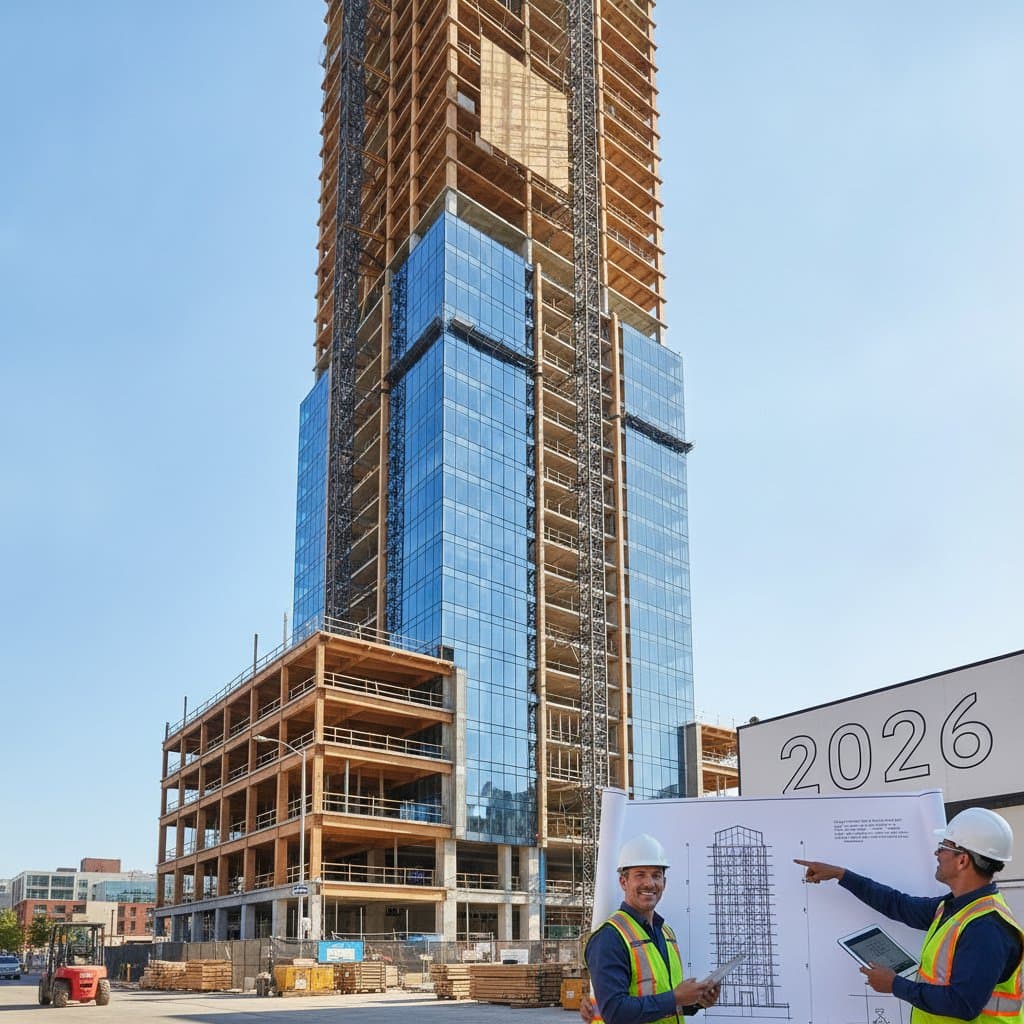
TL;DR
- New fire code approvals are clearing the way for more mass timber buildings.
- These updates mean taller, safer, and more sustainable wood structures.
- Builders and designers should prepare now to take advantage of the shift.
What is changing with mass timber fire codes?
The new fire code approvals will make it easier to use mass timber in taller and more complex buildings by recognizing its natural fire resistance and proven safety performance.
For years the biggest hurdle for mass timber has not been the material itself but the paperwork. Fire codes were originally built around steel and concrete. That meant if an architect wanted to use cross laminated timber in anything taller than a mid rise project, the team was often stuck completing case by case reviews and extra testing.
These approvals now recognize mass timber as a safe code compliant structural system for much taller buildings. Architects, engineers, and builders will not have to complete as many extra steps to receive project approval.
Key changes include:
- Taller limits for mass timber buildings
- Clearer guidance on fire resistance ratings
- Simplified testing and documentation requirements
- More predictable approval timelines
What makes mass timber fire safe?
Mass timber does not burn like ordinary lumber. It chars slowly, which protects its structural core and maintains stability longer than some steel frames under extreme heat.
Each cross laminated timber panel or glulam column is thick, dense, and engineered to resist fire in a predictable way. As the surface chars it insulates the interior and slows oxygen access along with heat transfer. This natural barrier allows the structure to remain intact for extended periods.
Real world tests confirm the performance. A four hour fire test on a cross laminated timber wall left the structural core intact and load bearing. Firefighters often note that the slow visible burn rate gives them more response time. Encapsulation with drywall or gypsum can further extend ratings for higher floors.
What does this mean for sustainability?
The change supports sustainable building because mass timber stores carbon instead of emitting it. Every steel beam or concrete slab replaced with a timber panel reduces the overall carbon footprint of a structure. Wood used in mass timber products typically comes from managed forests where new trees replace harvested stock, locking carbon inside the building for decades.
Sustainability benefits include:
- Lower embodied carbon than steel or concrete
- Renewable sourcing and cleaner manufacturing
- Easier disassembly and reuse potential
- Reduced transportation energy due to lighter materials
How will this change the look and feel of cities?
More warm natural looking buildings that still meet modern safety and performance standards will appear. Exposed wood ceilings, subtle scent, and acoustics that make large spaces feel comfortable become feasible in multi family housing, schools, offices, and civic buildings.
Regional manufacturing will increase as cross laminated timber factories locate closer to forested areas. Lighter timber materials also allow smaller foundation systems and related cost savings.
Next Steps for Project Teams
Review current projects against the new height and occupancy limits. Update internal specification templates to reflect simplified documentation paths. Schedule early coordination meetings with code officials to confirm local adoption timelines.