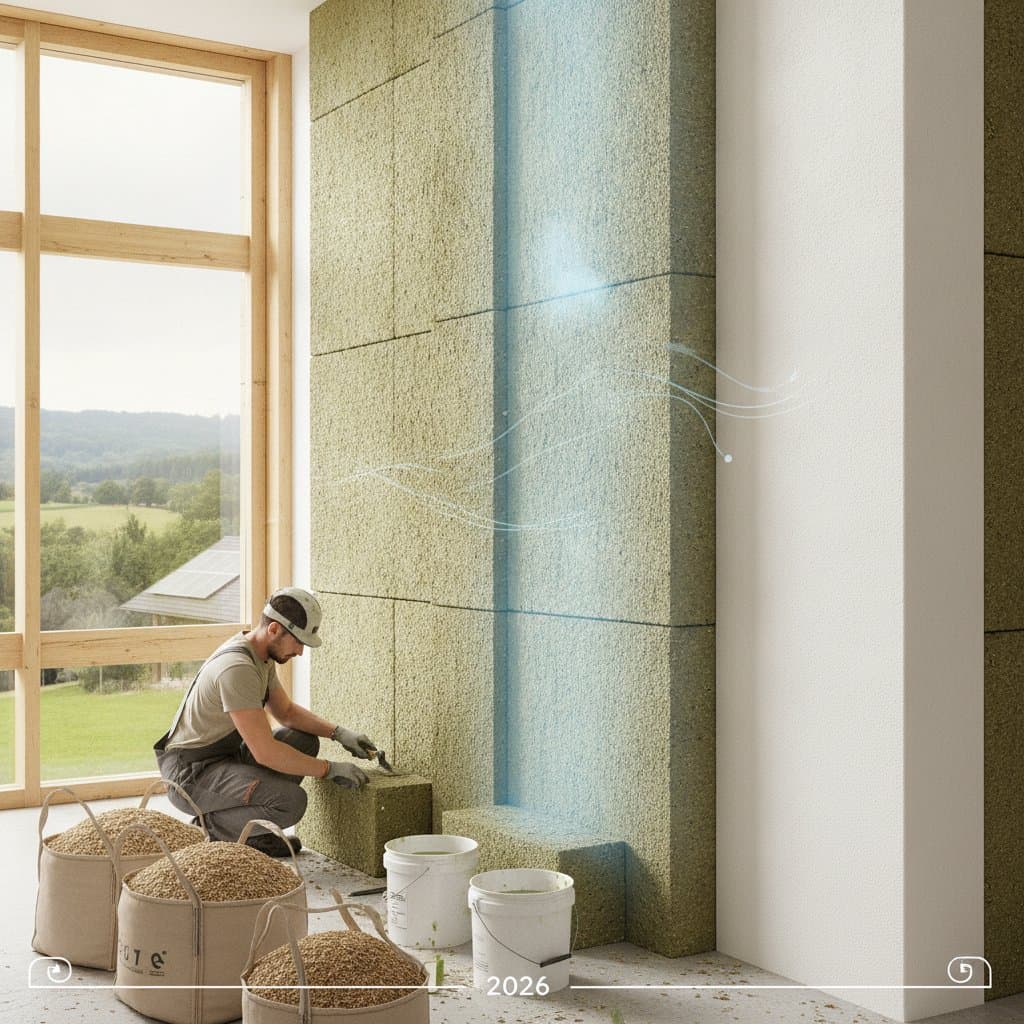
Understanding Hempcrete in Modern Construction
Hempcrete offers a distinctive approach to building walls that support both environmental goals and daily comfort. This material combines the woody core of the hemp plant, known as hurds, with a lime based binder and water. The result forms a lightweight composite that stores carbon throughout its lifespan.
Homeowners planning custom residences often seek options that reduce long term energy demands. Hempcrete addresses this need through its natural properties while integrating well with timber frames.
Key Advantages for Residential Use
- Carbon negative performance allows walls to sequester more carbon dioxide than the production process releases.
- Moisture regulation occurs naturally because the material permits vapor to pass through, which lowers risks of condensation and mold growth.
- Thermal performance provides consistent indoor temperatures without reliance on synthetic foams or additional chemical treatments.
- Fire resistance stems from the mineral content, eliminating the need for separate retardants in many applications.
- Pest deterrence arises from the alkaline lime component that discourages insects and rodents.
These characteristics make hempcrete suitable for projects that prioritize occupant health alongside reduced environmental impact.
Hempcrete Compared with Conventional Concrete
Traditional concrete delivers high compressive strength and widespread availability on construction sites. Builders value its familiarity and rapid installation in large scale projects. However, cement production generates substantial carbon emissions, and finished concrete surfaces often require extra insulation layers to achieve comfortable interior conditions.
Hempcrete cannot serve as a load bearing element, which means projects require a separate structural frame, typically wood or steel. Initial material and labor costs tend to exceed those of standard concrete pours, and curing times extend the overall schedule. In return, the material delivers ongoing energy savings through superior insulation and humidity control. Projects focused on speed and industrial aesthetics may still favor concrete, while those emphasizing livability and sustainability gain clear benefits from hempcrete.
Practical Considerations During Installation
Local building codes determine whether hempcrete receives approval in a given jurisdiction. Early consultation with officials prevents delays once construction begins. Application usually involves casting the mix between temporary formwork or spraying it against a frame, followed by a drying period that can span several weeks depending on climate.
Finishes must remain vapor permeable. Lime washes or clay plasters allow the walls to continue breathing, preserving the performance advantages. Standard acrylic paints can trap moisture and should be avoided.
Addressing Frequent Inquiries
Is hempcrete approved in all locations?
Approval exists in numerous regions, yet verification against municipal regulations remains essential before procurement.
What is the expected service life?
Properly maintained hempcrete structures can endure for centuries because the lime component continues to mineralize and strengthen over decades.
Can surfaces receive paint?
Breathable mineral paints such as lime or clay formulations work effectively and maintain the moisture management qualities.
Does the material attract insects?
The high pH of the lime binder creates an environment hostile to most common household pests.
How do costs compare over time?
Upfront expenses may exceed those of conventional systems, yet reduced heating and cooling loads plus minimal maintenance often offset the difference within a decade.
Planning a Hempcrete Project
Begin with an architect or builder experienced in natural materials to confirm structural compatibility and detailing. Source regionally grown hemp hurds when possible to minimize transportation emissions. Coordinate drying schedules with seasonal weather patterns to avoid trapped moisture. These steps help realize the full environmental and comfort benefits throughout the life of the home.