Carbon-Capture Concrete Enters Mainstream Construction
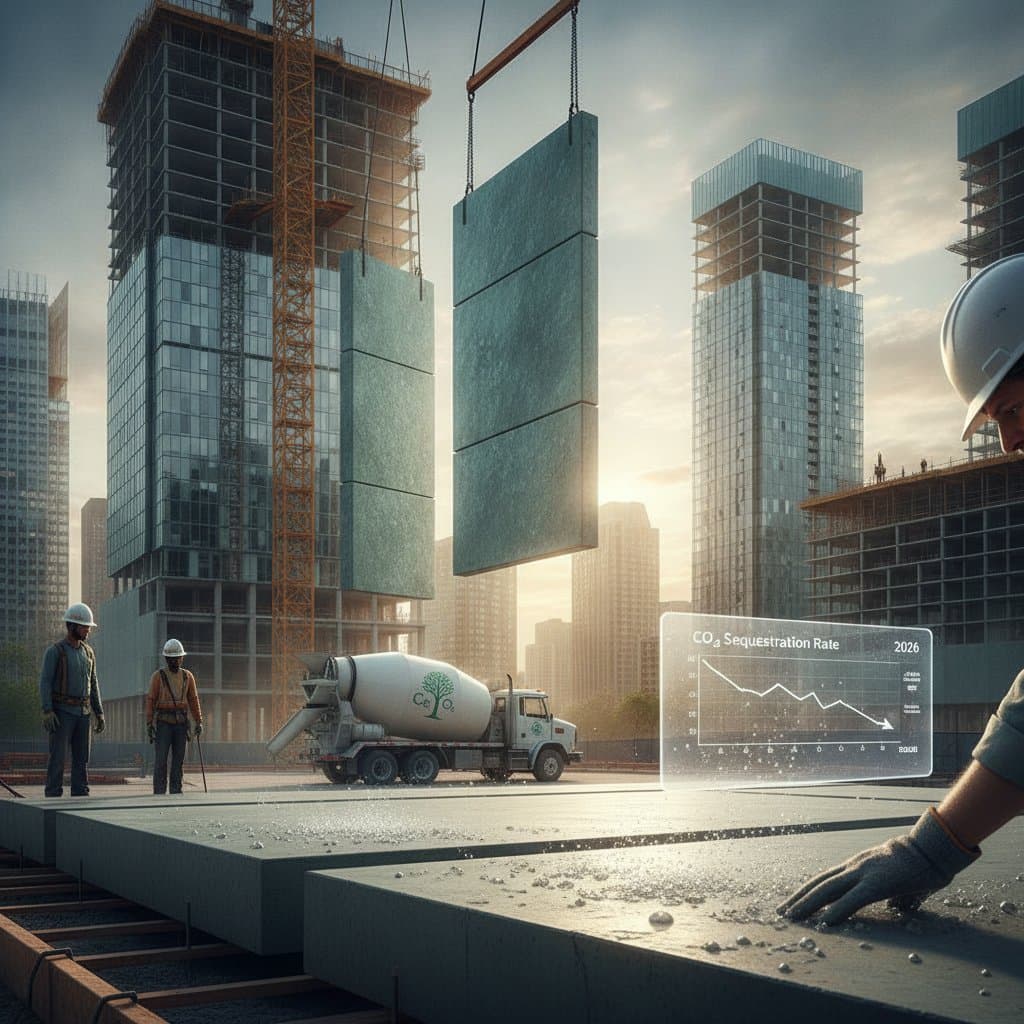
Construction sites now pour concrete that reduces atmospheric carbon as it cures. This material forms durable walls, foundations, and pavements while permanently storing captured carbon dioxide. Builders and homeowners gain a practical option that meets structural requirements without increasing project complexity.
Concrete remains essential for driveways, slabs, and structural elements. Traditional production methods release substantial carbon during cement manufacturing. Carbon-capture concrete addresses this issue by incorporating captured carbon dioxide either during mixing or cement production.
Concrete Production and Emissions
Cement manufacturing generates carbon at multiple stages, including heating limestone in kilns. Earlier reduction strategies relied on supplementary materials such as fly ash or slag. These approaches lowered emissions but did not reverse them. Carbon-capture methods go further by locking carbon into the finished material.
Two primary processes exist. In the first, captured carbon dioxide is injected into wet concrete during mixing. The gas reacts with calcium to form stable calcium carbonate. In the second, manufacturers capture carbon released during cement kiln operations and reuse it within the production cycle.
Performance Characteristics
Both methods produce concrete with compressive strength equal to or greater than conventional mixes. Curing times remain comparable, allowing standard placement techniques. The mineralized carbon stays bound even if the concrete is later demolished or recycled.
Contractors report consistent workability. The mix spreads and finishes with familiar tools and methods. No changes to reinforcement layouts or formwork are required for typical residential or commercial applications.
Current Applications
Projects now specify carbon-capture concrete for sidewalks, school buildings, retaining walls, and residential foundations. Municipalities include it in public infrastructure specifications. Architects integrate it into net-zero designs alongside other low-impact materials.
Cost and Availability
Pricing has moved to within ten percent of standard concrete in many regions. Local ready-mix suppliers increasingly stock the product through partnerships with carbon mineralization firms. Some jurisdictions provide tax credits or green building incentives that offset remaining differences.
Sourcing requires contacting suppliers that offer carbon-injected or carbon-captured mixes. Verification of stored carbon quantities and performance data helps confirm product claims.
Maintenance Practices
Installed carbon-capture concrete requires the same care as conventional slabs. Regular sweeping and washing with mild detergent preserve surface quality. Periodic sealing protects exterior installations from weather exposure.
Long-term durability benefits from the added calcium carbonate, which reduces cracking potential. This extends service life for driveways, patios, and structural slabs under normal loads.
Environmental Impact
Each cubic meter stores several pounds of carbon that would otherwise remain airborne. Widespread adoption across foundations and pavements scales these reductions across the construction sector. Local air quality improves as emissions from building activity decline.
Integration Opportunities
Homeowners and builders can substitute carbon-capture concrete in multiple locations. Driveways and walkways accept the material with standard finishing textures. Foundations and floor slabs maintain structural performance. Outdoor features such as garden walls and fire pits gain durability alongside carbon storage. Interior polished floors and countertops provide visible sustainable surfaces.
Supplier Selection
Request documentation on carbon sources and storage volumes when choosing a producer. Established providers maintain transparent performance records. Collaboration with project contractors ensures timely delivery and proper handling.
Long-Term Value
Owners benefit from reduced project emissions without altering construction schedules or appearance. The material supports certification goals and buyer interest in sustainable homes. Future maintenance follows familiar routines while delivering measurable environmental returns.