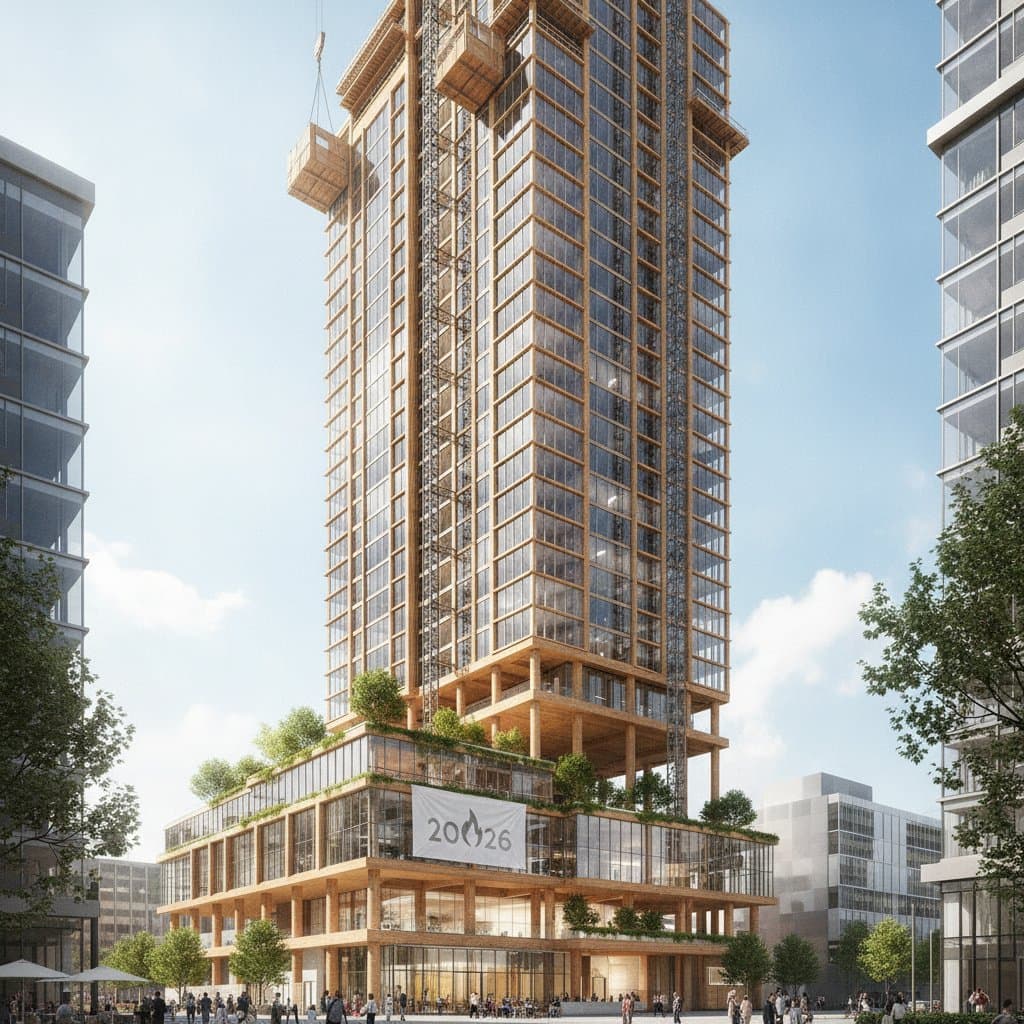
Mass Timber Buildings Surge With 2026 Fire Code Approvals
Walking into a newly finished apartment lobby reveals air that smells faintly of fresh pine. Light bounces warmly off honey-colored beams. The structure feels solid yet natural, modern yet calming. This experience defines the quiet revolution of mass timber. New fire code approvals will soon open doors for taller and more ambitious wood buildings.
Standing inside a half-framed mass timber office reveals a structure that feels alive in ways concrete rarely achieves. Grain runs visibly along each column. Every piece remains unique yet engineered for strength. Such spaces encourage occupancy even before drywall installation begins.
The Opportunity Behind the Code Change
Mass timber has remained a promising but limited option for years. Builders appreciated the appearance and sustainability benefits. Local codes often capped building height or required heavy fireproofing that increased costs. New fire code approvals now shift this situation. Developers gain the ability to construct taller buildings with cross-laminated timber, commonly called CLT, and other engineered wood systems.
These changes signal growing trust in timber as a structural material capable of meeting serious performance demands. Updated codes recognize that mass timber chars slowly and predictably under fire. A protective layer forms that maintains structural integrity longer than many expect. This controlled burn rate helped earn the approvals.
Why Builders and Designers Are Excited
Architects view mass timber as a method to restore warmth and humanity to urban construction. Developers respond to the combination of speed, sustainability, and aesthetics. Prefabricated panels enable faster and cleaner on-site assembly. Crews lift sections into place with relative ease. The process resembles puzzle assembly. Reduced noise, dust, and waste result. These efficiencies save time and frequently reduce expenses in cities where extended site durations accumulate costs.
Design flexibility allows exposed structural elements. Drop ceilings become unnecessary while acoustic comfort remains intact. Visible beams avoid an unfinished appearance. The outcome produces spaces that feel crafted rather than poured.
What Mass Timber Really Is
Mass timber consists of large structural panels or beamsand bonding smaller wood pieces. Cross-laminated timber stacks boards in alternating directions to achieve strength and stability. Additional forms include nail-laminated and glue-laminated timber. Each panel receives precision cutting at the factory. Openings for doors, windows, and mechanical systems arrive pre-installed. Site assembly proceeds rapidly. Mid-rise buildings often reach completion in weeks instead of months.
CLT and related products deliver environmental benefits alongside technical performance. They rival steel and concrete in strength while reducing embodied carbon substantially.
How Fire Code Approvals Change the Game
- Higher limits on building height allow high-rise residential and commercial projects in locations previously restricted.
- Clearer fire testing standards reflect proven performance of thick timber members under heat, which simplifies design approvals.
- More predictable permitting enables architects to design with confidence that plans align with national safety criteria.
- Expanded market confidence reduces hesitation from lenders and insurers, which opens financing options and lowers perceived risk.
Balancing Cost, Safety, and Sustainability
Mass timber can cost slightly more upfront than traditional framing depending on suppliers and logistics. Faster construction and reduced foundation requirements often offset this difference because timber weighs less than concrete. Fire safety receives attention through engineered design and protective detailing. Thicker panels allow for a predictable char layer. Sprinkler systems remain standard. Surface finishes add resistance without concealing the wood.
Sustainability drives many decisions. Timber stores carbon. Responsible sourcing maintains forest health. Many projects specify FSC-certified wood to guarantee replanting and ecosystem protection.
Typical Project Process
- Design phase involves architects and structural engineers modeling load paths and panel layouts. Lighting and HVAC planning begin early because panels arrive prefabricated.
- Permitting proceeds more smoothly under updated codes, though local review may still occur.
- Fabrication takes place at a factory where panels are cut and assembled, often within weeks.
- Delivery and assembly use cranes to position panels connected by steel plates or screws. The work rhythm stays efficient and quiet.
- Finishing applies low-VOC sealers to exposed surfaces. Matte or satin options highlight natural grain to varying degrees.
Sourcing and Team Coordination
Regions with growing interest benefit from local suppliers or fabrication partners. Companies such as SmartLam, StructureCraft, and Nordic specialize in CLT production. Some mills provide custom panel sizing. Water-based finishes allow surfaces to breathe while deepening color without gloss. Contractors experienced in hybrid construction coordinate steel connectors with timber panels effectively. Early briefings for electricians and plumbers ensure precision when drilling into engineered panels.
Daily Experience in Completed Buildings
Mass timber structures produce softer acoustics and fresher air compared with conventional buildings. Natural material character adds daily comfort. Maintenance requires moderate humidity control, avoidance of harsh cleaners, and gentle dusting on exposed beams.
Next Steps for Interested Parties
The growth in mass timber construction represents a practical and sustainable shift. New fire code approvals steadily reduce barriers to large-scale projects. Contact an architect experienced with mass timber work. Visit a completed building to observe exposed beams firsthand. The difference becomes immediately apparent.