Biochar Concrete Cuts Carbon 40 Percent in Future Builds
Imagine walking through a newly built neighborhood where every home feels solid and modern, yet the air seems cleaner. The sidewalks, the driveways, and the foundations contain a material that quietly stores carbon from the atmosphere. That hidden change in the concrete represents one of the most practical advances in building materials.
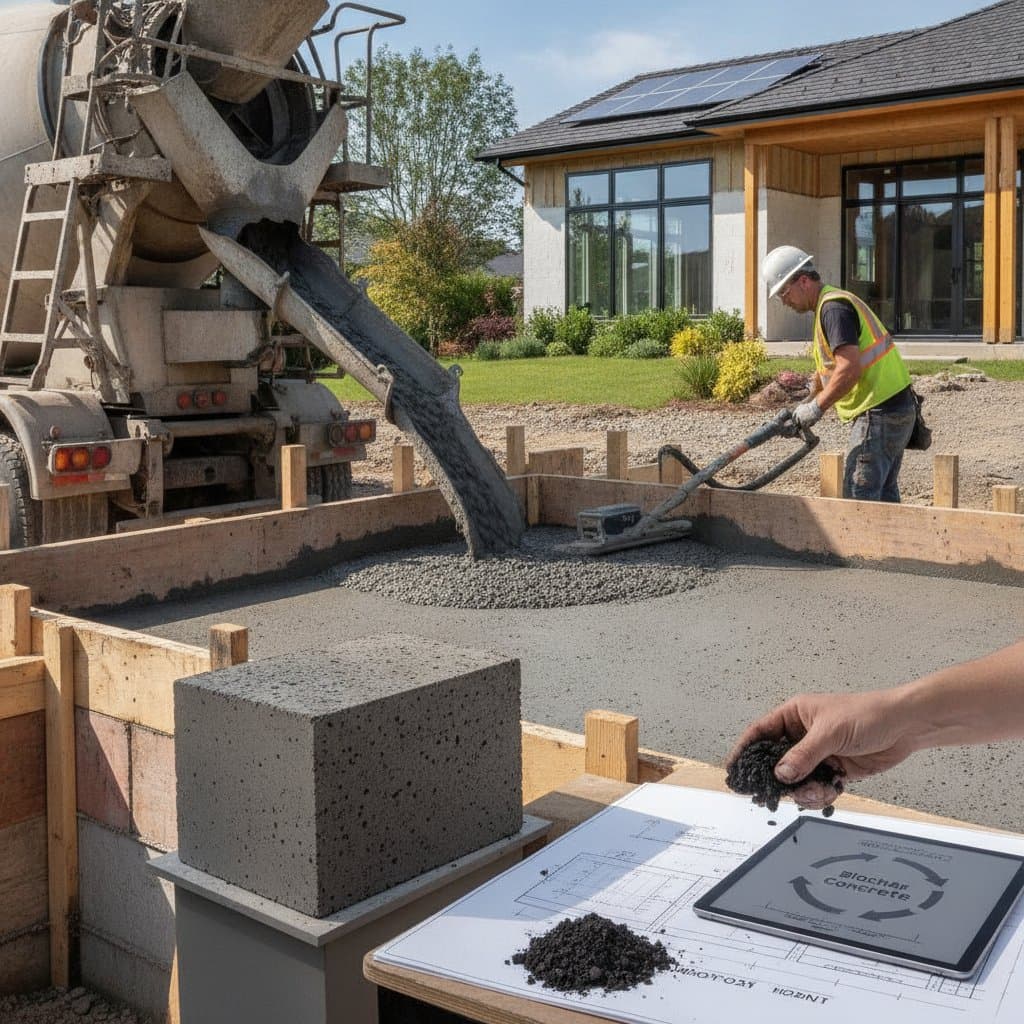
I first encountered biochar concrete while assisting a local builder on a backyard studio with strict carbon targets. The project required low-emission options, and standard concrete seemed difficult to improve. Then the crew added bags of dark, fine biochar to the mixer. The finished surfaces matched conventional concrete in appearance and performance, yet the emissions data showed a clear reduction.
The Carbon Challenge of Standard Concrete
Concrete supports homes, streets, and cities worldwide. Production of its key ingredient, cement, releases large amounts of carbon dioxide. Even modest residential projects accumulate significant emissions from foundations, slabs, and hardscape elements.
Builders seeking lower footprints often turn to recycled aggregates or alternative cements. These options help, yet many still require trade-offs in cost or availability. Biochar offers a direct way to lower emissions while preserving familiar construction practices.
How Biochar Alters Concrete Performance
Biochar forms when organic waste such as wood chips or crop residues is heated in a low-oxygen setting. The resulting fine, carbon-rich powder has served soil improvement and filtration for years. In concrete it replaces part of the cement or aggregate.
Two benefits follow. Less cement is needed, which cuts manufacturing emissions. The biochar itself retains carbon that would otherwise enter the atmosphere. Laboratory and field tests show total project emissions can drop by roughly 40 percent compared with conventional mixes.
Workability remains consistent with standard concrete. Texture, setting time, and finishing techniques require no special equipment. Contractors continue to use existing tools and crews.
Steps for Adding Biochar Concrete to a Project
- Calculate concrete volumes for the planned foundation, slab, or paving.
- Contact regional ready-mix suppliers to confirm biochar blend availability and typical substitution rates.
- Request mix designs that meet required compressive strength for the intended use.
- Adjust curing procedures according to supplier guidance, often extending moisture retention by one day.
- Record material quantities and supplier documentation for carbon accounting.
These steps integrate into normal project planning without new training or equipment.
Material Properties and Site Benefits
The porous particles of biochar bond with cement paste to maintain internal strength while slightly lowering density. Thermal performance improves modestly, which can support more stable indoor temperatures. Captured carbon stays locked inside the concrete throughout its service life.
Builders report that the material develops a subtle graphite tone in polished surfaces. This appearance provides a softer visual contrast than standard gray concrete.
Cost and Supply Considerations
Biochar concrete typically costs 5 to 15 percent more than conventional mixes because of biochar processing. For a small residential patio the added expense often totals only a few hundred dollars. Regional producers increasingly convert forestry or agricultural waste into biochar, creating local supply chains that meet verified carbon-storage standards.
Durability and Routine Care
Installed biochar concrete resists cracking and freeze-thaw damage at levels comparable to traditional concrete. It accepts standard sealers and stains. Mild soap and water suffice for cleaning because the surface absorbs fewer harsh chemicals.
Combining Materials for Greater Impact
Homeowners and small builders already specify biochar concrete for driveways, retaining walls, and slabs. Pairing it with reclaimed wood, recycled steel, or low-emission finishes creates a consistent approach to lower project emissions.
Starting a Biochar Concrete Project
Select one element, such as a garden path or patio slab, for the first trial. Compare performance and cost data with conventional concrete. Once results are confirmed, extend use to larger structural components. This measured adoption delivers measurable carbon storage without disrupting established construction methods.