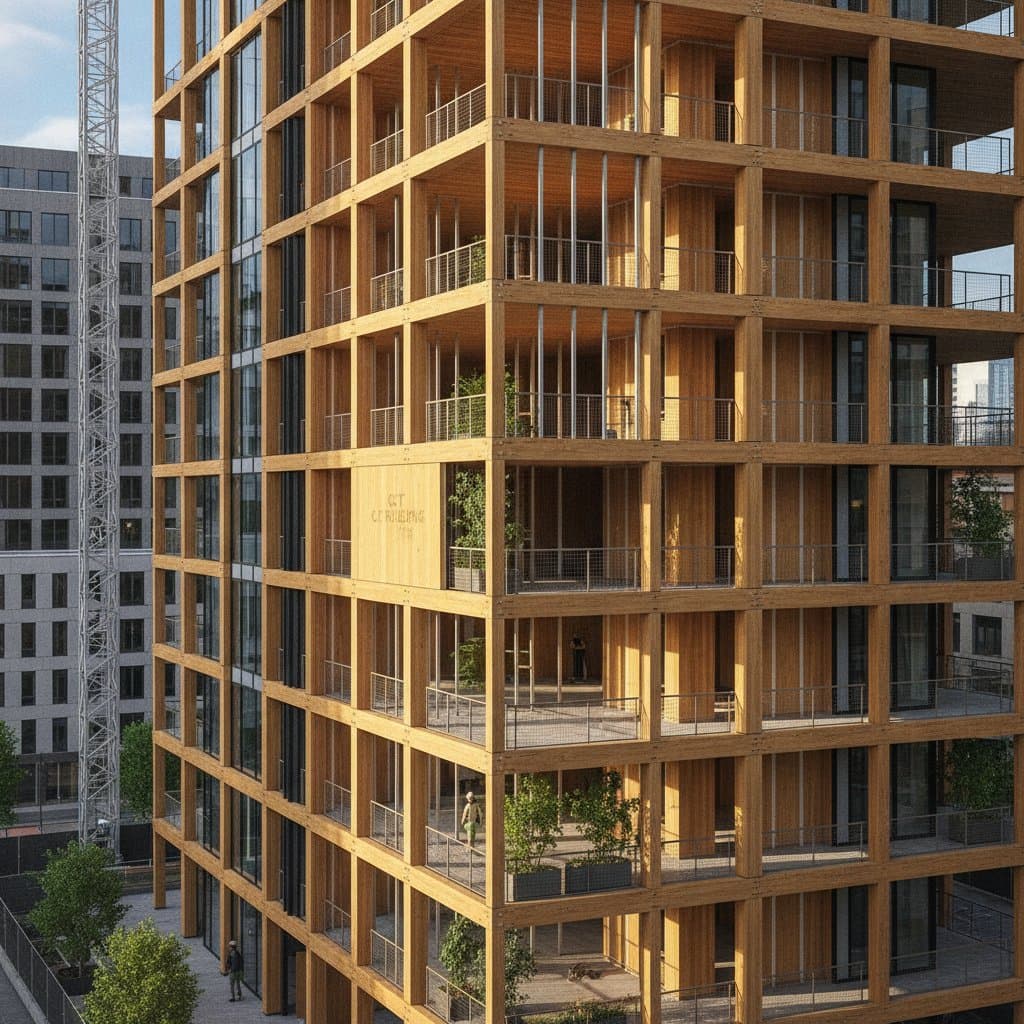
The Rise of Mass Timber in Mid-Rise Construction
Mass timber is gaining attention in multi-story projects because it combines structural performance with environmental benefits. Builders and designers now specify it for apartments, offices, and mixed-use buildings up to 18 stories. The material replaces steel and concrete framing while maintaining required strength and fire resistance.
Definition and Core Products
Mass timber consists of large engineered wood elements formed by gluing smaller lumber pieces under pressure. Cross-laminated timber, or CLT, is the most common product. Manufacturers stack boards in alternating directions to create panels that resist bending and shear forces.
These panels arrive at the site cut to exact dimensions. Crews then assemble them with cranes and mechanical connectors. The process eliminates most on-site formwork and reduces weather exposure during erection.
Key Performance Advantages
Mass timber delivers measurable gains in four areas:
- Carbon storage. One cubic meter of CLT sequesters roughly one ton of carbon dioxide absorbed during tree growth.
- Construction speed. Prefabricated panels allow a six-story building to reach weather-tight condition in weeks rather than months.
- Foundation savings. A timber structure weighs 20 to 30 percent less than an equivalent concrete frame, which often permits smaller footings.
- Interior quality. Exposed wood surfaces moderate humidity and improve acoustic comfort without added finishes.
Design and Construction Adjustments
Teams must address fire performance, moisture management, and connection detailing from the start. Encapsulation with gypsum board or charring calculations satisfy code requirements in most jurisdictions. Continuous vapor barriers and overhangs protect edges from rain during and after construction.
Contractors report that crews adapt quickly once they receive product-specific training. Many note quieter sites and fewer dust-related complaints compared with steel or concrete work.
Interior Applications and Material Pairings
Designers expose CLT ceilings and columns to highlight grain patterns. They pair the wood with terrazzo floors, clay plaster walls, or powder-coated steel accents. The combination maintains a contemporary appearance while preserving the warmth of the timber.
In residential units, visible beams reduce the need for suspended ceilings and improve perceived height. In offices, the same surfaces support biophilic design goals without additional artwork or plants.
Budget and Longevity Considerations
Material costs for mass timber currently exceed those of light-gauge steel framing. Savings appear in reduced labor hours, smaller cranes, and lower foundation expenses. Life-cycle studies show that maintenance requirements remain comparable to concrete once proper sealing and ventilation are in place.
Regular inspections focus on joint integrity and roof drainage. Manufacturers now provide 50-year warranties on treated panels when installation follows published guidelines.
Impact on Urban Environments
Mid-rise timber buildings integrate more readily into existing neighborhoods than taller concrete towers. Their scale matches many historic districts, and the visible wood softens streetscapes. Cities that update building codes to recognize mass timber report increased permit applications for this construction type.
Planning a Timber Project
Owners should engage a structural engineer familiar with CLT early in schematic design. Early coordination identifies span limits, fire ratings, and connection types that affect both cost and appearance. Small-scale mock-ups of typical details help owners visualize the finished surfaces before full commitment.