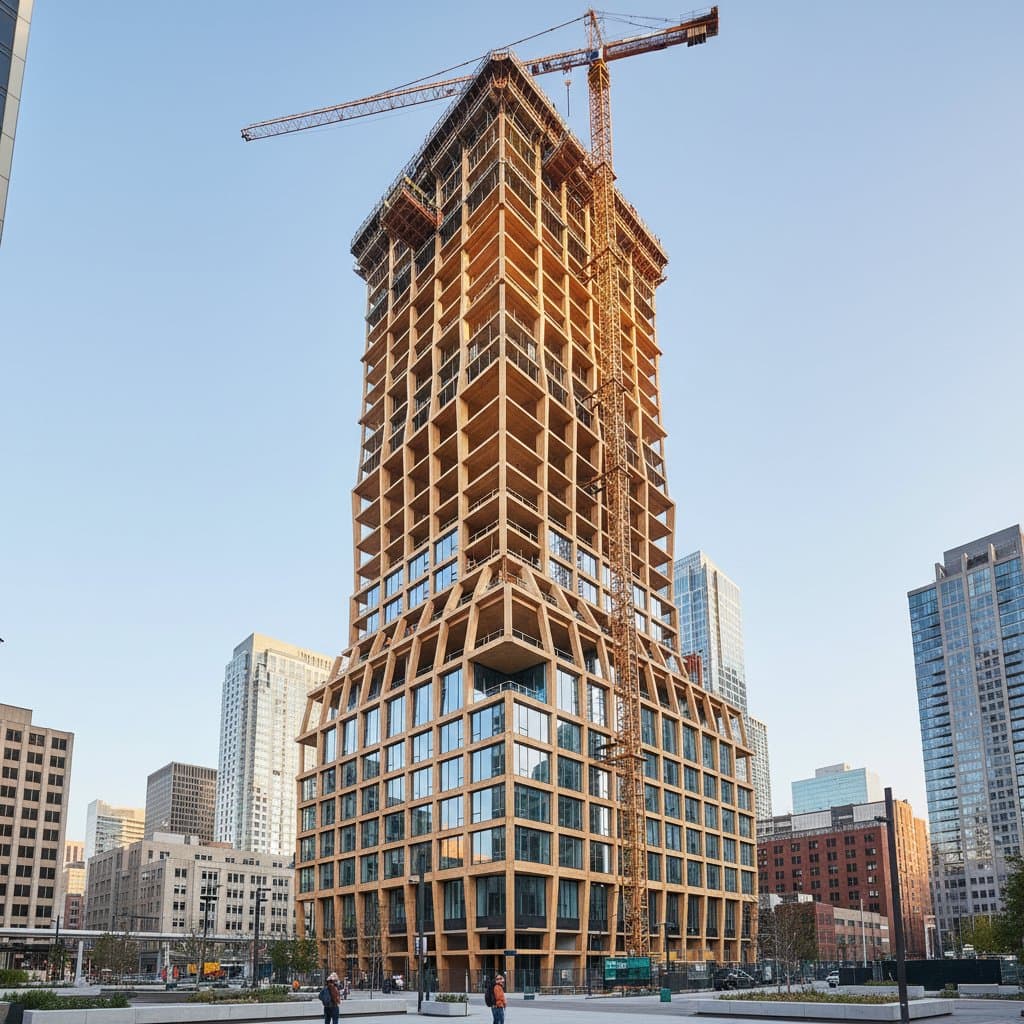
18-Story Wood Structures: Mass Timber Codes Pave the Way
A recent visit to a construction site revealed the distinctive aroma of fresh timber amid the framework of a rising high-rise. This modern edifice, far from a simple cabin, demonstrated wood's potential to ascend boldly into urban landscapes. Such scenes highlight architecture's capacity to integrate natural elements while maintaining innovative rigor.
Understanding the Rise of Tall Wood Buildings
Recent discussions about mass timber reflect a genuine surge in interest among architects and builders. Mass timber consists of engineered wood products, such as large panels formed by layering, gluing, and pressing lumber for superior structural integrity. Cross-laminated timber, a prominent variant, arranges boards perpendicularly to yield panels comparable to concrete or steel in load-bearing capacity.
Traditional building codes once restricted wood structures to modest heights, primarily due to fire risks and longevity concerns. Recent updates, however, authorize timber buildings up to 18 stories when they satisfy rigorous safety and performance criteria. This evolution merges advanced engineering with renewable materials, fostering designs that appear both progressive and rooted in tradition.
Key Advantages of Mass Timber
Mass timber offers warmth and environmental benefits that enhance occupant experience. Envision interiors featuring exposed wood grains that interact with natural light, creating inviting atmospheres while providing robust support. Unlike emissions-heavy alternatives, mass timber sequesters carbon throughout its lifecycle, appealing to developers committed to lowering ecological impacts.
Construction efficiency stands out as another strength. Factory-prefabricated panels arrive ready for rapid on-site assembly, minimizing logistical demands. This approach reduces vehicle traffic, operational disruptions, and site waste, proving particularly valuable in crowded urban settings where time and community harmony matter.
Ensuring Safety in Mass Timber Designs
Fire resistance in mass timber exceeds initial expectations through inherent material properties. Thick panels char externally during exposure, insulating the unburned core and limiting fire spread. Supplementary measures, including automated sprinkler systems and intumescent coatings, further bolster protection, ensuring compliance with elevated safety benchmarks.
Earthquake resilience adds to its merits. The material's inherent flexibility allows structures to sway and dissipate seismic energy, mitigating potential harm. Engineers in regions with high seismic activity value this ductility, which promotes stability without compromising integrity.
Evaluating Costs and Long-Term Upkeep
Initial expenses for mass timber fluctuate with regional availability and logistics, yet they often align with those of traditional materials when accounting for accelerated timelines and reduced foundation requirements. Lighter weight decreases groundwork demands, potentially lowering overall budgets.
Maintenance proves straightforward with appropriate treatments. Sealed surfaces repel moisture effectively, and exposed interiors preserve aesthetic value over time. Installers must address humidity during assembly, particularly in humid environments, but meticulous planning ensures longevity spanning decades.
Developers benefit from enhanced marketability. The distinctive timber aesthetic attracts tenants, supporting higher leasing rates and fostering community engagement. Beyond financial gains, these structures cultivate spaces that resonate with users on an emotional level.
Integrating Mass Timber Across Architectural Styles
Mass timber adapts seamlessly to diverse aesthetics, from sleek corporate towers to residential complexes with organic textures. Architects combine it with elements like glass facades or steel accents to achieve harmonious, contemporary expressions. Even mid-scale developments, such as apartment blocks or public facilities, leverage these panels for efficient, welcoming environments.
Visualize an 18-story timber edifice: rather than evoking rusticity, it presents a refined, urban profile. This versatility underscores that sustainability enhances, rather than restricts, creative possibilities in design.
Embracing Timber's Role in Urban Evolution
Tall mass timber buildings redefine the interplay between built environments and natural resources. Occupants in cross-laminated timber offices sense a subtle link to woodland origins, enriching daily experiences.
As codes expand opportunities for mass timber, future skylines will incorporate softer, more approachable forms. For project planners or urban enthusiasts, this trend signals a shift toward resilient, human-centered cities built on wood's timeless durability.