TL;DR
- Mass timber receives approval for structures up to 18 stories in height.
- This material combines exceptional strength with environmental sustainability, reshaping approaches to high-rise development.
- Construction professionals benefit from reduced material weight, shortened project schedules, and decreased reliance on carbon-intensive alternatives.
Understanding the Excitement Around Mass Timber
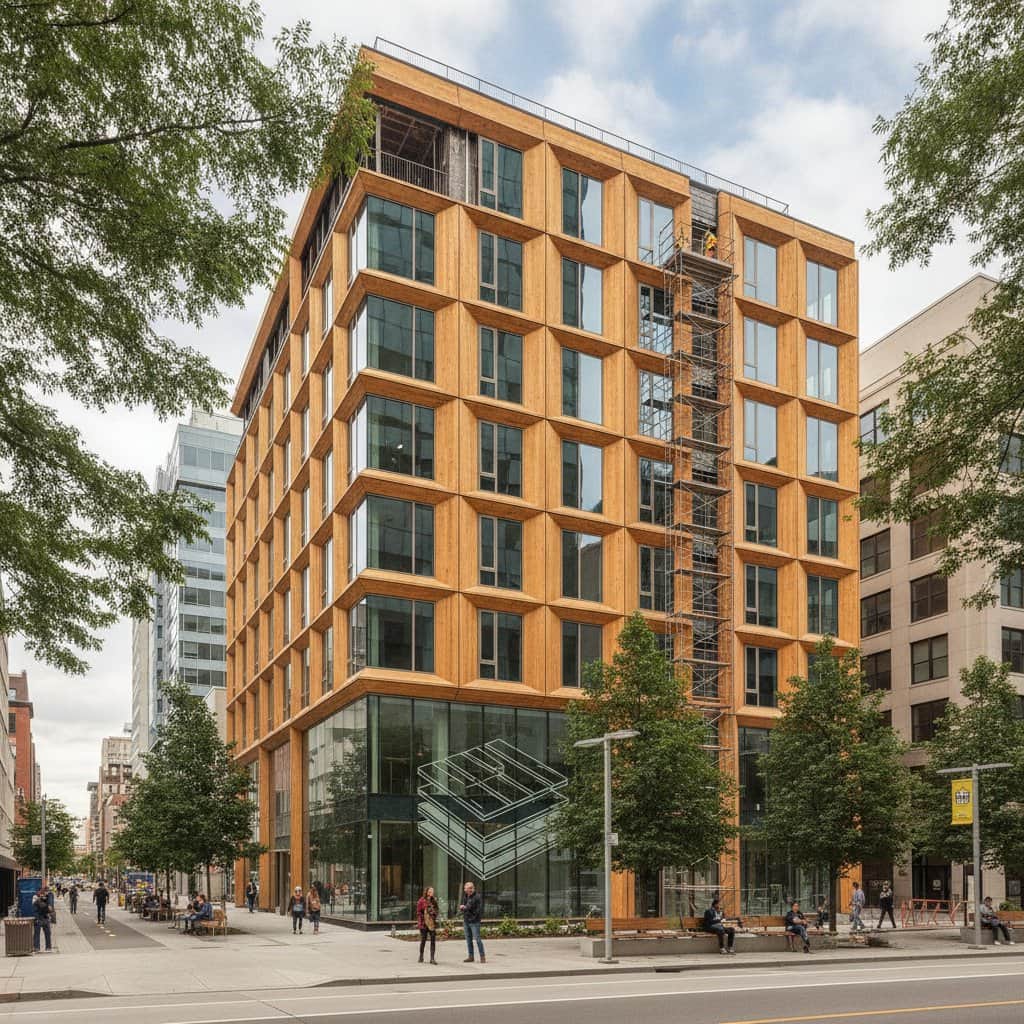
Builders express enthusiasm for mass timber due to its environmental advantages, ease of handling, and striking visual qualities.
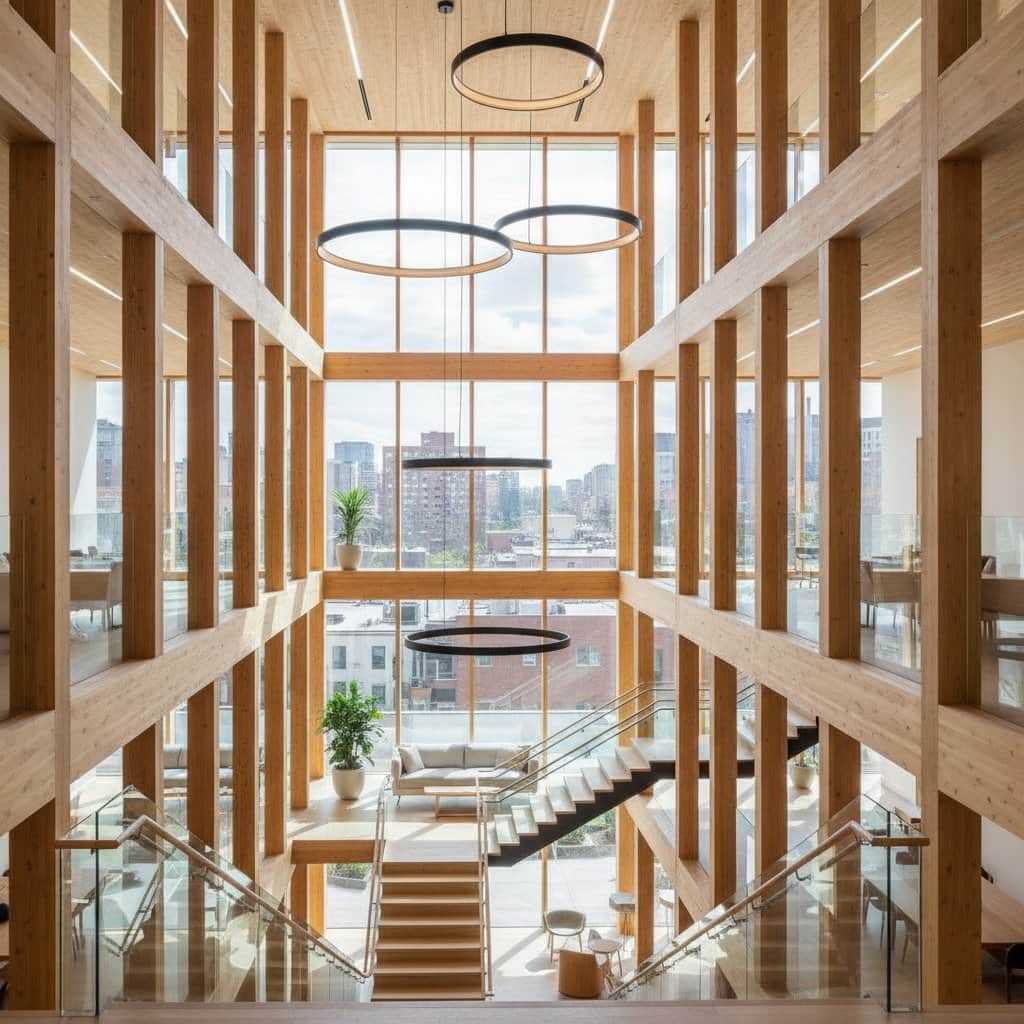
During a visit to a mass timber office structure, the tactile quality of the wooden surfaces stands out. Wood conveys a sense of warmth and vitality absent in materials like steel and concrete. This natural element enhances the human experience within built environments.
Key Advantages
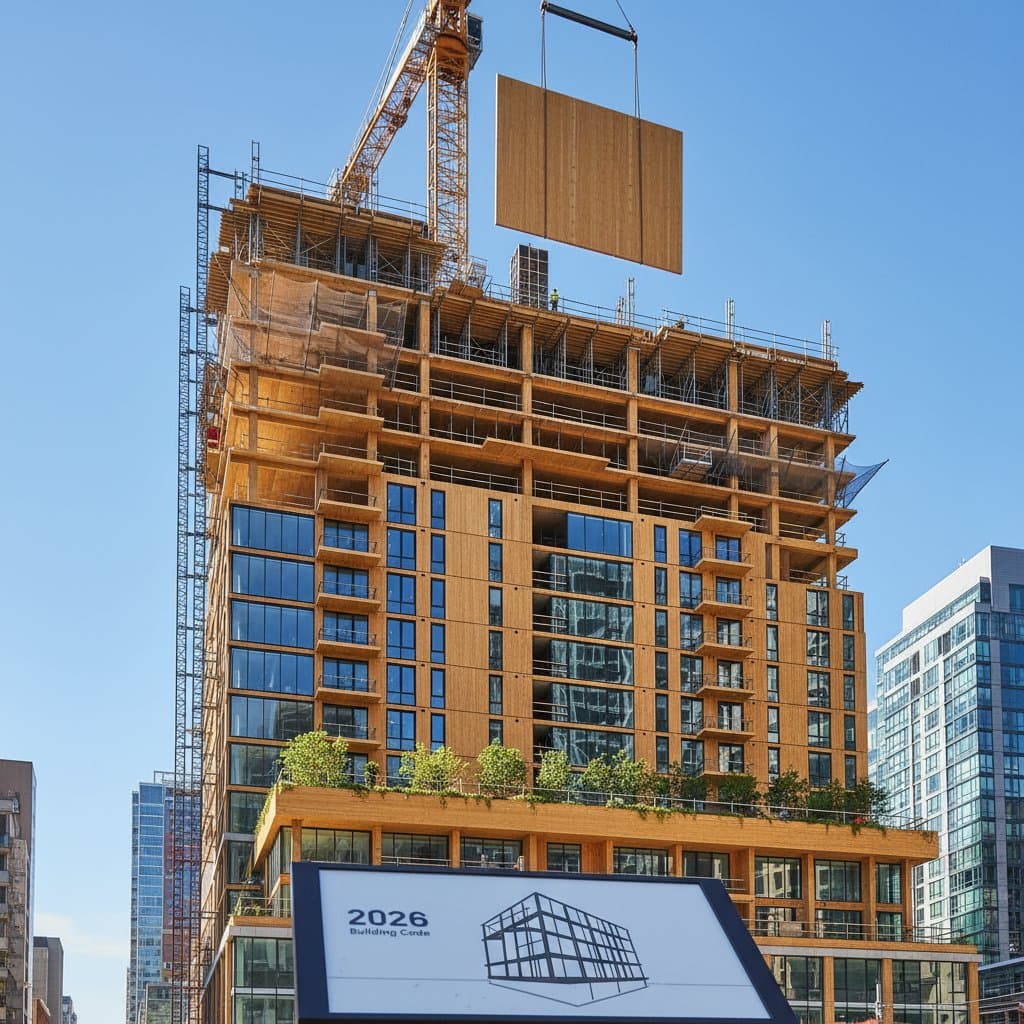
- Accelerated Construction Processes. Mass timber panels arrive prefabricated and precisely dimensioned, enabling rapid on-site assembly and significant reductions in overall project duration.
- Reduced Structural Weight. Compared to traditional concrete, mass timber weighs considerably less, allowing for more modest foundation designs and substantial cost savings in groundwork.
- Minimized Environmental Impact. Timber naturally sequesters carbon during growth, in contrast to the high-emission production of concrete and steel, resulting in a lower overall carbon footprint for completed buildings.
- Enhanced Aesthetic Value. The natural grain and texture of exposed timber eliminate the need for additional interior finishes, creating inviting spaces that blend functionality with visual appeal.
Mass timber encompasses engineered products such as cross-laminated timber (CLT) and glued-laminated timber (glulam). CLT consists of layers of lumber glued in alternating directions for enhanced stability, while glulam forms curved or straight beams from laminated wood strips. These innovations allow mass timber to rival the performance of conventional materials in high-rise applications.
The Broader Implications for Construction Practices
The approval of mass timber for taller buildings marks a pivotal evolution in the industry. For generations, high-rise projects relied exclusively on steel and concrete frameworks. Mass timber introduces a renewable alternative that aligns with global demands for reduced environmental harm.
Imagine urban landscapes featuring towers clad in natural wood tones, softening the stark lines of traditional skyscrapers. This shift extends beyond aesthetics; it promotes resource efficiency throughout the building lifecycle. Timber sourcing from sustainably managed forests ensures regeneration, unlike the finite extraction of minerals for steel and cement production.
Smaller municipalities stand to gain significantly from this development. Vertical expansion becomes feasible without the proportional increase in ecological strain. Educational facilities, residential complexes, and commercial offices can incorporate mass timber to achieve quicker completion dates and lower embodied carbon values. For instance, a mid-sized school project might reduce its construction timeline by 20 to 30 percent, freeing resources for community enhancements.
Moreover, the prefabrication aspect of mass timber minimizes waste on construction sites. Factory-controlled manufacturing ensures precise cuts and joins, reducing material overuse and debris. This precision also enhances worker safety, as assembly involves fewer heavy lifts and less exposure to hazardous processes like concrete pouring.
Challenges and Solutions in Adoption
Despite its promise, mass timber adoption faces obstacles that require strategic addressing. Fire safety represents a primary concern, though extensive testing demonstrates its resilience. The charring behavior of wood creates a protective barrier, insulating unexposed layers and limiting oxygen access, which controls fire spread more effectively than expected in some steel scenarios.
Supply chain logistics pose another hurdle. Scaling production to meet demand for large projects demands expanded milling and lamination facilities. Industry leaders respond by investing in regional manufacturing hubs, which shorten transport distances and bolster local economies. Regulatory variations across jurisdictions further complicate implementation, but standardized testing protocols help streamline approvals.
Cost considerations vary by project scale. Initial material expenses may exceed those of concrete in certain markets, yet long-term savings from expedited builds and energy-efficient designs often balance the equation. Life-cycle analyses reveal that mass timber structures incur 45 percent less embodied carbon than equivalents in steel and concrete, providing a compelling economic and ethical case.
Addressing Key Concerns About Mass Timber
Is Mass Timber Fire-Resistant?
Mass timber demonstrates proven fire performance. When exposed to flames, the outer surface chars slowly, forming an insulating layer that shields the core from heat penetration. This mechanism, validated through rigorous large-scale burn tests, ensures structural integrity for extended periods, often outperforming unprotected steel which can soften at high temperatures.
What Are the Height Limitations?
Under updated building codes, mass timber constructions reach up to 18 stories, contingent on specific engineering designs and compliance with local regulations. Advanced modeling tools assess load-bearing capacities, wind resistance, and seismic performance to confirm safety at these elevations.
How Do Costs Compare to Traditional Materials?
Upfront costs for mass timber can exceed concrete by 5 to 15 percent, depending on sourcing and scale. However, savings accrue from diminished foundation requirements, accelerated timelines that lower labor expenses, and reduced operational energy needs due to timber's insulating properties. Over the building's lifespan, these factors frequently yield net financial benefits.
What Types of Projects Suit Mass Timber Best?
This material excels in mid- to high-rise applications, including office towers, residential blocks, and public venues. Its versatility supports hybrid designs, where mass timber frames integrate with steel elements for optimal performance in seismic zones.
Integrating Mass Timber into Future Developments
Mass timber emerges as a transformative force in construction, prioritizing intelligence, cleanliness, and aesthetic restoration in vertical architecture. For architects, developers, and builders contemplating upcoming initiatives, evaluating mass timber options unlocks opportunities for innovation and responsibility. By selecting this material, projects contribute to resilient cities that harmonize human needs with planetary health.