TL;DR
- Hempcrete gains popularity among builders seeking sustainable options for breathable, eco-friendly homes.
- The material achieves carbon negativity, boosts energy efficiency, and simplifies on-site handling.
- Success requires adapting construction methods to its unique properties, distinct from traditional concrete.
Highlights
- Carbon-negative composition that sequesters CO₂ throughout the hemp plant's growth and the material's lifecycle.
- Natural temperature regulation that decreases dependence on artificial heating and cooling systems.
- Resistance to mold and pests, resulting in reduced long-term maintenance requirements.
- Non-toxic and permeable structure, enhancing indoor air quality and occupant comfort.
- Versatility for bespoke constructions or renovations emphasizing environmental responsibility.
The Rising Adoption of Hempcrete in Construction
The construction sector faces increasing pressure to adopt materials with lower environmental impacts. Traditional concrete provides unmatched strength yet contributes significantly to global carbon emissions through production processes that release substantial CO₂. In contrast, hempcrete utilizes the hemp plant, which absorbs CO₂ during rapid growth, effectively sequestering that carbon within the finished building material.
This sequestration occurs as the lime binder in hempcrete slowly recarbonates over time, further locking away atmospheric carbon. Builders appreciate the material's workability; it can be applied via spraying for seamless coverage, cast into prefabricated panels for efficiency, or poured directly into forms on-site. The extended setting time compared to concrete allows for adjustments during application, minimizing errors and waste.
Contractors report streamlined workflows with hempcrete, as the process generates less debris and avoids chemical pollutants common in conventional pours. Homeowners benefit from enhanced energy performance and the absence of volatile organic compounds, fostering healthier living environments. These advantages position hempcrete as a practical alternative for projects prioritizing sustainability.
Comparing Hempcrete to Concrete and Conventional Insulation
Concrete excels in load-bearing applications but demands high energy for manufacturing, often exacerbating moisture retention issues in varied climates. Hempcrete, though lacking structural capacity, outperforms as an infill or insulation layer. Its fibrous composition facilitates vapor diffusion, maintaining optimal humidity levels and eliminating the need for additional moisture barriers.
Consider the performance metrics in a typical residential wall assembly. Hempcrete achieves an R-value of approximately 2.4 per inch, comparable to fiberglass insulation, while offering acoustic damping that reduces noise transmission by up to 50 decibels. This dual functionality supports thinner wall profiles without sacrificing thermal efficiency.
Hempcrete Advantages
- Carbon sequestration that offsets emissions equivalent to 50-100 kg of CO₂ per cubic meter.
- Breathable properties that prevent condensation and promote natural ventilation.
- Reduced weight, easing transportation and installation for crews.
- Thermal mass that stabilizes indoor temperatures year-round.
- Durability exceeding 100 years with proper curing, requiring little upkeep.
Hempcrete Limitations
- Reliance on separate framing systems for structural support.
- Extended curing periods, often 4-6 weeks, delaying subsequent phases.
- Regional supply constraints due to emerging production scales.
- Initial costs 20-30% higher than concrete, though offset by lifecycle savings.
For new constructions, the upfront investment in hempcrete yields returns through 30-50% lower energy consumption over the building's life. Retrofitting existing structures presents challenges, yet modular blocks and spray applications enable targeted upgrades, such as insulating attics or exterior walls, to enhance performance without full disassembly.
The Living Experience in Hempcrete Homes
Homeowners describe residences built with hempcrete as remarkably comfortable. The material's density absorbs external sounds effectively, creating serene interiors even in urban settings. Temperature fluctuations remain minimal, with walls providing steady thermal buffering that maintains 68-72°F indoors regardless of outdoor extremes.
Energy usage data from early adopters illustrates the impact: one family in a temperate climate reduced heating costs by 45% compared to a similar stick-frame home. Another installation in a humid region showed no mold growth after two years, thanks to the material's wicking properties that dry out excess moisture naturally.
Beyond practical benefits, residents value the ethical dimension. Their homes actively contribute to carbon reduction, aligning personal living spaces with broader environmental goals. This sense of harmony enhances overall well-being, making hempcrete not just a building choice but a lifestyle commitment.
Future Developments in Hempcrete Applications
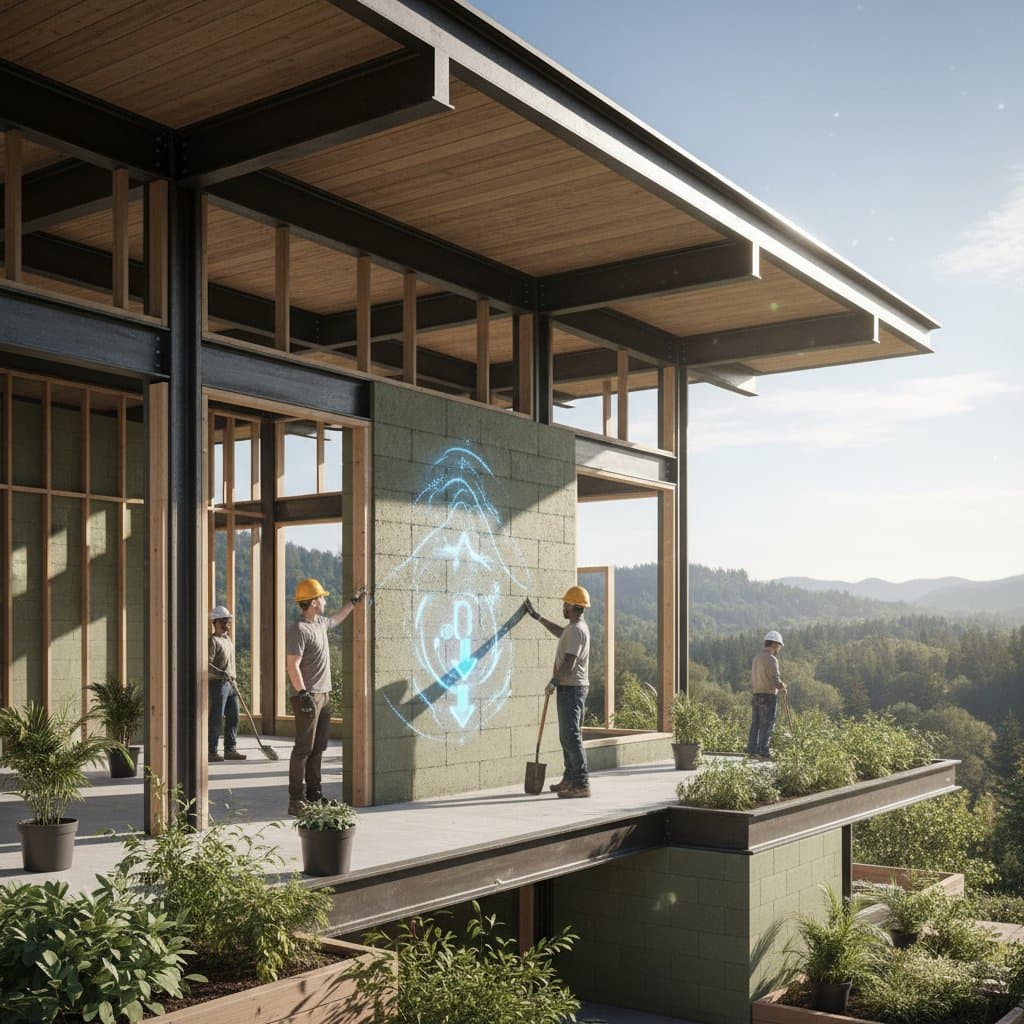
Industry growth signals broader integration of hempcrete. Expanding supplier networks now offer consistent quality, while innovations in prefabricated components accelerate project timelines. Developers explore combined systems, layering hempcrete within timber frames for hybrid walls that balance strength and sustainability.
Regulatory advancements play a crucial role; updated building codes in regions like Europe and parts of North America now certify hempcrete for non-load-bearing uses, paving the way for mainstream adoption. Training programs for mix design and application ensure reliable outcomes, transforming hempcrete from a niche option to a standard tool.
Looking ahead, expect applications in diverse scales, from compact eco-cabins to expansive multi-family units. The material's adaptability supports off-grid designs with integrated solar compatibility, further amplifying its role in resilient, low-impact architecture.
Frequently Asked Questions
Q: Can hempcrete serve as a foundation material in place of concrete?
No, hempcrete lacks the necessary compressive strength for foundations, typically rated at 1-3 MPa versus concrete's 20-40 MPa. It functions optimally in walls, roofs, and infill positions, always paired with robust framing.
Q: How does the installation process differ from standard concrete work?
Hempcrete mixing involves hemp hurds, lime binder, and water in ratios like 1:2:1, applied wet or as blocks. Curing demands ventilation to facilitate recarbonation, contrasting concrete's rapid hydration that requires formwork removal within days.
Q: Is hempcrete suitable for all climate zones?
Yes, its breathability suits humid areas by preventing rot, while thermal mass benefits cold regions. In extreme dryness, supplemental sealing protects against rapid evaporation during curing.
Embracing Hempcrete for Lasting Environmental Impact
Integrating hempcrete into building projects delivers tangible benefits in carbon management and occupant health. Builders achieve compliance with green standards while homeowners enjoy reduced operational costs and superior comfort. As production scales, this material promises to elevate sustainable construction, fostering homes that sustain both people and the planet.