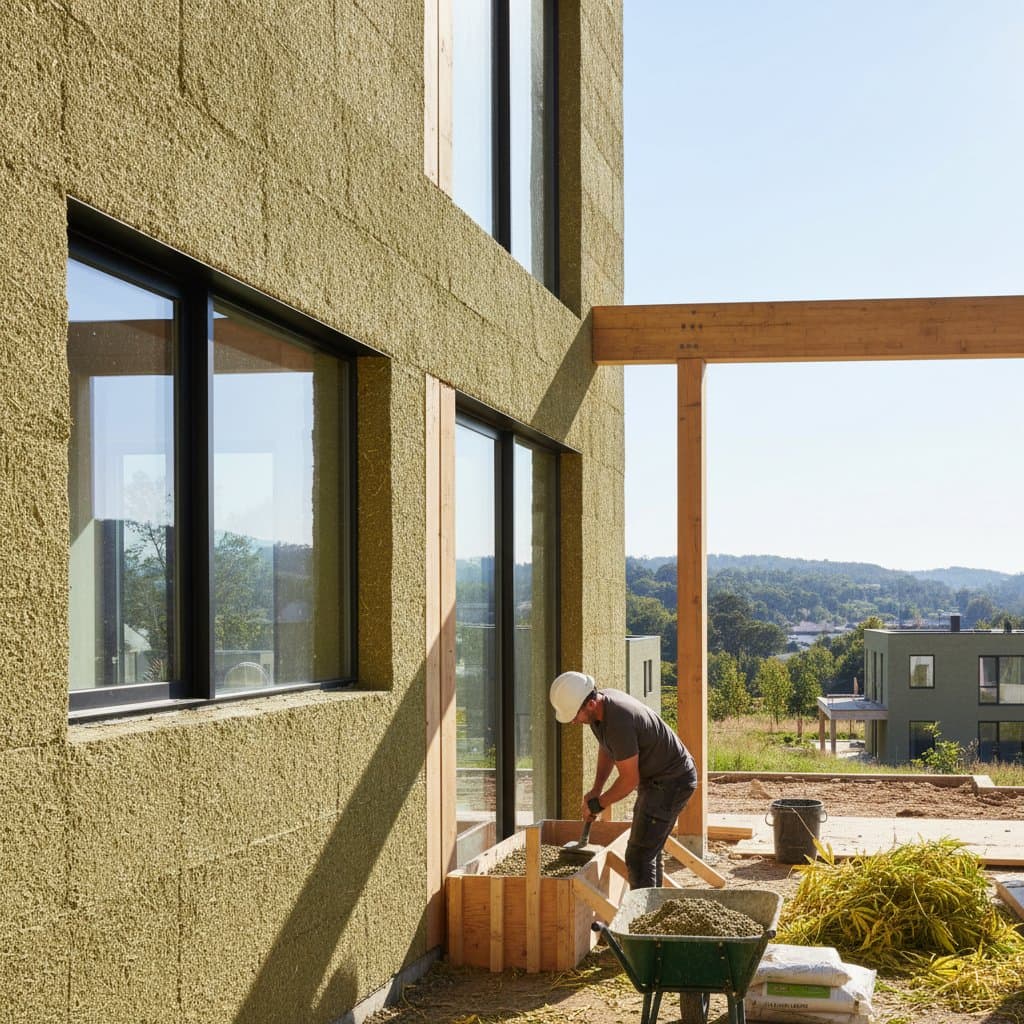
Why Hempcrete Walls Will Lead the Shift to Carbon-Negative Construction in 2026
During a visit to an eco-friendly residence on the outskirts of the city, the author traced fingers along a hempcrete wall. The surface presented a subtle, chalky texture that evoked both timeless tradition and innovative design. The interior atmosphere remained serene and noticeably cooler than the exterior, fostering a profound sense of equilibrium uncommon in conventional dwellings. This encounter highlighted that wall materials extend beyond mere structural support; they shape daily living and indoor environmental quality.
Understanding Hempcrete's Unique Composition
Hempcrete may appear unfamiliar to those outside sustainable construction circles, yet its formulation proves straightforward. Builders combine hemp hurd, hydraulic lime, and water to form this lightweight, permeable material suitable as an alternative to conventional concrete blocks or rigid insulation in residential projects.
This composition achieves an inherent equilibrium. Hempcrete provides effective thermal insulation while permitting moisture vapor to pass through, thus preventing accumulation. It maintains stable indoor temperatures through passive regulation and sequesters carbon dioxide during the curing process. Consequently, each hempcrete wall actively removes carbon from the atmosphere, establishing it as a genuinely carbon-negative option.
Such attributes align with the increasing preference for residences that integrate seamlessly with environmental principles. Homeowners seek durable spaces that evolve gracefully over time, reflect personal commitments to sustainability, and require minimal upkeep. Hempcrete fulfills these expectations through its inherent reliability.
Reasons Builders Embrace Hempcrete
Construction professionals have long relied on materials emphasizing durability and rapid installation, though these often incur environmental and performance drawbacks. Portland cement-based concrete and foam insulations excel in strength but promote thermal bridging, foster condensation, and necessitate high-energy manufacturing.
Hempcrete reverses these limitations. Its low density facilitates handling, while sufficient compressive strength supports typical load-bearing applications in homes when paired with framing. The material's vapor permeability ensures walls function as a respiratory system, expelling excess humidity to maintain dryness.
Application of hempcrete yields interiors that retain coolness during summer heatwaves and conserve warmth through winter months. The lime component deters mold growth and insect infestation, reducing long-term maintenance needs and enhancing indoor air purity. Professionals value its versatility: installers cast it in situ within molds, prefabricate blocks off-site, or apply it as a spray between studs.
Beyond ecological benefits, hempcrete addresses practical demands. As energy costs rise and awareness of indoor pollutants grows, this material reduces utility expenses and eliminates harmful emissions. It demonstrates superior fire resistance, with non-combustible lime preventing flame spread, and superior sound absorption, muffling external noise effectively. For households managing respiratory conditions or sensitivities, these qualities significantly elevate living standards.
Evidence Supporting Hempcrete as a Lasting Solution
Skeptics may question whether hempcrete constitutes a transient trend in green building. However, its adoption stems from proven performance rather than promotional campaigns. Homeowners and contractors who experience its benefits seldom revert to alternatives, drawn to the material's sensory appeal and aesthetic warmth absent in standard options.
Envision walls featuring a smooth, matte finish that diffuses natural light softly throughout the day. Consider a residence that sustains comfort without reliance on intensive mechanical systems. The embedded hemp fibers form microscopic air voids that stabilize thermal conditions through convection and radiation, simulating the responsiveness of natural ecosystems rather than impermeable enclosures.
The sustainability narrative further bolsters its credibility. Hemp plants mature in 3 to 4 months, demand minimal irrigation, and enrich depleted soils through root systems. Utilization spans multiple sectors, including fibers for fabrics and seeds for nutrition, maximizing resource efficiency. In building applications, hempcrete immobilizes absorbed carbon for the structure's lifespan, often exceeding 100 years, aligning with regenerative design philosophies that prioritize ecological harmony.
Key Considerations for Hempcrete Implementation
Prospective users should note that hempcrete serves as a non-load-bearing infill rather than a standalone structural element. It requires integration with a skeletal framework of timber, metal, or composite materials to bear vertical loads effectively.
Curing demands extend beyond those of poured concrete, typically requiring 4 to 6 weeks for full strength development under controlled conditions. This extended timeline necessitates scheduling adjustments, yet the enduring stability justifies the wait, with structures demonstrating resilience against seismic activity and weathering.
Initial expenses fluctuate based on regional availability of raw components. Hemp hurd sourcing benefits from expanding agricultural networks in Europe and North America, while lime remains widely accessible. Import dependencies persist in some markets, but rising popularity spurs local production facilities, stabilizing prices and shortening supply chains.
Practical Applications of Hempcrete in Design
Even without undertaking a complete new build, individuals can integrate hempcrete into existing properties. Options include non-structural partitions, retrofitted insulation layers, or aesthetic cladding elements. Its tactile qualities complement materials such as exposed wood beams, natural stone accents, and earthen plasters, yielding cohesive, biophilic interiors.
Pairing with eco-compatible finishes like mineral-based paints or lime washes enhances longevity and visual appeal. The following approaches demonstrate feasible incorporation:
- Accent Features: Install hempcrete on select interior surfaces, such as a bedroom accent wall, to introduce organic texture and thermal buffering.
- Upgrade Initiatives: In renovations, substitute fiberglass or polystyrene with hempcrete blocks to upgrade vapor management and energy performance.
- Ancillary Structures: Experiment in detached spaces like home offices or storage sheds, allowing evaluation of benefits on a contained scale before broader adoption.
These methods deliver consistent advantages, including humidity equilibrium and sensory comfort, across diverse project scopes.
Experiencing the Benefits of Hempcrete Daily
Residing within hempcrete-enclosed spaces reveals subtle yet transformative effects on well-being. Indoor environments maintain freshness, free from the stagnation associated with airtight constructions. Thermal mass properties buffer against diurnal fluctuations, preserving equable conditions year-round without excessive reliance on heating or cooling systems.
Surfaces develop a subtle patina over time, enhancing architectural character without degradation. As construction practices evolve, hempcrete gains prominence through hands-on expertise among tradespeople, intentional specifications by designers, and deliberate selections by clients. This momentum arises from tangible outcomes rather than abstract ideals, compelling widespread integration.
In envisioning forward-thinking architecture, prioritize materials that contribute positively to planetary health. Hempcrete embodies this ideal by harmonizing human comfort, ecological stewardship, and enduring elegance in every application.