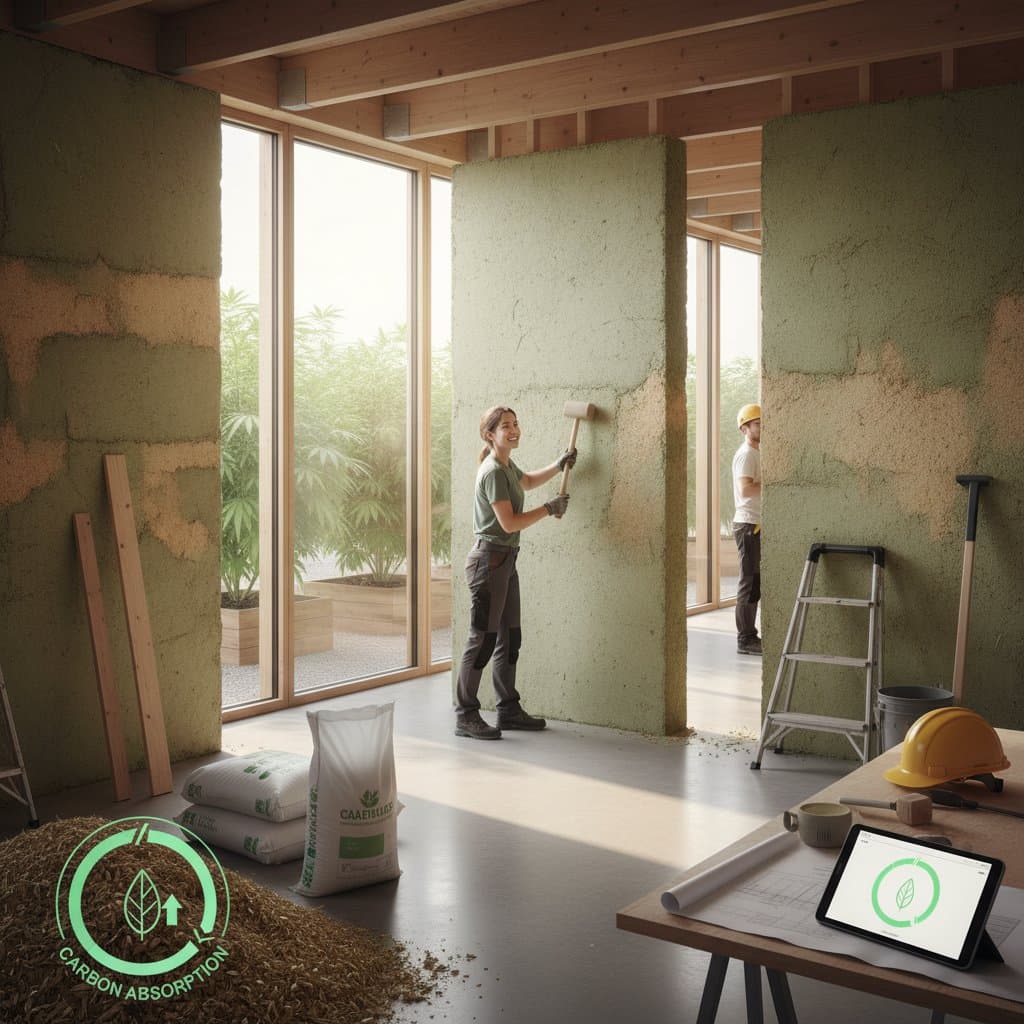
Hempcrete Walls: The Carbon-Negative Building Revolution
Envision entering a home that remains cool in summer and warm in winter without excessive energy use. The walls regulate moisture, freshen the air, and sequester carbon from the atmosphere. This scenario describes the benefits of hempcrete, a material that integrates sustainability with comfort in modern construction.
Hempcrete represents more than an eco-friendly option. It embodies a commitment to low-impact living. For those considering new builds or renovations, hempcrete offers a pathway to reduced environmental footprints.
The Fundamentals of Hempcrete
Hempcrete consists of the hemp plant's inner woody core, or hurd, combined with lime and water to create a bio-composite. Upon curing, it yields a lightweight yet robust insulating material for walls. In contrast to traditional concrete, which generates carbon emissions during manufacturing, hempcrete captures and retains carbon dioxide absorbed by the hemp during growth.
This carbon sequestration persists for the material's lifespan, often spanning decades. Hempcrete qualifies as carbon-negative because it removes more carbon from the atmosphere than it releases throughout its production and use. Such properties elevate sustainability discussions in the building industry.
Key Advantages for Builders and Homeowners
Professionals in construction value hempcrete for its multifaceted performance. The material balances thermal properties, resists moisture buildup, and enhances air quality without synthetic additives. These attributes address common issues in conventional builds, such as uneven temperatures and poor ventilation.
Consider the following benefits that attract designers, contractors, and residents:
- Renewable Sourcing: Hemp matures rapidly and requires little water or chemical inputs, positioning it as a highly sustainable crop.
- Carbon Sequestration: One cubic meter of hempcrete sequesters approximately 100 to 200 kilograms of carbon dioxide, acting as an environmental asset.
- Thermal Regulation: The material stabilizes indoor temperatures, reducing dependence on artificial heating and cooling.
- Improved Air Quality: Lime in the mix inhibits mold and mildew, fostering healthier indoor environments.
- Long-Term Durability: With appropriate sealing, hempcrete endures comparably to standard masonry structures.
These features appeal to individuals prioritizing both visual appeal and ecological impact.
Constructing Hempcrete Walls
Hempcrete construction diverges from industrial concrete methods, emphasizing manual techniques and natural processes. The approach suits smaller projects and integrates well with framed structures. Understanding the steps clarifies its accessibility for various scales of building.
The process unfolds as follows:
-
Establish the Framework: Since hempcrete does not support structural loads, install a timber or metal frame first.
-
Blend the Components: Mix hemp hurd, lime binder, and water in a large container to achieve a consistency similar to damp soil.
-
Apply the Mixture: Pack or tamp the blend into formwork surrounding the frame, building up layers as needed.
-
Allow Curing Time: Permit the walls to dry for weeks, during which the material gains strength and breathability.
-
Apply Finishes: After curing, coat with plaster, limewash, or leave exposed for a natural texture.
This method, while labor-intensive, produces walls with organic warmth and subtle texture reminiscent of aged stone.
Budgeting and Sourcing Materials
Initial costs for hempcrete typically exceed those of conventional insulation and concrete by 10 to 20 percent. However, long-term savings emerge from reduced energy consumption and low upkeep needs. Planning accounts for these factors to justify the investment.
Sourcing locally minimizes expenses and environmental transport impacts. Hemp processing facilities in many areas supply hurds affordably, while lime comes from regional masonry providers. Direct partnerships with farmers create efficient, community-supported supply chains.
For a modest residential project, estimate costs as:
- Hemp Hurds: $0.50 to $1.00 per cubic foot, depending on volume.
- Lime Binder: $1.00 to $2.00 per cubic foot, valued for its permanence.
- Labor: Elevated for mixing and forming, often 20 to 30 percent above standard rates.
- Energy Reductions: Annual savings of 15 to 25 percent on utilities post-construction.
These elements ensure financial viability alongside ecological gains.
Maintenance and Daily Use
Hempcrete demands minimal ongoing care, provided finishes remain breathable. Opt for lime-based plasters or mineral paints to prevent moisture retention. Such choices preserve the material's vapor-permeable nature.
Routine cleaning involves soft brushes or vacuums for exposed areas. In moist regions, maintain airflow during initial curing to avoid issues. The inherent pest resistance and lack of off-gassing make it suitable for sensitive households.
Safety features include high fire resistance and non-toxicity. These qualities provide reassurance for long-term occupancy.
Impacts on Construction Practices
Hempcrete influences broader industry changes by promoting circular economies. Hemp cultivation revitalizes agriculture in rural areas, while processing converts plant waste into valuable resources. This model encourages sustainable sourcing from farm to finish.
Designers adapt to hempcrete's flexibility, incorporating it into curved walls, modular panels, and urban retrofits. The material supports innovative aesthetics without compromising performance. Adoption reflects a move toward regenerative building that restores rather than depletes.
Experiencing Life in a Hempcrete Space
Residents in hempcrete homes report enhanced comfort through cleaner air, balanced sound, and stable climates. The walls diffuse light softly, creating inviting atmospheres. Over years, the material strengthens, requiring only periodic finish renewals.
Refreshing limewash proves straightforward, often completing in hours. This upkeep integrates seamlessly into home routines, akin to natural material care.
Steps to Incorporate Hempcrete
To pursue hempcrete, consult certified builders experienced in bio-materials. Request demonstrations of finished samples to assess texture and feel. Align the material with specific project visions through expert guidance.
Choosing hempcrete extends beyond sustainability. It fosters homes that harmonize with natural cycles, offering enduring comfort and environmental contribution.