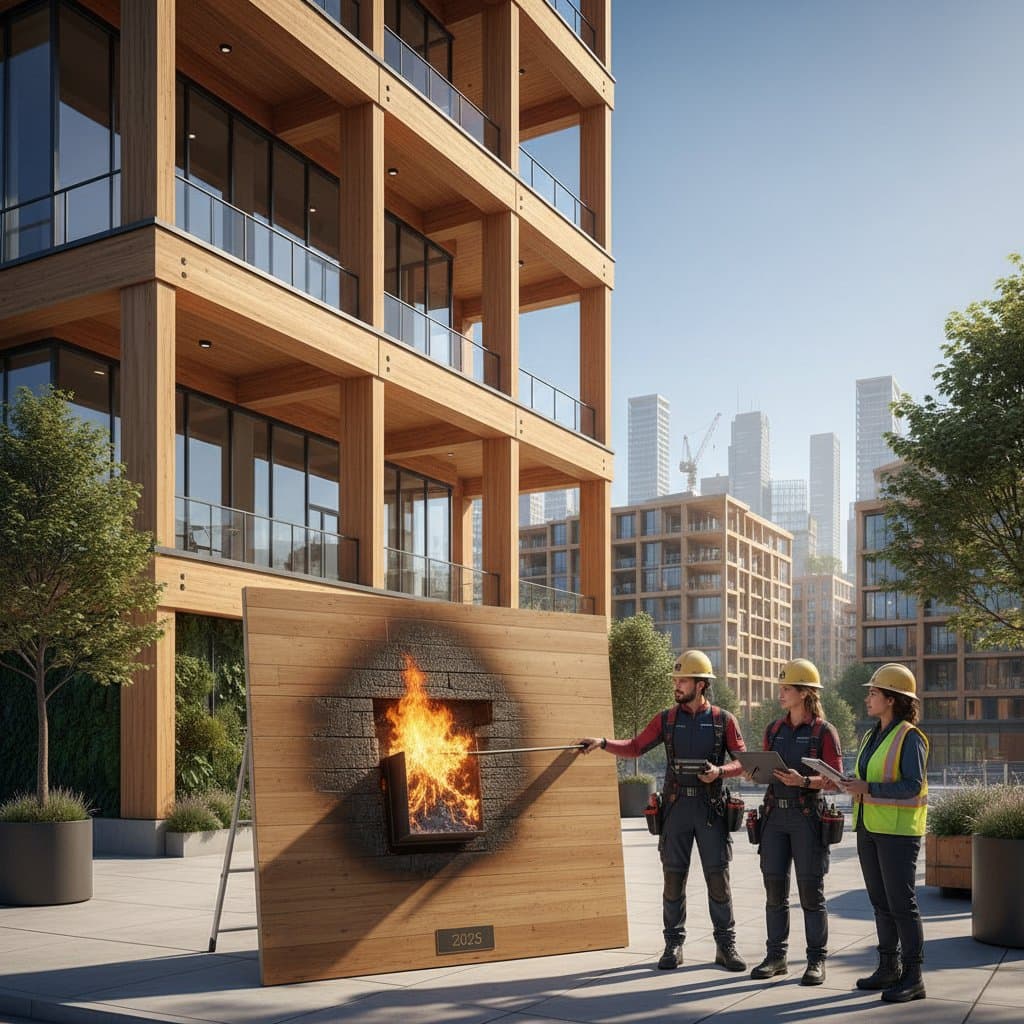
Fire-Safe Mass Timber: Building the Future in 2025
Imagine entering a contemporary apartment complex where the subtle aroma of fresh wood mingles with natural light illuminating polished surfaces. The atmosphere conveys warmth through both innovative design and the inherent qualities of the materials. Mass timber structures offer a solid foundation that contrasts with the rigidity of concrete or steel, blending quiet elegance with modern functionality.
This material addresses long-standing demands in construction for options that balance natural appeal with rigorous safety and environmental criteria. Mass timber provides exceptional strength and versatility. Recent technological advancements and extensive testing have established its reliability in fire safety, positioning it as a transformative choice for 2025 projects.
Overcoming Wood's Traditional Limitations in Construction
Wood enjoys widespread appreciation for its tactile warmth, visual texture, and minimal environmental impact. However, concerns about fire risk in high-rise applications have historically confined its use to low-scale developments. Traditional wood framing ignites rapidly, prompting restrictions in building codes.
Meanwhile, the construction industry seeks alternatives to resource-intensive materials. Concrete and steel deliver durability but incur substantial carbon emissions during production. The core challenge lies in scaling wood for larger structures while ensuring safety and efficiency.
Mass timber resolves these issues through advanced engineering. Unlike conventional lumber, these components withstand significant structural loads and fire exposure. Their inherent beauty enhances architectural designs, appealing to both professionals and occupants.
Key Characteristics of Mass Timber
Mass timber consists of large-scale, multi-layered wood panels assembled under precise pressure and adhesion processes. Primary variants include cross-laminated timber (CLT), glued laminated timber (glulam), and nail-laminated timber (NLT). These products achieve performance levels comparable to conventional building materials.
Distinct features include:
- Orthogonal Layering in CLT: Boards in each layer orient perpendicular to adjacent layers, enhancing bidirectional strength and dimensional stability.
- Inherent Fire Performance: Exposure to heat prompts surface charring, creating a protective barrier that insulates the core and limits oxygen access.
- Controlled Fabrication: Production occurs in regulated environments, minimizing variability and ensuring uniform quality across panels.
- Environmental Benefits: Sourced from certified forests, mass timber sequesters carbon and promotes the use of renewable resources over finite alternatives.
Facilities producing CLT operate with industrial precision, processing lumber into components that integrate natural aesthetics with engineered reliability.
Fire Performance Mechanisms in Mass Timber
Advancements in fire safety represent a pivotal evolution for mass timber. During exposure, the dense outer layers carbonize predictably, forming an insulating char layer. This mechanism shields unexposed sections, preserving structural integrity for extended periods.
Engineers model this behavior accurately, enabling designs that comply with international safety standards. The char layer reduces heat penetration rates, outperforming expectations for wood-based systems.
Many installations incorporate supplementary measures, such as intumescent coatings or encasements in gypsum board, to bolster protection. Properly engineered mass timber assemblies achieve fire-resistance ratings equivalent to or surpassing those of steel and concrete frameworks.
Essential Factors for Implementing Mass Timber
Beyond sustainability and visual appeal, mass timber excels in operational efficiency. Builders and designers should evaluate the following aspects for project integration:
- Budget and Availability: Initial costs may exceed those of standard framing, yet prefabrication accelerates timelines and cuts labor expenses. Suppliers like SmartLam and Structurlam provide diverse options in various dimensions and surface treatments for both commercial and residential applications.
- Assembly Efficiency: Off-site fabrication allows for rapid on-site erection. Mid-rise structures often complete framing phases in weeks rather than months compared to poured concrete methods.
- Structural Loads and Site Conditions: The reduced weight of timber lessens demands on foundations, lowering expenses and facilitating construction on challenging terrains like expansive soils.
- Sound Management: Integrate appropriate insulation and joint sealing to optimize acoustics. Well-executed timber builds deliver serene interiors with minimal reverberation, unlike exposed metal constructions.
- Long-Term Care: Apply protective finishes such as penetrating oils or transparent varnishes to enhance resilience against wear. Opt for low-sheen coatings that highlight wood grain while repelling stains and humidity.
Environmental and Lifecycle Benefits
Mass timber stands out for its role in reducing construction's ecological footprint. Panels lock in atmospheric carbon from harvest through building lifespan, leveraging juvenile trees from sustainable plantations to minimize deforestation risks.
Manufacturing demands far less energy than cement or metal production, yielding lower embodied carbon values. This alignment supports urban initiatives targeting net-zero emissions and regulatory compliance.
Architects increasingly combine mass timber with strategies like daylight optimization and natural airflow systems. Such integrations foster low-energy buildings that honor material heritage while advancing performance metrics.
Experiencing Mass Timber Environments
Occupants in mass timber buildings sense an immediate uplift in ambiance. Warmer air circulation, subdued acoustics, and dynamic light interactions with wood textures create invigorating spaces. Exposed CLT elements develop appealing patinas over time, contributing to refined, non-sterile atmospheres.
For residents, this translates to enhanced well-being and design cohesion. Fire safety certifications provide reassurance, complementing straightforward upkeep routines similar to those for solid wood interiors.
Integrating Mass Timber into Projects
To adopt mass timber, consult architects and contractors on procurement and regulatory compliance early in planning. Regional availability varies, though market expansion continues apace.
Prioritize vendors with forest stewardship certifications. Review jurisdiction-specific fire performance data to align CLT or glulam selections with project objectives, ensuring seamless execution and lasting value.