2025 Flood Mandates: Strategies to Mitigate Insurance Increases
A neighbor once shared a garage filled with rainwater after heavy precipitation, expressing surprise at the water's advance despite their home's position. Such experiences highlight the vulnerability many property owners encounter during wet seasons. With impending flood regulations set for 2025, individuals must reassess construction, renovation, and protection approaches for residences. These changes influence both design practices and financial implications.
For those considering new construction near coastal regions or renovations in susceptible areas, foundation and structural decisions determine insurance affordability. Elevated, flood-resilient builds offer benefits beyond cost savings, including reduced anxiety during severe weather events.
Factors Driving Insurance Premium Increases
Insurers reassess hazards based on updated flood mapping and climate data. Communities previously outside designated flood areas now face reclassification due to rising sea levels and intensified storms. This shift leads to higher premiums for properties below the base flood elevation, defined as the anticipated water level in a 1% annual chance flood event.
Properties below this elevation may see premium hikes of 20% to 50% or more, depending on location and coverage. Elevation adjustments or incorporation of flood-resistant features enable qualification for discounts through programs like the National Flood Insurance Program. Exceeding minimum requirements often yields annual savings of several hundred dollars, alongside enhanced structural integrity.
Compliance extends beyond legal obligations; it fosters long-term security for homeowners.
Weighing Initial Investments Against Long-Term Gains
Adhering to flood mandates involves elevated upfront expenses, such as structural lifts or specialized materials that add 5% to 15% to construction budgets. These costs recoup through diminished insurance rates and minimized post-flood repairs, which can exceed $50,000 per incident in vulnerable zones.
Renovation projects benefit from incremental steps: relocate utilities to higher levels, apply water-resistant drywall and sealants to ground floors, and install French drains or sump pumps for better water diversion. Larger modifications, like hydraulic foundation elevation, prove more economical when planned in phases.
New constructions integrate elevation seamlessly during planning. Raising the foundation by 1 to 3 feet above base flood elevation costs approximately $10,000 to $30,000 less than post-construction retrofits. This proactive measure bolsters safety and optimizes insurance eligibility from the outset.
Tailoring Designs to Climate and Geography
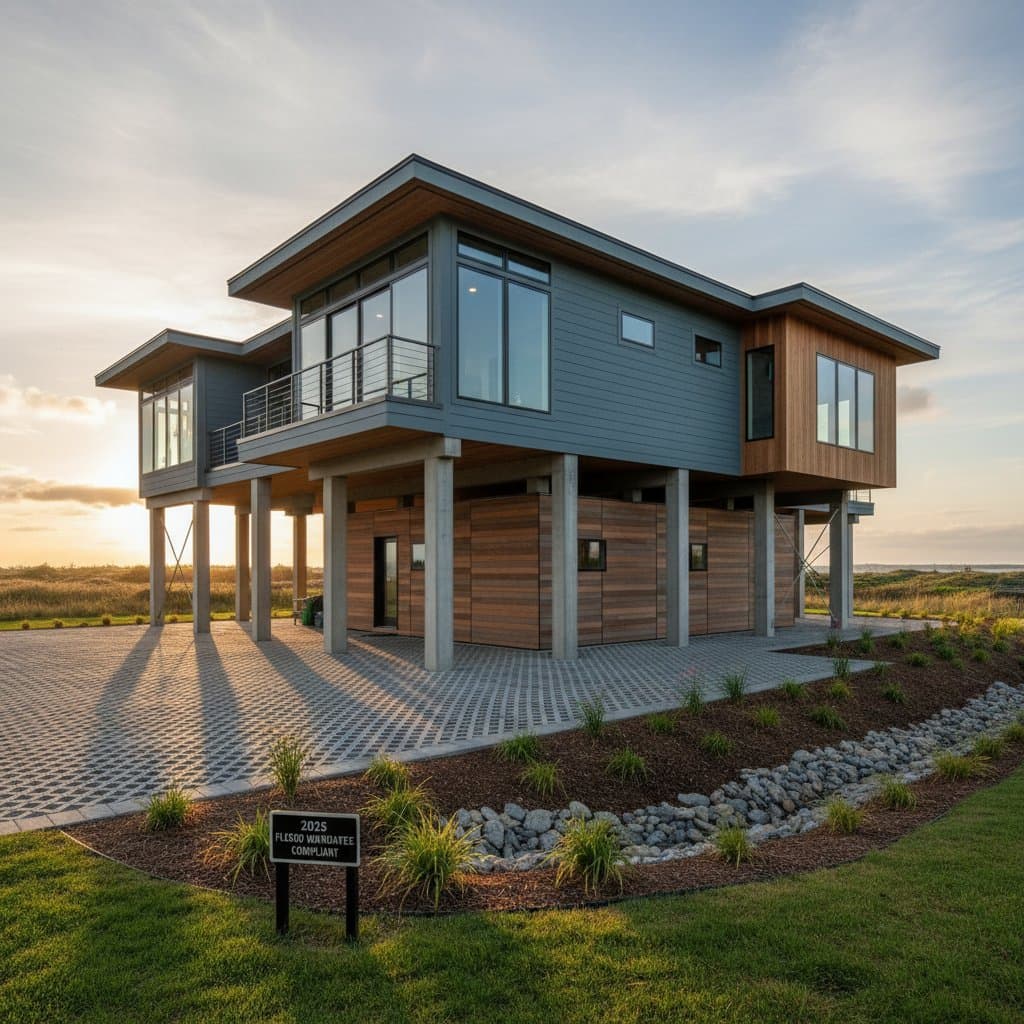
Regional weather patterns dictate optimal flood-resistant strategies. Coastal or riverine areas prone to tidal surges favor pier-and-beam foundations, which permit water flow beneath the structure without damage. Inland regions with flash flooding benefit from elevated slabs reinforced with breakaway walls that yield under pressure.
Consult local engineers or contractors familiar with soil stability and hydrology. They recommend site-specific solutions, such as permeable paving to reduce runoff or vegetative buffers to slow water velocity. These adaptations ensure compliance while preserving habitability.
Before initiating projects near waterways or lowlands, review Federal Emergency Management Agency flood insurance rate maps. These resources specify base flood elevations and special flood hazard areas, guiding precise design elevations and material selections.
Integrating Resilience with Aesthetic Appeal
Contemporary architecture embraces flood-resistant elements as design assets. Elevated structures accommodate expansive decks, integrated carports, or utility enclosures below the living space, enhancing functionality without sacrificing style.
Durable options like fiber-reinforced concrete, pressure-treated lumber, and galvanized steel siding withstand moisture while contributing to visual interest. Neutral palettes, including terracotta, beige, and sage hues, harmonize with natural landscapes, creating elevated homes that appear rooted yet protected.
This fusion of practicality and elegance results in residences that provide refuge and delight. Homeowners achieve not only fiscal prudence but also a profound sense of stability amid environmental uncertainties.
Sustaining Flood-Resilient Features Over Time
Post-construction, routine upkeep preserves design efficacy. Schedule biannual inspections of elevation components, ensuring anchors and pilings remain secure. Maintain clear sump pumps by testing during dry periods and replacing filters as needed.
Prevent blockages in drainage systems through monthly debris removal from grates and swales. Elevate outdoor appliances and seal entry points annually to deter water intrusion. These habits extend the lifespan of resilient features and sustain insurance discounts.
Adopt elevation as a holistic philosophy for resilient living. Whether embarking on a fresh build or refining an existing property, these informed decisions empower homeowners to thrive in evolving climatic conditions, securing both assets and well-being.