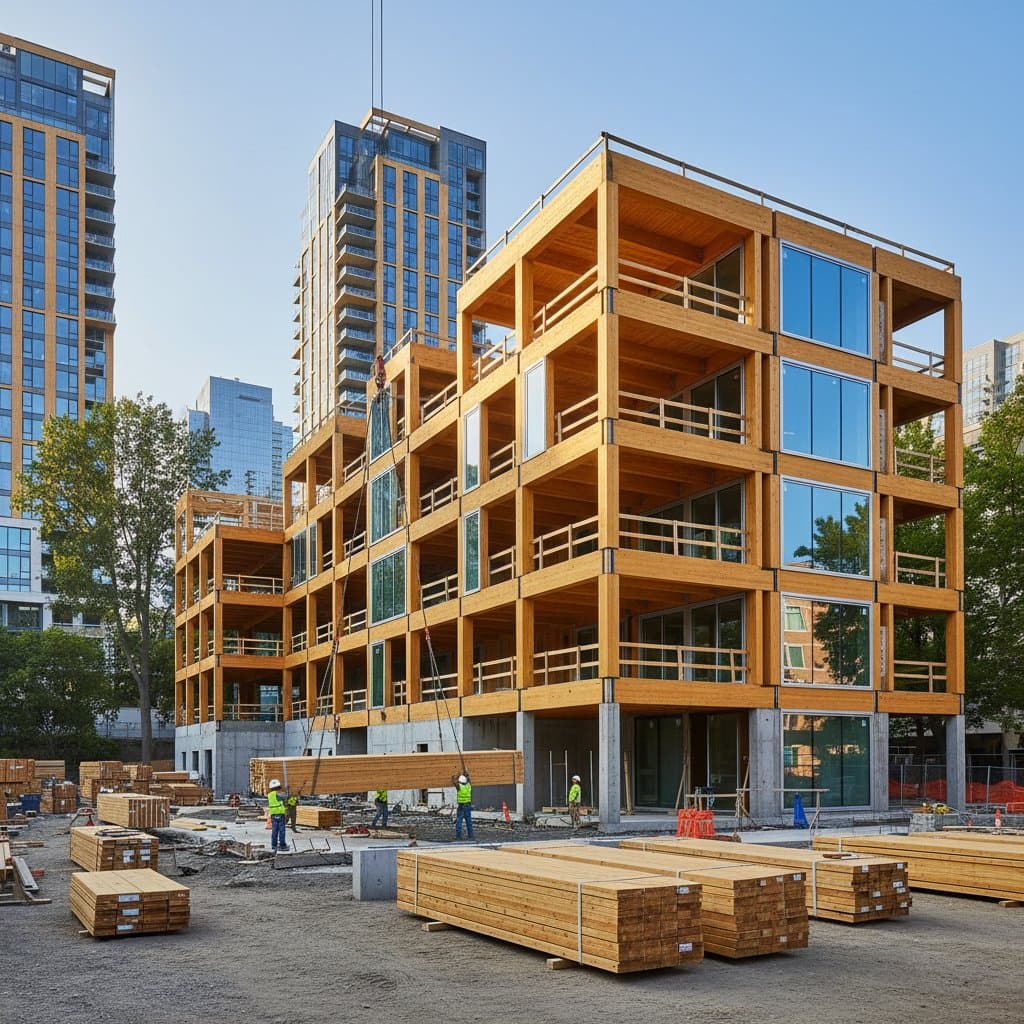
Mass Timber and 2025 Building Codes: Cost Comparisons and Benefits
In a recent visit to an under-construction lobby, the sight of honey-colored timber beams spanning the ceiling captured attention. The scent of fresh resin lingered in the air, creating a serene atmosphere distinct from typical concrete environments. The builder explained that this structure utilized mass timber, a material poised to redefine modern building practices.
Understanding the 2025 Code Updates
Recent developments in construction have spotlighted mass timber, particularly with the 2025 building code revisions that broaden its applications. These changes address safety, durability, and performance, allowing mass timber to serve in larger-scale projects.
Mass timber encompasses engineered products like cross-laminated timber (CLT) and glulam beams, which function as alternatives to steel or concrete in load-bearing roles. The updated codes incorporate enhanced standards for fire resistance, structural integrity, and earthquake resilience. As a result, professionals can incorporate these materials into mid-rise buildings and select high-rise designs with greater assurance.
Analyzing Costs: Mass Timber Compared to Concrete
A frequent concern among stakeholders involves expense comparisons. While the initial material cost per cubic meter for mass timber exceeds that of traditional lumber, overall project expenses frequently prove competitive or lower than concrete equivalents.
Key factors contribute to this outcome:
- Accelerated timelines. Prefabricated components assemble on-site rapidly, often reducing construction duration by several weeks.
- Optimized labor. Installation requires smaller teams and minimal heavy machinery, cutting personnel and equipment expenses.
- Simplified foundations. The lighter weight of timber structures permits shallower foundations, decreasing excavation and material needs.
- Improved energy performance. Wood's inherent insulation reduces heating and cooling demands, yielding long-term operational savings.
Beyond economics, mass timber imparts a sense of vitality to spaces, enhancing occupant well-being through natural textures and acoustics.
Sustainability Advantages of Mass Timber
Mass timber aligns seamlessly with contemporary environmental objectives while preserving architectural appeal. One cubic meter of CLT sequesters carbon absorbed during tree growth, retaining it throughout the building's lifespan when sourced from sustainable forests.
This approach supports emission reduction efforts at community levels. Beyond metrics, it fosters environments that resonate with nature, such as office spaces with exposed timber elements or residential areas featuring durable wood finishes that develop character over years.
Practical Considerations for Builders and Homeowners
Builders transitioning to mass timber under the new codes encounter manageable adjustments. Components arrive from certified suppliers with exact specifications, connecting via engineered joints that streamline erection processes. Success hinges on early planning and collaboration among project teams.
Homeowners should prioritize supply chain evaluation during initial consultations. Regional availability varies; some areas benefit from nearby mills, while others rely on national distributors, potentially extending procurement periods. Discuss timelines with architects to mitigate delays.
Upkeep remains simple. Apply protective sealants to shield against moisture, and schedule periodic assessments to address any surface issues promptly. These steps ensure longevity and maintain the material's aesthetic integrity.
Embracing Mass Timber in Everyday Spaces
Mass timber elevates interior experiences through subtle enhancements in light diffusion, sound absorption, and thermal comfort. These qualities extend beyond technical merits to influence daily interactions within built environments.
As code updates expand possibilities, professionals and residents gain access to versatile, eco-friendly options. Mass timber evolves from experimental choice to standard solution, appearing in diverse settings from city developments to suburban homes. Consider its potential to blend innovation with natural harmony in future projects.